
The Amazing Health Benefits of Eating Maize in South Africa
Last updated: December 2025
Originally published: February 2025
This is your evidence-based guide to the amazing health benefits of eating maize in South Africa.
Maize — commonly known as mielie meal, pap, or samp — is one of the most consumed foods in South Africa.
For millions of households, it is not just a staple, but a daily reality.
Yet maize is often misunderstood. It gets criticised for health problems like weight gain, diabetes, and inflammation.
So, the real question is not “Do South Africans eat maize?”
The question is:
Is maize healthy — and how should it be eaten for better health?
This guide looks at the nutritional value and health benefits of maize in South Africa. It also discusses its limitations. We use current nutrition science, public health data, and local eating habits.

By ssanchezfermin https://pixabay.com/@ssanchezfermin
Why Maize Is So Important in South Africa
Maize plays a central role in:
- Household food security.
- Cultural traditions and meals.
- Affordable calorie intake.
- Rural and urban diets.
From stiff pap and phuthu to samp and beans, maize provides energy at a cost most families can afford.
Its health impact is essential, given how often it’s eaten. This impact can be both good and bad.
Nutritional Profile of Maize (What the Science Shows)
Maize is primarily a carbohydrate-rich plant food, but it also provides:
- Complex carbohydrates (energy).
- Dietary fibre (especially in whole maize).
- Small amounts of protein.
- Naturally occurring antioxidants.
- Fortified vitamins and minerals (in South Africa).
Whole vs Refined Maize: A Critical Distinction
table
From a health perspective, processing level matters more than maize itself.
Fortified Maize Meal in South Africa: A Public Health Success
South Africa requires fortification of maize meal. This makes it a key source of micronutrients in the country.
Fortified maize meal typically contains:
- Iron
- Zinc
- Folic acid
- Vitamin A
- B-vitamins (B1, B2, B3, B6)
Why Fortification Matters
Research and public health data show that maize fortification has:
- Reduced iron-deficiency anaemia
- Improved maternal and child nutrition.
- Lowered the risk of neural tube defects.
For many households, fortified maize meal is not optional — it is a nutritional safety net.
Is Maize Good for Gut Health?
Yes — when eaten in the proper form and combinations.
Maize contains insoluble fibre, which:
- Supports regular bowel movements.
- Improves stool bulk.
- Promotes gut motility.
Traditional Combinations Improve Gut Health
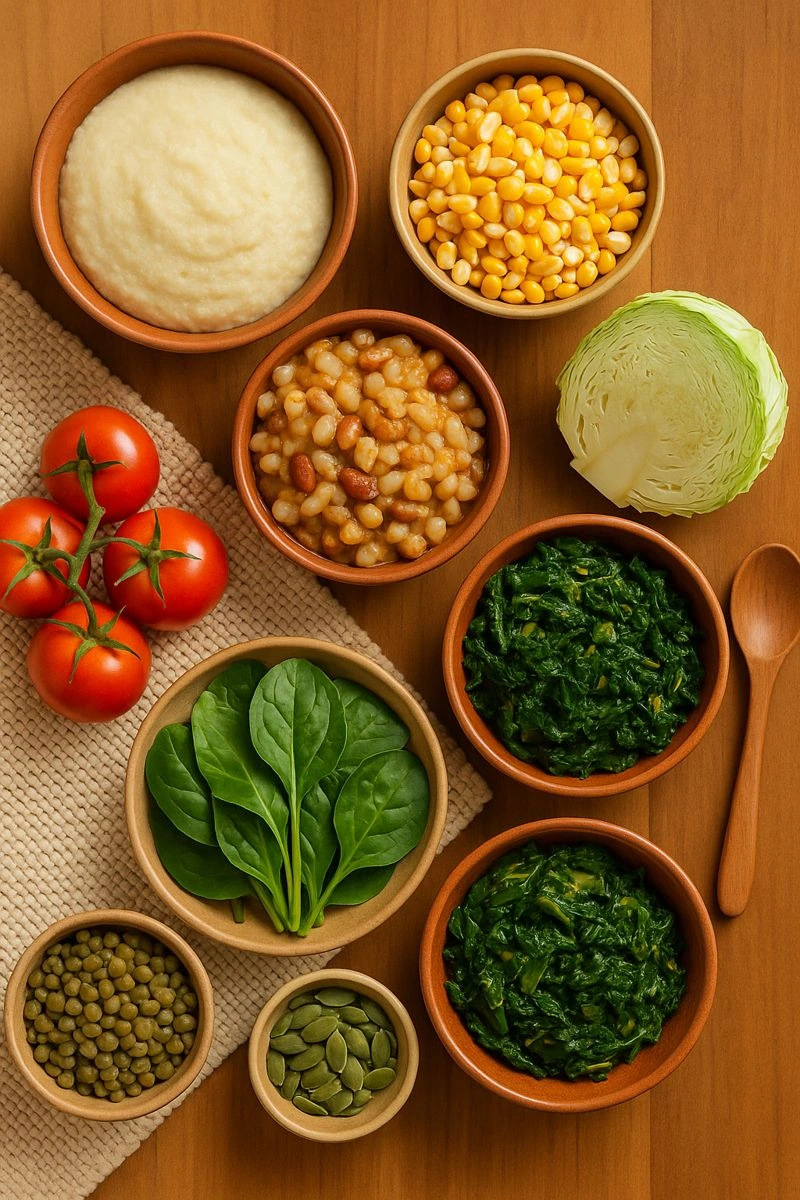
Maize becomes far more gut-friendly when paired with:
- Beans, lentils, or cowpeas.
- Leafy greens such as morogo or spinach,
- Fermented maize preparations.
Dishes like samp and beans show smart nutrition. They mix carbs, fibre, and plant protein. This aids digestion and keeps you feeling full longer.
Maize, Blood Sugar & Diabetes: What You Need to Know
Maize is often labelled as “bad for diabetics,” but this oversimplifies the issue.
What Increases Blood Sugar Impact
- Highly refined maize meal.
- Large portions are eaten alone.
- Lack of fibre, protein, or fat.
How to Eat Maize More Safely
- Choose whole or stone-ground maize meal.
- Keep portions moderate.
- Always pair maize with legumes and vegetables.
Maize can fit into a diabetes-friendly eating pattern when incorporated into a balanced plant-based meal.
Can Maize Support Heart Health?
Whole maize contains:
- Antioxidants (predominantly yellow maize carotenoids)
- Small amounts of magnesium and potassium
- Naturally low-fat and zero cholesterol
When maize replaces:
- Sugary breakfast cereals
- Refined white bread
- Ultra-processed snacks
…it may contribute to better cardiovascular outcomes, especially within a whole-food plant-based diet.
When Maize Becomes Less Healthy
Maize is not harmful by default, but problems arise when:
- It is highly refined.
- Portions are excessive.
- Meals lack vegetables and protein.
- It dominates the diet without variety.
Ultra-processed maize products, such as chips and sweet cereals, don’t offer the same health benefits as traditional maize foods.
Maize, Affordability & Food Security in South Africa
From a realistic nutrition perspective, maize remains:
- Affordable
- Accessible
- Culturally accepted
- Easy to prepare and to store.
Eliminating maize without affordable alternatives can increase food insecurity. The healthier solution is not removal — it is improving quality, preparation, and balance.
How to Eat Maize More Healthfully (Practical Tips)
- Choose fortified maize meal.
- Prefer stone-ground or whole maize.
- Pair maize with beans, lentils, or peas.
- Add leafy greens and vegetables.
- Control portion sizes.
- Avoid ultra-processed maize snacks.
Frequently Asked Questions (South Africa)
Is pap healthy?
Yes. Pap can be healthy if you use fortified maize meal. Also, including fibre-rich foods like beans and vegetables makes it better.
Is maize inflammatory?
There is no substantial evidence that whole maize is inflammatory. Problems are more often linked to ultra-processed maize products.
Is Mielie Meal good for gut health?
Yes — especially when eaten with legumes, vegetables, and fermented foods.
Can maize help with weight management?
Maize helps with weight control when consumed in moderation. It works well in a high-fibre, plant-based diet.
Bottom Line: Is Maize Healthy in South Africa?
Yes — maize can be healthy.
When fortified and minimally processed, maize helps support a diverse plant-based diet:
- Energy needs
- Gut health
- Micronutrient intake
- Food security
Health outcomes depend far more on how maize is eaten than on maize itself.
Editor’s Note
This article aligns with current nutrition science, South African public health guidance, and evidence-based plant-based principles.
It’s designed to be practical, affordable, and culturally relevant. Sustainable health needs to fit into real life.
2 thoughts on “The Amazing Health Benefits of Eating Maize in South Africa”