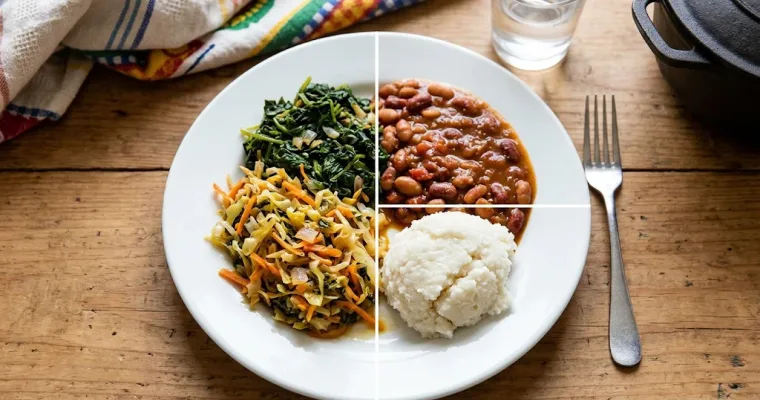
The first time a nurse told my uncle his sugar was “a bit high,” he came home, sat down at the table, and asked my aunt one question: “So I can’t eat pap anymore?” If you’ve asked the same question, this post is for you. …
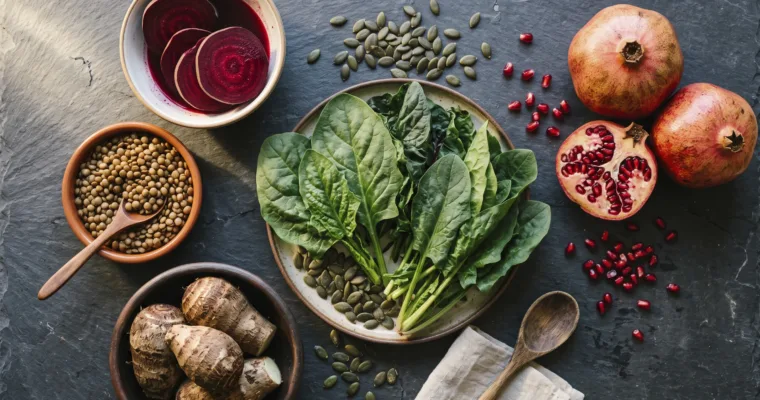
By Zama Zincume — Public Health Specialist & Plant-Based Food Writer Quick Answer The best plant-based foods for male health and energy are those rich in dietary nitrates, zinc, magnesium, antioxidants, and slow-burning complex carbohydrates. Top performers include beetroot, pumpkin seeds, dark leafy greens (like …
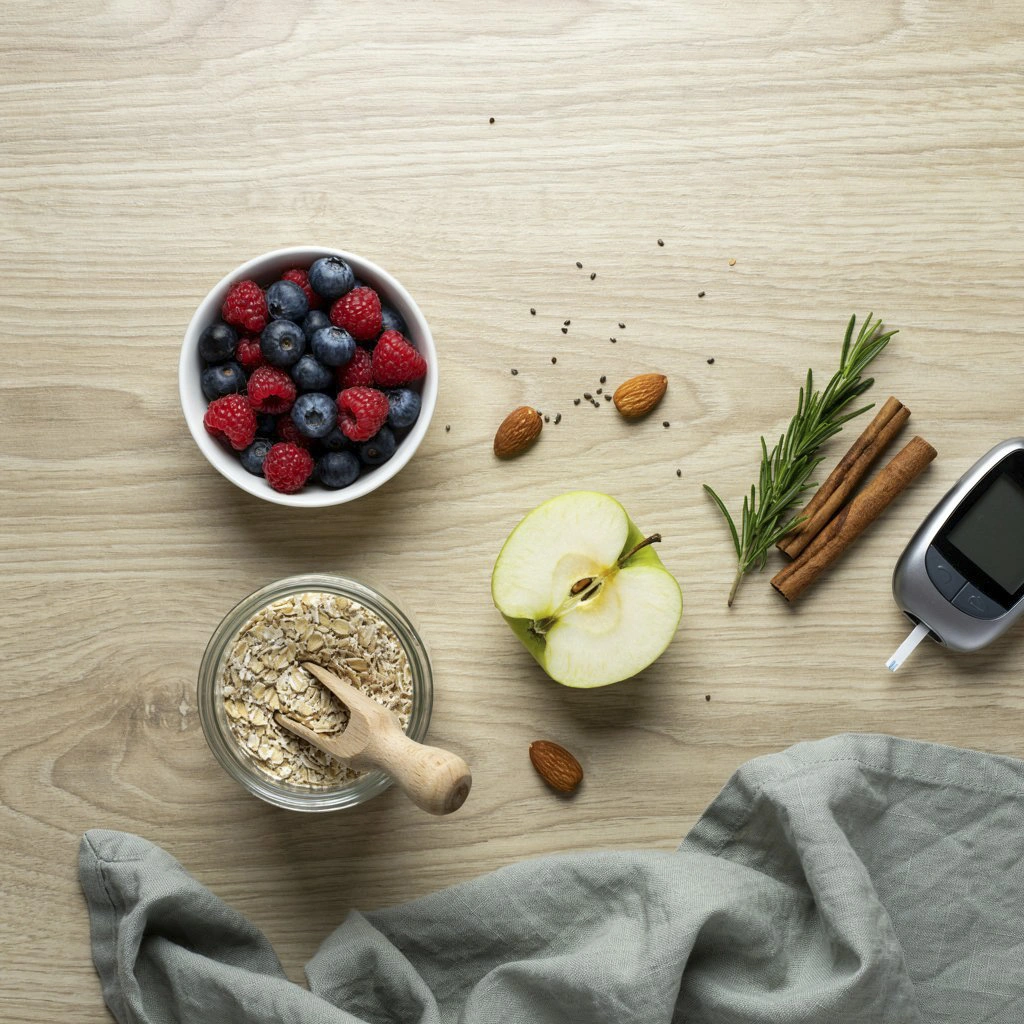
You didn’t use to feel this way. Lunch used to be just lunch. By 3 PM, your eyes feel heavy. Your focus slips, and you grab coffee or something sweet to power through the afternoon. Your waistline has grown even though the scale barely moves. And at your last checkup, your doctor mentioned a fasting glucose or HbA1c number “to keep an eye on.”
If this sounds familiar, you are not broken. You’re facing a common health change after 50. It’s about blood sugar regulation. Many misunderstand it.
Most advice on this topic swings between two extremes.
If this sounds familiar, you are not broken. You’re facing a common health change after 50. It’s about blood sugar regulation. Many misunderstand it. Most advice on this topic swings between two extremes.
Why Blood Sugar Changes After 50
Turning 50 doesn’t flip a metabolic switch. Nothing breaks overnight. What actually happens is more gradual and more manageable than most men realise. As the years pass, a few quiet shifts tend to stack up.
Muscle strength can decrease, especially if you’ve never done strength training. Daily movement often decreases. People drive more, sit at desks longer, and do fewer physically demanding tasks.
Sleep can become shorter or more broken. Old injuries or joint pain may have slowed you down without you noticing. And portions that felt harmless in your 30s may no longer match your current energy needs.
None of these changes is dramatic on their own. But together, they make blood sugar regulation harder. Skeletal muscle uses a lot of glucose in your body. When you move less and have less muscle, your body has fewer places to send that glucose after eating. Shorter sleep makes insulin sensitivity worse. Many men over 50 feel the effects. They report afternoon crashes, stubborn waistlines, and bad lab results.
The good news is you can still control each of these drivers.
You can’t turn back time.
However, you can rebuild muscle. You can protect your sleep. You can also improve your food environment. The key to managing blood sugar after 50 is simple: don’t fight age. Instead, adjust your strategy to fit it.
It also helps to understand what’s happening beneath the surface.
When you eat, your body releases insulin. Insulin facilitates the transfer of blood glucose into muscles and other tissues. Your body then uses this glucose as fuel. In insulin resistance, tissues respond less to insulin. So, your body needs to release more insulin to achieve the same effect. Over time, if that compensation can’t keep up, blood sugar levels start climbing.
Muscle is crucial for blood sugar control after 50. Your body uses skeletal muscle as a primary location for the intake of glucose. The more muscle you have and use, the easier it is to manage blood sugar.
The Problem With Most Blood Sugar Advice
Search online for advice about blood sugar after 50, and you’ll find no shortage of loud opinions. Cut all carbs. Fear insulin. Fast for sixteen hours a day. Buy a continuous glucose monitor and panic every time a banana causes a rise.
Here’s the problem: none of this reflects how your body actually works.
Insulin is not a villain. It’s an essential hormone that helps move nutrients through your body.
In insulin resistance, the issue isn’t that insulin exists; it’s that your tissues have become less responsive to it, so your body needs more of it to do the same job. Fearing a normal hormone doesn’t fix that. Better food quality, more muscle use, and better sleep do.
Fear of carbohydrates can be just as harmful.
Carbohydrates are found in whole grains, fruit, beans, and oats. However, they don’t have the same nutritional value as processed foods or sugary drinks.
A spike in blood sugar after a nutritious meal is normal physiology and doesn’t mean the meal was unsuccessful. A perfectly flat glucose line was never the aim.
The goal is a pattern that sustains consistent energy over time.
And extreme fasting?
For some men, especially those on medication that can cause low blood sugar, aggressive fasting isn’t just unhelpful. It can also be unsafe.
Any major change to eating patterns deserves a conversation with your doctor first, not a challenge you found online.
What actually works is less dramatic, and far more sustainable. It’s called the STEADY Method.
Common Myths About Blood Sugar After 50
Before we get to what works, it helps to clear away a few ideas that quietly make things worse.
Myth: A tired afternoon proves your blood sugar spiked. Fatigue is one of the least specific symptoms in medicine. Poor sleep, dehydration, a heavy lunch, and hours of sitting can all cause the same 3 PM slump. The only way to know what’s really happening with your blood sugar is testing, not guessing from how you feel.
Myth: Fruit is dangerous because it contains sugar. Whole fruit brings fibre, water, and nutrients along with its natural sugars — a very different package from sugary drinks or sweets. Fearing an apple was never the goal.
Myth: If you lose weight, everything else fixes itself. Weight can matter, but a man who loses five kilograms while losing muscle and sleeping badly has not necessarily improved his health. Strength and energy matter just as much as the number on the scale.
Myth: Every man over 50 needs the same fix. Medication, kidney health, exercise tolerance, and personal history all shape what’s safe and appropriate. A system should adapt to you — not the other way around.
Once these myths are out of the way, the real work becomes much simpler.
Meet the STEADY Method
STEADY is a six-part system built specifically around the changes men experience after 50. Each letter represents one lever. None of them rrequiresyou to fear a food group, buy an expensive gadget, or follow a rigid schedule that falls apart the moment life gets busy.
S — Start With Staples
Most nutrition advice starts with products: protein bars, sugar-free drinks, “diabetic” snacks. STEADY begins with simple foods. These everyday staples cover most of your nutritional needs. Beans, lentils, oats, whole grains, potatoes, and vegetables form the foundation. These foods are cheap, familiar, and easy to use week after week. That’s more important than any single “superfood.”
T — Target Fibre and Food Quality
Instead of worrying about grams of carbs, think about their sources. Fibre-rich foods include beans, whole grains, vegetables, and whole fruits. They provide nutrients and water and help you feel full. Plus, they provide carbohydrates. Sugary drinks and refined snacks bring little else. Increase your fibre slowly. Don’t change your whole diet overnight. This way, the change will last.
E — Eat for Steadier Energy
Steady doesn’t mean flat. Your meals raise your blood sugar. That’s normal for digestion. Choose meals that prevent the crash-and-crave cycle. Fill your plate with vegetables, a fibre-rich staple, and protein. Avoid sugary snacks; they’ll leave you hungry in an hour.
A — Activate Muscle
This is the lever most blood sugar advice skips entirely, and it may be the most powerful one you have. Skeletal muscle is one of your body’s biggest glucose consumers. Your muscles have an incentive to use that fuel when you walk, especially after a quick post-meal walk. Include two easy strength training workouts every week. This helps preserve strength and independence while also helping control blood sugar. As you get older, these things make life easier.
D — Defend Sleep and Daily Rhythm
Your metabolism depends on sleep, so it’s not a luxury. Not sleeping enough can reduce insulin sensitivity within a few days. If you feel fatigued even after getting enough sleep, snore loudly, or wake up gasping, see your doctor. Men with blood sugar problems frequently have untreated sleep apnea, and a sleep condition cannot be cured by diet.
Y — Your Numbers, Your Feedback
Your blood sugar level cannot be determined solely by your symptoms. Many times, prediabetes has no obvious symptoms. Testing is important because of this. Markers like HbA1c and fasting glucose provide accurate information. However, statistics should inform choices rather than instil dread. A single elevated post-meal reading does not mean the meal was hazardous. Examine long-term trends and ask your healthcare physician to help you understand them.
A Simple First Step You Can Take Today
You don’t need to overhaul everything at once. In fact, trying to change your food, sleep, and exercise all on the same day is one of the fastest ways to give up by day three.
Try this easy experiment for the next seven days: prepare one meal every day. Pay attention to a staple that is high in fiber and a food that is high in protein. Replace one sugar-filled beverage with water. Add a quick stroll, even ten minutes after that meal. Don’t change anything else.
At the end of the week, notice what changed. Did your energy feel steadier? Was the change easy enough to repeat next week? Small, specific experiments like this tell you far more than a dramatic 30-day overhaul that collapses the moment life gets busy again.
When to See a Doctor
Managing blood sugar after 50 can be tricky. You shouldn’t do it alone. This article isn’t a replacement for medical care. If you have risk factors, like a bigger waistline or a family history of diabetes, talk to your doctor. High blood pressure or a past prediabetes diagnosis also counts.
Ask about the right tests.
If you take diabetes medication, don’t stop, reduce, or change it on your own, even if a new habit seems to help. Better numbers mean you should have a doctor review them, not adjust your treatment yourself.
Watch for symptoms that need prompt medical attention: unexplained weight loss, excessive thirst, frequent urination, or severe, worsening fatigue.
These deserve a proper evaluation rather than a new diet.
Building a System That Actually Lasts
Here’s the truth most crash diets won’t share: after 50, good metabolic health isn’t about one food to avoid. It’s not about one supplement to buy, either. It’s about making your kitchen, movements, sleep, and numbers work for you. This can help keep blood sugar steady naturally. You won’t have to struggle every day.
That’s exactly what the STEADY Method is designed to do. It won’t promise a cure or make you fear food. It offers a repeatable system. This system fits your real life and body at 50. It’s based on solid evidence. It helps men manage blood sugar without the stress of strict limits.
If this approach resonates with you, The Men’s Blood Sugar Fix After 50 details the full STEADY Method. It includes a 14-day reset, a 90-day plan, and many staple meals to kickstart your journey.
Your fifties don’t have to mean fighting your body. They can mean finally working with it.
By Zama Zincume — Public Health Specialist & Plant-Based Food Writer · Updated (How to Eat Plant-Based in South Africa for Under R50 a Night) Quick Answer Yes, you can eat a filling, protein-rich plant-based dinner in South Africa for R50 or less per plate …
By Zama Zincume | Eating Plant-Based ZA | Updated 15 October 2026 Looking for the best vegan restaurants in Durban? This updated local guide covers vegan cafés, plant-based burgers, traditional bean bunny chow, Indian vegetarian restaurants and affordable vegan-friendly meals across Durban, Umhlanga, Glenwood and …
By Zama Zincume — Public Health Specialist & Plant-Based Food Writer
Quick Answer
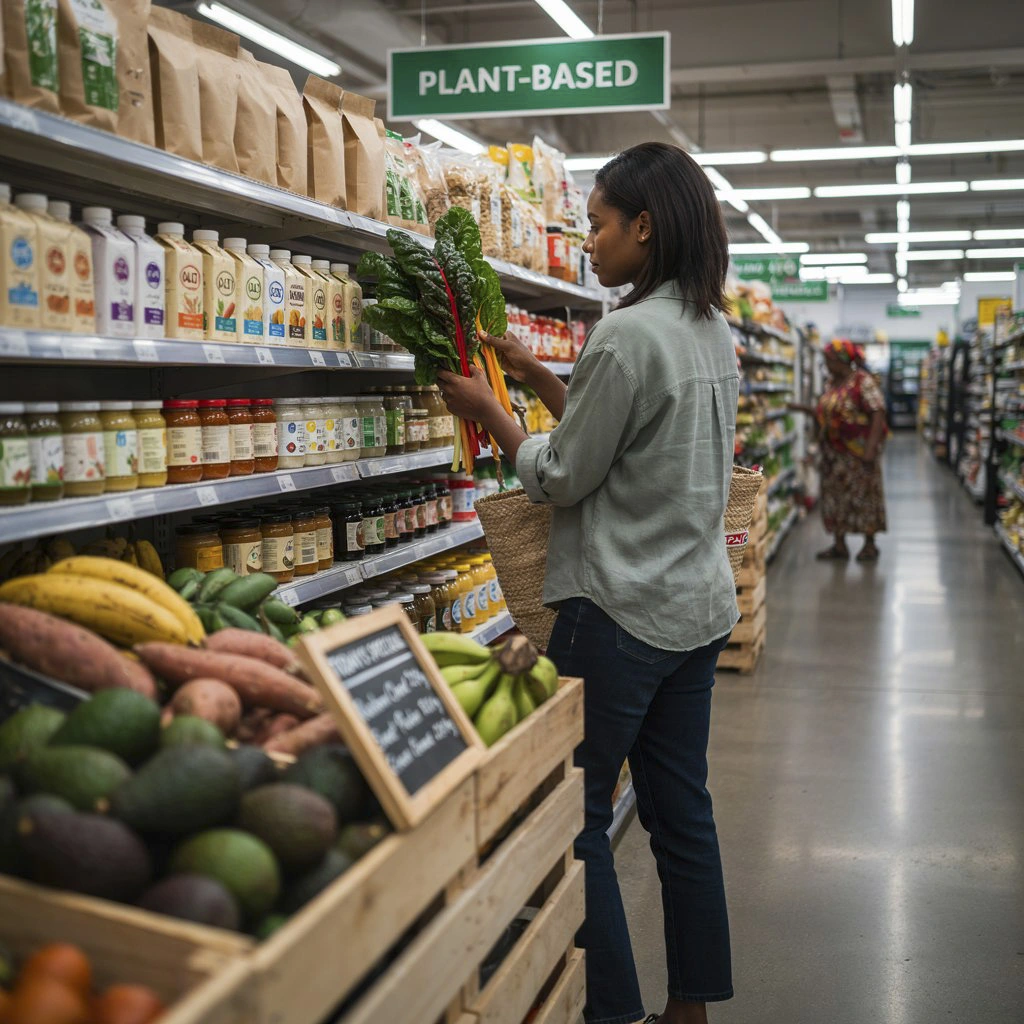
Smart plant-based food shopping in South Africa includes: Start with a staples-first list. Look for hidden animal ingredients on labels. Watch out for exorbitant pricing on “plant-based” things. Shop at both chain stores and small markets. Buy dried essentials in bulk. This book guides you through each step. Every shopping trip can then support your health and save you money.
Why Shopping Is Its Own Skill
Knowing what a plant-based diet should look like is one thing. Actually standing in a grocery store, list in hand, budget in your head, is another.
Many people use the Staple-First Method™ but still overspend. Stores have traps. They use clever packaging and charge extra for “plant-based” labels. The layout also leads you past extras before your trolley is full of staples.
This guide focuses on the shop itself. It’s about the choices you make in the aisle, not just the list you brought.
It affects what you put in the trolley first. What goes in first often gets bought when the budget is tight at the till.
Know your non-negotiables versus your flexible items.
Some items on your list are fixed; you need maize meal, you need a protein source. Others are flexible: this week’s vegetable could be cabbage or butternut, whichever is cheaper or fresher. Marking this distinction before you shop means you can adapt in-store without losing track of your budget.
Check what you already have in your pantry.
Oil, spices, stock cubes, and other flavour-category items are one-time or infrequent purchases. Many grocery trips go over budget because people buy things they already own. This often occurs when they don’t check their inventory before leaving.
Decide your store split in advance.
If you plan to shop at two places:
one for bulk staples
and another for fresh produce, decide before you go. Don’t wait until you’re in the first store and unsure whether to buy vegetables there.
Reading Labels: What Actually Matters
Label literacy is a key skill for plant-based shoppers. It helps you avoid two traps. One is hidden animal ingredients. The other is overpriced products that aren’t worth it.
Checking for hidden animal-derived ingredients.
Some ingredients aren’t obviously animal-derived from their name alone. Stock cubes can have animal fat or extract, even in veggie flavours.
Always inspect the contents list, not just the front of the packaging.
Bread and baked goods may occasionally contain whey or animal-based emulsifiers. Sauces may contain fish-derived ingredients, as classic Worcestershire sauce does.
Understanding the “plant-based” price premium.
Stock cubes can have animal fat or extract, even in veggie flavours. Always inspect the contents list, not just the front of the packaging. Bread and baked goods may occasionally contain whey or animal-based emulsifiers. Sauces may contain fish-derived ingredients, as classic Worcestershire sauce does.
Use the length of the ingredient list as a rough guide.
A shorter ingredient list on foods like beans, rice, or peanut butter means less processing. Fewer ingredients are often better. This usually leads to better value, too. Peanut butter with just peanuts and salt is simpler. It’s also cheaper than peanut butter with added sugar, oil, and stabilisers.
Compare price per unit, not price per package. Larger packages don’t automatically mean better value, and smaller packages aren’t automatically worse.
Most South African grocery stores show a price per kilogram or per 100g on the shelf labels. Use this info to compare brands and sizes instead of relying on the sticker price.
Where to Shop: Matching Store Type to Category
Different store types serve different parts of your list best, and understanding this mapping is what “smart shopping” means in practice.
Chain supermarkets work best for packaged staples in larger sizes—maize meal, rice, tinned tomatoes, cooking oil, and dried legumes—when fresh or bulk options aren’t available nearby.
Store-brand versions of these staples are typically the most cost-efficient choice on the shelf, and loyalty programmes or weekly specials can make them even better if you time your shopping trip around them.
Wholesalers and bulk retailers become worthwhile once you’re buying regularly or for a larger household.
Dried legumes, rice, and maize meal are often much cheaper per kilogram in bulk packaging, and the savings compound the more consistently you buy the same staples.
Spaza shops and informal traders are often the best source for fresh produce, especially indigenous staples like morogo and amadumbe that chain supermarkets may not stock consistently. Buying here also keeps grocery spending circulating within local and township economies.
Farmers’ markets and township markets, where accessible, are worth checking seasonally for produce like pumpkin, butternut, and cabbage, which can be fresher and cheaper than supermarket equivalents when in season.
Online grocery delivery has grown in South Africa and can be useful for restocking staples—buying dried legumes, grains, and pantry items in bulk without carrying them.
It’s generally less useful for fresh produce, where in-person selection and local sourcing tend to offer better value and quality.
A Step-by-Step Shopping Process
Step 1: Check your pantry against your list. Cross off anything you already have, especially in the flavour and fat category.
Step 2: Shop your staples first, in-store. Go straight to the legumes, grains, and dried goods aisles before anything else. Fill this part of your trolley before you’ve seen the rest of the store.
Step 3: Move to produce. Choose your vegetables based on what’s freshest and cheapest that day, using your flexible-item list to adapt rather than sticking rigidly to a specific vegetable that might be priced high that week.
Step 4: Pick up flavour and fat items only if needed. Check your list again—if you already have oil, garlic, or spices at home, skip this aisle entirely.
Step 5: Extras, only if budget remains. This is the last stop, not the first, and it should only happen if the first three steps are fully covered within budget.
Step 6: Check your total against your budget before checkout, if possible. Many stores show running totals on self-checkout screens or in apps — use this to catch overspending before you get to the till, when it’s easier to put something back.
Buying in Bulk: When It Helps and When It Doesn’t
Bulk buying is one of the most effective budget tools available for plant-based shopping, but it only works for specific categories.
Good candidates for bulk buying: dried legumes, rice, maize meal, oats, and other shelf-stable staples you know you’ll use consistently.
Poor candidates for bulk buying: fresh produce that spoils before you can use it, and speciality items you’re still testing out. Buying a large quantity of something you haven’t confirmed you’ll actually use regularly is a common way bulk buying backfires financially.
A middle path: buy staples in bulk, buy produce weekly. This combination—a large one-time or monthly staple purchase alongside smaller, more frequent fresh produce trips—tends to offer the best overall value, since it captures bulk pricing on items that benefit from it while keeping produce fresh.
Seasonal Shopping: Letting the Calendar Guide the List
Vegetable prices in South Africa shift with the seasons, and shopping with the season rather than against it is one of the simplest ways to keep produce costs down. As a general guide:
Winter months tend to favour root vegetables and hardy greens — pumpkin, butternut, cabbage, carrots.
Summer months tend to bring down prices on more delicate produce and certain fruit.
Rather than fixing your vegetable choices in advance, treat the vegetable category on your list as a rotating slot filled by whatever’s in season and priced well that week.
This is built into the Staple-First Method™’s “seasonal vegetables second” step, and it’s one of the easiest adjustments once you’re used to shopping this way.
Avoiding Common Overspending Traps
Shopping hungry. A well-established pattern — shopping without having eaten leads to more impulse purchases, particularly in the extras category.
Shopping without a list. Even a loose category-based list (as outlined above) significantly reduces impulse buying compared to shopping from memory.
Buying pre-made “convenience” plant-based meals. These consistently cost more per meal than the same ingredients bought raw and cooked at home, even accounting for the time saved.
Ignoring price-per-unit labels. As covered above, package size alone is a poor guide to value — always check the per-kilogram or per-100g comparison where available.
Not checking specials cycles. Many South African chain stores run predictable weekly or monthly specials on staple items. Timing bulk staple purchases around these cycles, where your schedule allows, compounds savings over time.
Frequently Asked Questions
What’s the biggest mistake people make when grocery shopping for a plant-based diet? Shopping the store in the wrong order — picking up extras and speciality “plant-based” products before covering staples like legumes and grains. This is the single most common reason plant-based grocery shopping feels expensive.
Are plant-based labelled products worth the extra cost? Not automatically. A “plant-based” or “vegan” label doesn’t guarantee better nutrition or quality — check the ingredient list and price per serving rather than relying on the label alone.
Is it better to shop at one store or split shopping across multiple stores? Splitting shopping — bulk staples at a chain or wholesale store, fresh produce at a local market or spaza shop — is generally more cost-effective than shopping entirely at one store, even accounting for the extra time involved.
How do I know if a stock cube or sauce is actually plant-based? Always check the full ingredient list rather than the front-of-pack labelling. Animal-derived ingredients like fat or fish extract can appear in products that don’t obviously signal it on the packaging.
Is buying in bulk always cheaper? Only for shelf-stable staples you know you’ll use consistently. Bulk buying fresh produce or untested specialty items often leads to waste, which cancels out the savings.
Where to Go From Here
This guide covers the mechanics of the shop itself. For this shopping process, check out Plant-Based Diet on a Budget South Africa.
For your next trip, check out the R500 Plant-Based Grocery List South Africa. It provides a full week’s staples and meal plan, plus current prices.
After a few shopping trips, check out the R500 Plant-Based Pantry Starter Guide. It’s a free way to create a monthly system. Also, Eating Plant-Based on a Budget: Second Edition covers the full Staple-First Method™. This guide combines shopping, cooking, and budgeting all in one.
By Zama Zincume — Public Health Specialist & Plant-Based Food Writer Men lose energy and drive after 50 mainly because testosterone falls by roughly 1–2% every year, deep sleep and growth hormone release drop by as much as 75% by midlife, and skeletal muscle — …
By Zama Zincume — Public Health Specialist & Plant-Based Food Writer Quick Answer After age 50, men experience a natural, gradual decline in serum testosterone, often called andropause or late-onset hypogonadism—at a rate of about 1% to 2% per year. Simultaneously, Sex Hormone-Binding Globulin (SHBG) …
By Zama Zincume — Public Health Specialist & Plant-Based Food Writer · Updated
Quick Answer: A solid plant-based pantry in South Africa is built from legumes (sugar beans, lentils, chickpeas, cowpeas), grains (rice, maize meal, samp, sorghum, oats), a few oils and spices, and a handful of canned staples. Most of these — Imbo Red Speckled Sugar Beans at R26.99 per 500g, for example — cost less than their meat or dairy equivalents and last for months on a shelf.
One of the best things you can do for your plant-based cooking is stop treating every meal as a fresh shopping trip.
A well-stocked pantry means you can put together a filling, nourishing meal on a night you didn’t plan for, without reaching for takeaway. This list isn’t built around imported speciality ingredients you’ll struggle to find or afford in South Africa.
It’s built around what’s actually on the shelves at Checkers, Shoprite, Pick n Pay, and your local spaza or wholesaler.
Why a Stocked Pantry Matters More on a Plant-Based Diet
Plant-based cooking leans heavily on combining a few simple categories: a legume, a grain, a fat, and some flavour. When you have all four on hand, “what’s for dinner” stops being a crisis. Buying these staples in bulk is also cheaper per meal than buying fresh, perishable ingredients every few days, which matters when you’re managing a household budget.
Legumes and Beans (6)
1. Sugar beans. The backbone of South African plant-based cooking. Imbo Red Speckled Sugar Beans run R26.99 per 500g at Shoprite and Checkers — one of the cheapest protein sources you can keep on a shelf.
2. Lentils. No soaking required, cooked in under 30 minutes. Imbo Brown Lentils cost around R29.99–R38.99 per 500g, depending on the store.
3. Chickpeas. Keep both dried (for stews and curries) and a tin or two on hand for fast meals — KOO Chickpeas in Flavoured Brine (R27.99 per 400g) need no cooking time.
4. Cowpeas. A deeply South African staple, cheapest when bought in bulk from a local wholesaler or market rather than a branded supermarket packet.
5. Split peas. Break down into a thick, comforting soup or stew base — a good rotation partner for lentils when you want variety.
6. Butter beans. Larger and creamier than sugar beans, good in slow-cooked stews and a useful textural change across the week.
Grains and Starches (6)
7. Rice. The most versatile starch in the pantry — pairs with almost every stew or curry on this list. No Name Rice runs around R37.99 per 2kg.
8. Maize meal (mielie meal). For pap, the everyday partner to bean and lentil stews. A 2.5kg bag (around R39.99) lasts for weeks.
9. Samp. Cooked low and slow, ideally with beans, for umngqusho — one of the most traditional and filling dishes in South African cooking.
10. Sorghum meal. A drought-resistant, heritage grain that makes a filling breakfast porridge and deserves more space in a modern South African pantry than it usually gets.
11. Oats. Quick, cheap, and versatile — a fast breakfast on its own, or ground into flour for baking.
12. Whole wheat flour. For flatbreads, roti-style breads, or thickening a stew — a small bag goes a long way.
Nuts, Seeds, and Nut Butters (4)
13. Peanut butter. Doubles as a protein source and a sauce base — stirred into stews for a West and Southern African-style peanut sauce, or spread on bread. Plain versions (R38.99–R42.99 per 400g) are the most versatile and have the least added sugar.
14. Peanuts (raw or roasted). Cheaper than most other nuts in South Africa, and a good snack or stir-fry addition on their own.
15. Sunflower seeds. Affordable, shelf-stable, and useful sprinkled over porridge, salads, or stews for texture and healthy fat.
16. Tahini (optional). Pricier than the other items on this list, but worth keeping if your budget allows — a spoonful transforms a simple bean or chickpea dish into something closer to a proper sauce.
Oils and Fats (2)
17. Sunflower cooking oil. The standard, affordable cooking oil in most South African kitchens — used across nearly every recipe in this list.
18. Olive oil (optional upgrade). Pricier than sunflower oil, but worth having a small bottle on hand for salad dressings or finishing a dish, if your budget stretches to it.
Canned and Jarred Staples (4)
19. Canned tomatoes. The base of most stews and curries on this list — faster than chopping fresh tomatoes and just as useful.
20. Tomato paste. A small tin adds depth and thickness to a stew without needing a full tin of tomatoes.
21. Canned coconut milk. Turns a simple vegetable curry into something richer — useful to keep a tin or two on hand for when you want a change from tomato-based sauces.
22. Canned chickpeas. As above — KOO Chickpeas in Flavoured Brine (R27.99 per 400g) are ready to eat straight from the tin, making them the fastest legume option in the whole pantry.
Soy and Plant Protein (2)
23. Soya mince (TVP). Dehydrated, so a small bag rehydrates into a large volume of food — the easiest first swap for households transitioning away from meat mince.
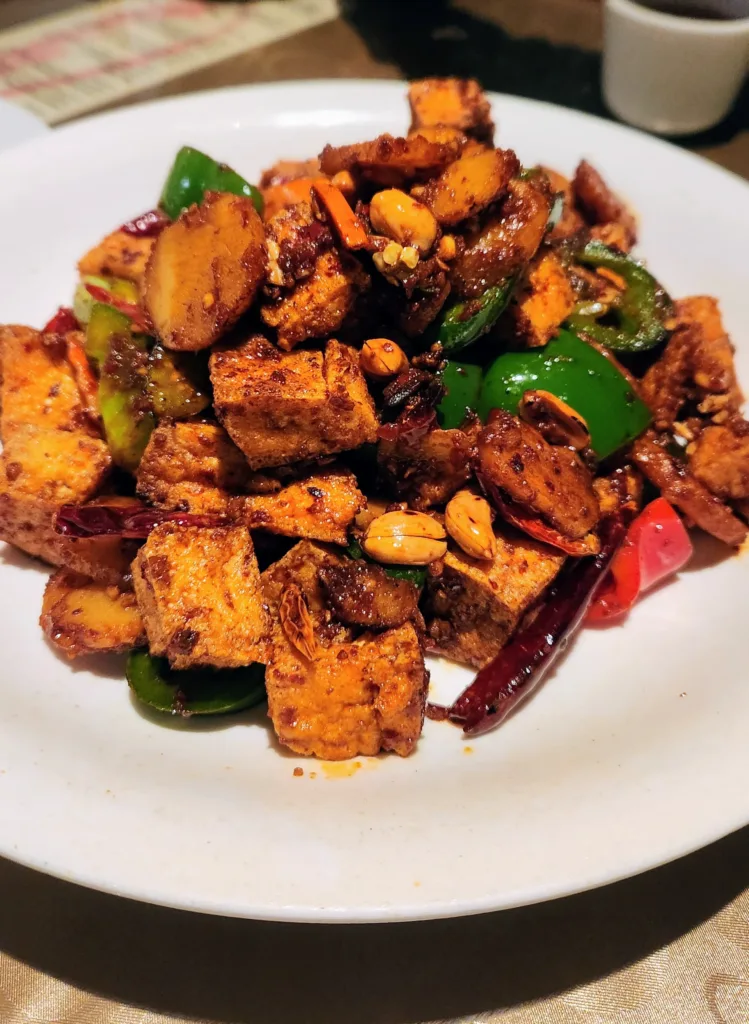
24. Tofu. Not shelf-stable like the rest of this list (keep it refrigerated), but worth including here since it belongs in the same “always have protein ready” category. PlantLove Herbed Tofu runs R69.99 per 350g at Woolworths.
Tofu and. Pepper
Spices and Flavour (3)
25. Curry powder. The single spice that does the most work across this list — turns a simple lentil or chickpea stew into a proper curry.
26. Mixed dried herbs. A basic blend (or a few separate jars — oregano, thyme, mixed herbs) rounds out tomato-based stews and soups.
27. Salt. Obvious, but worth naming — a good coarse salt makes every other item on this list taste as it should.
Sweeteners and Baking (2)
28. Brown sugar. For porridge, baking, or balancing an acidic tomato-based stew.
29. Baking powder. Keeps flatbreads, scones, and quick breads light — a small tin lasts a long time.
A South African Extra (1)
30. Rooibos tea. Not a cooking ingredient, but a genuinely South African pantry staple worth naming — naturally caffeine-free, locally grown, and a comforting constant in a plant-based kitchen.
How to Build This Pantry Without Overspending
You don’t need all 30 items on day one. Start with the legume-and-grain core — sugar beans, lentils, rice, and maize meal — since those four alone can carry you through a full week of meals (see our guide to Cheap Plant-Based Meals South Africa for exactly how). Add oils, spices, and canned staples over the following weeks as your budget allows, rather than buying everything in one large, expensive shop.
Buying legumes and grains in bulk, rather than small packets, consistently works out cheaper per meal — a pattern that holds across the verified prices in our companion piece on the cheapest plant-based protein sources in South Africa.
A Note for Daniel Fast and Faith-Based Seasons
Nearly every item on this list — beans, lentils, grains, and simple oils and spices — fits naturally within Daniel Fast guidelines, since the fast calls for whole, simple foods rather than processed ones. If you’re stocking your pantry ahead of that season, see our Daniel Fast Meal Plan South Africa and our broader guide to the Christian Plant-Based Diet.
Frequently Asked Questions
What are the most important items to buy first for a plant-based pantry in South Africa?
Start with sugar beans, lentils, rice, and maize meal—these four staples alone can cover a full week of meals and are among the cheapest items on this list.
Do I need speciality vegan ingredients to eat plant-based in South Africa?
No. Nearly everything on this list—beans, lentils, rice, maize meal, peanut butter, curry powder—is a standard item sold at every major South African supermarket.
How long do dried legumes and grains last in the pantry?
Stored in a sealed container away from moisture, dried beans, lentils, rice, and maize meal typically last many months to a year or more, making them ideal for bulk buying.
Is tofu a pantry item if it needs refrigeration?
Not technically shelf-stable, but it’s included here because it plays the same role as the pantry staples — a ready protein source to build a meal around at short notice.
Your Next Step
Want this whole list as a printable checklist you can stick inside a cupboard door? Grab the free 30-Item Plant-Based Pantry Checklist — built directly from this article, with space to tick off what you already have.
And if you want a full system for turning this pantry into a month of affordable meals, the Plant-Based Budget Blueprint course walks you through exactly that.
By Zama Zincume — Public Health Specialist & Plant-Based Food Writer Quick Answer: The cheapest plant-based protein sources in South Africa include dried beans, lentils, cowpeas, sorghum, and peanut butter. On a cost-per-gram-of-protein basis, dried legumes consistently beat meat, chicken, and most dairy. Imbo Red …