
R50 Plant-Based Dinners: How to Eat Plant-Based in South Africa for Under R50 a Night
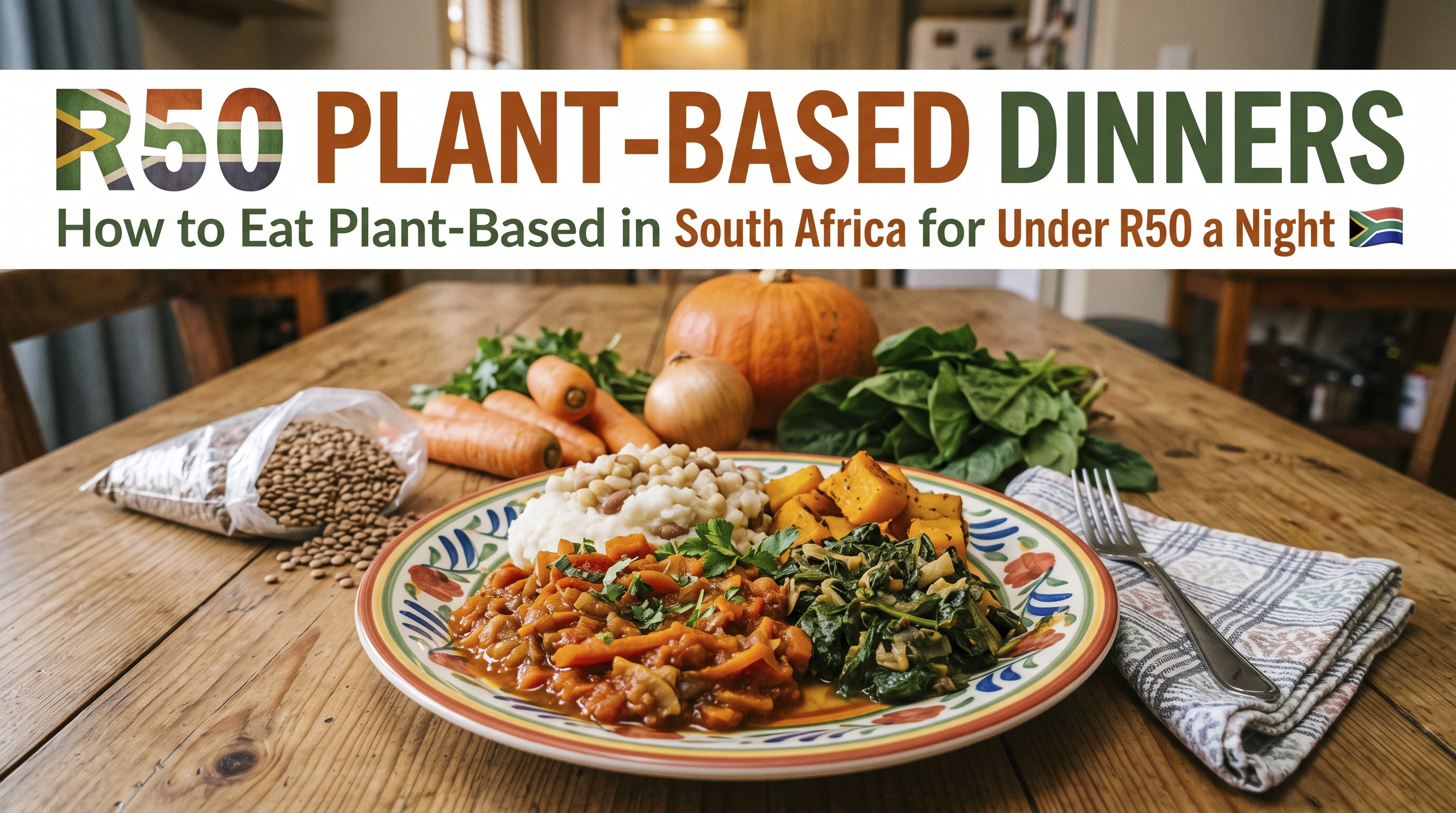
By Zama Zincume — Public Health Specialist & Plant-Based Food Writer · Updated (How to Eat Plant-Based in South Africa for Under R50 a Night)
Quick Answer
Yes, you can eat a filling, protein-rich plant-based dinner in South Africa for R50 or less per plate by building meals around dried legumes (sugar beans, cowpeas, lentils) and South African staple carbohydrates (samp, maize meal, sorghum, amadumbe), then adding one fresh vegetable and a flavour base of onion, garlic and spice. Below are six dinners, each with a per-serving cost breakdown, built using the Staple-First Method™.
Why R50 a Night Is a Realistic Target
Load-shedding-era grocery bills, fuel-linked food inflation and a weak rand have made “eating well” feel like a luxury in South Africa. But the maths on plant-based eating tells a different story. Dried legumes and grains are, rand-for-rand, some of the cheapest sources of protein and energy on supermarket shelves; cheaper than chicken, far cheaper than beef, and they store for months without refrigeration.
The Staple-First Method™ is simple: build every dinner around one dried legume, one starchy staple, and one vegetable, then season generously. Meat is not “removed” from these meals, it was never the anchor to begin with. This is how umngqusho, morogo relish and pap have fed South African households for generations, long before “plant-based” was a marketing term.
A note on the number: R50 is a per-serving target for the meal itself (main plus vegetables), assuming you’re cooking a pot that serves three to four people and already have basic pantry items: onion, garlic, oil, salt, and a spice or two on hand. It does not include snacks, drinks or bread on the side.
A Word on the Prices Below
Grocery prices move often, and they differ by store, region and whether you shop online or in-aisle.
The figures below are indicative retail prices for budget-brand products at major South African supermarkets, checked mid-September 2026. Remember, prices can shift by R2–R5 in either direction month to month, and regional pricing (especially for indigenous staples like amadumbe and sorghum meal) varies more than nationally-distributed items like maize meal.
1. Umngqusho: Samp and Sugar Bean Stew
A Xhosa staple and one of the most nutritionally complete R50 dinners you can make; the combination of a grain (samp) and a legume (sugar beans) supplies a full range of amino acids across the meal.
What you need: dried samp, dried sugar beans, onion, garlic, a carrot, a knob of butter or a splash of oil, salt, and a pinch of curry powder if you like it warming.
Method: Soak samp and beans overnight, then simmer together for 60–90 minutes (or 35 minutes in a pressure cooker) until soft. Fry onion, garlic and grated carrot separately, stir through, and season.
Cost per serving (serves 4): dried samp (~R25/kg, use 300g) + dried sugar beans (~R28/500g, use 250g) + onion, garlic, carrot (~R20 combined) + oil and seasoning (~R5) = roughly R170 for the pot, R42–R45 per serving.
Nutrition note: Legumes paired with a grain across a meal or a day provide all nine essential amino acids the body needs, you don’t need to eat the bean and the grain in the exact same bite, just across the same day, to meet your protein needs from plants (government and dietetic body guidance on plant protein adequacy).
2. Sorghum Pap with Morogo and Peanut Sauce
Sorghum (mabele) is an indigenous South African grain, more fibre-dense than maize meal, and deserves more shelf space in plant-based cooking than it currently gets.
What you need: sorghum meal, a bunch of morogo (or spinach/Swiss chard as a substitute), onion, tomato, smooth unsweetened peanut butter, and chilli if you like heat.
Method: Cook sorghum meal into a soft pap with water and a pinch of salt. Wilt the morogo with fried onion and tomato, then stir in a spoon of peanut butter thinned with hot water to make a light sauce over the greens.
Cost per serving (serves 4): sorghum meal (~R30/kg, use 400g) + morogo bunch (~R15) + onion and tomato (~R20) + peanut butter portion (~R10) = roughly R75–90 for the pot, R19–R23 per serving — one of the cheapest dinners on this list.
Nutrition note: Leafy greens like morogo are a source of iron, calcium and folate; pairing them with peanut butter’s fat helps the body absorb the fat-soluble nutrients in the greens.
3. Lentil and Butternut Curry with Rice
A pantry-friendly dinner that comes together in under 40 minutes and freezes well, so it’s worth doubling the pot.
What you need: brown or red lentils, half a butternut, onion, garlic, curry powder, tinned tomato, and rice or leftover pap.
Method: Fry onion, garlic and curry powder, add cubed butternut and tinned tomato, then stir in rinsed lentils with enough water to cover. Simmer 25–30 minutes until the lentils and butternut are soft, and serve over rice.
Cost per serving (serves 4): lentils (~R30/500g, use 300g) + half a butternut (~R15) + onion, garlic, tinned tomato (~R30) + curry powder and rice portion (~R25) = roughly R100 for the pot, R25 per serving.
Nutrition note: Lentils are one of the fastest-cooking legumes (no overnight soak needed) and are a strong source of dietary fibre, which supports steadier blood sugar responses compared with refined-carbohydrate-only meals.
It’s a genuinely useful property for household cooks managing diabetes risk, though this is general nutrition information and not a substitute for individualised medical advice.
4. Cowpea and Spinach Stew with Maize Pap
Cowpeas (dried or fresh, sometimes sold as “black-eyed peas”) are under-used in mainstream South African cooking despite being a traditional crop across the country.
What you need: dried cowpeas, spinach or morogo, onion, tomato, garlic, and maize meal for pap.
Method: Soak and simmer cowpeas until tender (about 45 minutes: they cook faster than sugar beans). Fry onion, garlic and tomato, wilt in the spinach, then combine with the cooked cowpeas and serve with maize meal pap.
Cost per serving (serves 4): dried cowpeas (~R25/500g, use 300g) + spinach (~R15) + onion, tomato, garlic (~R20) + maize meal portion (~R10) = roughly R70 for the pot, R17–R20 per serving.
Nutrition note: Cowpeas are a good source of plant protein and folate, and; like other legumes, contribute meaningfully to daily fibre intake, which most South African diets fall short of against dietetic association recommendations.
5. Amadumbe and Bean Mash with Tomato Relish
Amadumbe (taro) is a starchy indigenous root vegetable, naturally creamy when mashed, and a genuine alternative to potato that deserves more visibility than “budget substitute” framing.
What you need: amadumbe, tinned or home-cooked sugar beans, onion, tomato, garlic, and a little oil or butter for mashing.
Method: Boil peeled amadumbe until soft (20–25 minutes) and mash with a splash of the cooking water. Fry onion, garlic and tomato into a quick relish, warm the beans through, and serve the mash topped with the relish and beans.
Cost per serving (serves 4): amadumbe (~R25/kg, use 800g) + tinned sugar beans (~R18/410g tin, use 2 tins) + onion, tomato, garlic (~R20) = roughly R80 for the pot, R20 per serving.
Nutrition note: We view amadumbe as promising but unproven because it contains complex carbohydrates and resistant starch that behave differently in the gut than refined starches. Nutrition studies suggest it may offer digestive and metabolic benefits, but research in this area is ongoing.
6. Chakalaka Beans on Maize Pap or Toast
The fastest dinner on this list, and the one to lean on when you’re too tired to cook from scratch.
What you need: a tin of chakalaka, a tin of sugar or butter beans, and maize meal (or bread) to serve it on.
Method: Warm the chakalaka and beans together in a pot for five minutes. Serve over soft pap or on toast.
Cost per serving (serves 4): tinned chakalaka (~R18/410g) + tinned beans (~R18/410g, use 2 tins) + maize meal portion (~R10) = roughly R64 for the pot, R16 per serving.
Nutrition note: This is a truly handy “no-excuse” dinner for busy weeknights. Tinned beans keep most of their fiber and protein, unlike dried, cooked beans. So this shortcut isn’t just easy; it’s also a healthy choice.
Building Your Own R50 Plant-Based Dinner
If none of the six above suit what’s in your pantry tonight, the Staple-First Method™ formula still works:
- Pick one legume — sugar beans, cowpeas, lentils, or sugar beans from a tin if you’re short on time.
- Pick one staple — samp, maize pap, sorghum pap, amadumbe, or rice.
- Pick one vegetable — morogo, spinach, butternut, carrots, or frozen mixed vegetables (a reliable, shelf-stable backup at roughly R35/kg).
- Build flavour with what you already have — onion, garlic, tomato, curry powder, peanut butter, or chakalaka.
Keep dried legumes and grains in bulk in your pantry (a 1–2.5kg bag lasts several meals), and you’ll rarely pay full “per meal” price again — the cost per serving drops further the more you buy in bulk.
Frequently Asked Questions
Is it actually possible to get enough protein eating plant-based on a R50 budget in South Africa?
Yes. A serving of dried beans, lentils or cowpeas (roughly 250–300g dried, cooked) provides a substantial portion of an adult’s daily protein needs, and combining legumes with a grain like samp, maize or sorghum across the day rounds out the full amino acid profile — no expensive protein powders or meat substitutes required.
Do I need to soak beans and samp overnight?
For dried sugar beans and samp, yes — an overnight soak cuts cooking time significantly and makes them easier to digest. Lentils and cowpeas are the exception: they cook in 25–45 minutes with no soaking needed, which makes them the better choice on a weeknight.
Are tinned beans as nutritious as dried beans?
Largely yes. Tinned beans keep most of their protein and fibre content; just rinse them to reduce added sodium. They cost more per gram than dried beans but save significant time, which makes them worth it for a fast weeknight dinner like the chakalaka bean option above.
What’s the cheapest plant-based dinner in this list?
Sorghum pap with morogo and peanut sauce, at roughly R19–R23 per serving, followed closely by the cowpea and spinach stew at R17–R20 per serving.
Where to Go Next
To create a full week of meals, begin with the Staple-First Method™ overview. Next, follow a 7-day whole-food plant-based meal plan. You’ll also find a complete R500-a-week grocery list. Both use the same indigenous staples.
The indigenous South African plant foods guide focuses on amadumbe, sorghum, and cowpeas. It tells you where to buy them. It also compares them nutritionally to more common foods.
Next step: Download the printable 7-Day South African Plant-Based Starter Plan to turn these six dinners into a full week of budget-friendly meals.