
Plant-Based Groceries Shopping South Africa: A Complete Guide to Buying Smart
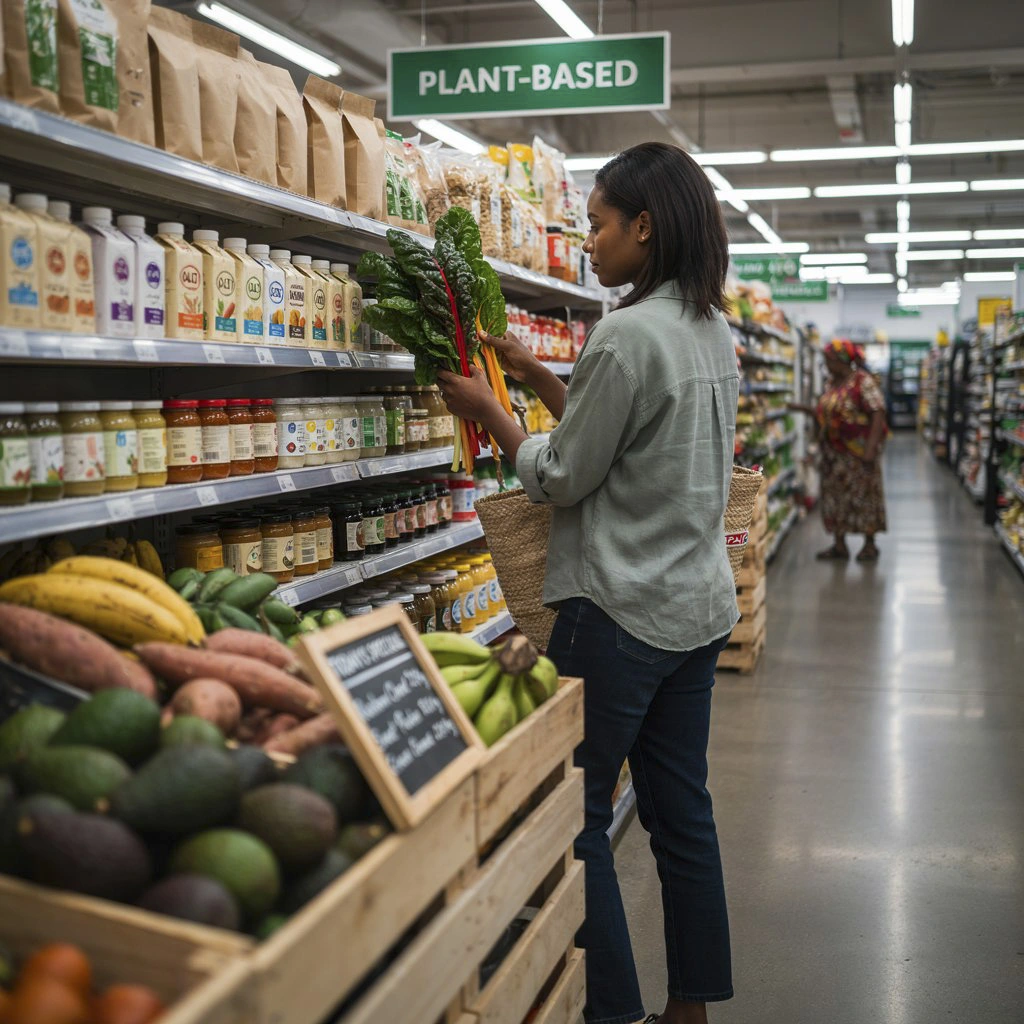
By Zama Zincume — Public Health Specialist & Plant-Based Food Writer
Quick Answer
Smart plant-based food shopping in South Africa includes:
Start with a staples-first list.
Look for hidden animal ingredients on labels.
Watch out for exorbitant pricing on “plant-based” things.
Shop at both chain stores and small markets.
Buy dried essentials in bulk.
This book guides you through each step. Every shopping trip can then support your health and save you money.
Why Shopping Is Its Own Skill
Knowing what a plant-based diet should look like is one thing. Actually standing in a grocery store, list in hand, budget in your head, is another.
Many people use the Staple-First Method™ but still overspend. Stores have traps. They use clever packaging and charge extra for “plant-based” labels. The layout also leads you past extras before your trolley is full of staples.
This guide focuses on the shop itself. It’s about the choices you make in the aisle, not just the list you brought.
Before You Go: Setting Up the Trip
Shop with a list, and shop it in order.
Write your list following the Staple-First Method™ order:
- Legumes and grains first
- Vegetables second
- Flavour and fat third
- Extras last

Legumes & grains
This isn’t just organisational.
It affects what you put in the trolley first. What goes in first often gets bought when the budget is tight at the till.
Know your non-negotiables versus your flexible items.
Some items on your list are fixed; you need maize meal, you need a protein source. Others are flexible: this week’s vegetable could be cabbage or butternut, whichever is cheaper or fresher. Marking this distinction before you shop means you can adapt in-store without losing track of your budget.
Check what you already have in your pantry.
Oil, spices, stock cubes, and other flavour-category items are one-time or infrequent purchases. Many grocery trips go over budget because people buy things they already own. This often occurs when they don’t check their inventory before leaving.
Decide your store split in advance.
If you plan to shop at two places:
- one for bulk staples
- and another for fresh produce, decide before you go. Don’t wait until you’re in the first store and unsure whether to buy vegetables there.
Reading Labels: What Actually Matters
Label literacy is a key skill for plant-based shoppers. It helps you avoid two traps. One is hidden animal ingredients. The other is overpriced products that aren’t worth it.
Checking for hidden animal-derived ingredients.
Some ingredients aren’t obviously animal-derived from their name alone. Stock cubes can have animal fat or extract, even in veggie flavours.
Always inspect the contents list, not just the front of the packaging.
Bread and baked goods may occasionally contain whey or animal-based emulsifiers. Sauces may contain fish-derived ingredients, as classic Worcestershire sauce does.
Understanding the “plant-based” price premium.
Stock cubes can have animal fat or extract, even in veggie flavours. Always inspect the contents list, not just the front of the packaging. Bread and baked goods may occasionally contain whey or animal-based emulsifiers. Sauces may contain fish-derived ingredients, as classic Worcestershire sauce does.
Use the length of the ingredient list as a rough guide.
A shorter ingredient list on foods like beans, rice, or peanut butter means less processing. Fewer ingredients are often better. This usually leads to better value, too. Peanut butter with just peanuts and salt is simpler. It’s also cheaper than peanut butter with added sugar, oil, and stabilisers.
Compare price per unit, not price per package. Larger packages don’t automatically mean better value, and smaller packages aren’t automatically worse.
Most South African grocery stores show a price per kilogram or per 100g on the shelf labels. Use this info to compare brands and sizes instead of relying on the sticker price.
Where to Shop: Matching Store Type to Category
Different store types serve different parts of your list best, and understanding this mapping is what “smart shopping” means in practice.
Chain supermarkets work best for packaged staples in larger sizes—maize meal, rice, tinned tomatoes, cooking oil, and dried legumes—when fresh or bulk options aren’t available nearby.
Store-brand versions of these staples are typically the most cost-efficient choice on the shelf, and loyalty programmes or weekly specials can make them even better if you time your shopping trip around them.
Wholesalers and bulk retailers become worthwhile once you’re buying regularly or for a larger household.
Dried legumes, rice, and maize meal are often much cheaper per kilogram in bulk packaging, and the savings compound the more consistently you buy the same staples.
Spaza shops and informal traders are often the best source for fresh produce, especially indigenous staples like morogo and amadumbe that chain supermarkets may not stock consistently. Buying here also keeps grocery spending circulating within local and township economies.
Farmers’ markets and township markets, where accessible, are worth checking seasonally for produce like pumpkin, butternut, and cabbage, which can be fresher and cheaper than supermarket equivalents when in season.
Online grocery delivery has grown in South Africa and can be useful for restocking staples—buying dried legumes, grains, and pantry items in bulk without carrying them.
It’s generally less useful for fresh produce, where in-person selection and local sourcing tend to offer better value and quality.
A Step-by-Step Shopping Process
Step 1: Check your pantry against your list. Cross off anything you already have, especially in the flavour and fat category.
Step 2: Shop your staples first, in-store. Go straight to the legumes, grains, and dried goods aisles before anything else. Fill this part of your trolley before you’ve seen the rest of the store.
Step 3: Move to produce. Choose your vegetables based on what’s freshest and cheapest that day, using your flexible-item list to adapt rather than sticking rigidly to a specific vegetable that might be priced high that week.
Step 4: Pick up flavour and fat items only if needed. Check your list again—if you already have oil, garlic, or spices at home, skip this aisle entirely.
Step 5: Extras, only if budget remains. This is the last stop, not the first, and it should only happen if the first three steps are fully covered within budget.
Step 6: Check your total against your budget before checkout, if possible. Many stores show running totals on self-checkout screens or in apps — use this to catch overspending before you get to the till, when it’s easier to put something back.
Buying in Bulk: When It Helps and When It Doesn’t
Bulk buying is one of the most effective budget tools available for plant-based shopping, but it only works for specific categories.
Good candidates for bulk buying: dried legumes, rice, maize meal, oats, and other shelf-stable staples you know you’ll use consistently.
Poor candidates for bulk buying: fresh produce that spoils before you can use it, and speciality items you’re still testing out. Buying a large quantity of something you haven’t confirmed you’ll actually use regularly is a common way bulk buying backfires financially.
A middle path: buy staples in bulk, buy produce weekly. This combination—a large one-time or monthly staple purchase alongside smaller, more frequent fresh produce trips—tends to offer the best overall value, since it captures bulk pricing on items that benefit from it while keeping produce fresh.
Seasonal Shopping: Letting the Calendar Guide the List
Vegetable prices in South Africa shift with the seasons, and shopping with the season rather than against it is one of the simplest ways to keep produce costs down. As a general guide:
Winter months tend to favour root vegetables and hardy greens — pumpkin, butternut, cabbage, carrots.
Summer months tend to bring down prices on more delicate produce and certain fruit.
Rather than fixing your vegetable choices in advance, treat the vegetable category on your list as a rotating slot filled by whatever’s in season and priced well that week.
This is built into the Staple-First Method™’s “seasonal vegetables second” step, and it’s one of the easiest adjustments once you’re used to shopping this way.
Avoiding Common Overspending Traps
Shopping hungry. A well-established pattern — shopping without having eaten leads to more impulse purchases, particularly in the extras category.
Shopping without a list. Even a loose category-based list (as outlined above) significantly reduces impulse buying compared to shopping from memory.
Buying pre-made “convenience” plant-based meals. These consistently cost more per meal than the same ingredients bought raw and cooked at home, even accounting for the time saved.
Ignoring price-per-unit labels. As covered above, package size alone is a poor guide to value — always check the per-kilogram or per-100g comparison where available.
Not checking specials cycles. Many South African chain stores run predictable weekly or monthly specials on staple items. Timing bulk staple purchases around these cycles, where your schedule allows, compounds savings over time.
Frequently Asked Questions
What’s the biggest mistake people make when grocery shopping for a plant-based diet?
Shopping the store in the wrong order — picking up extras and speciality “plant-based” products before covering staples like legumes and grains. This is the single most common reason plant-based grocery shopping feels expensive.
Are plant-based labelled products worth the extra cost?
Not automatically. A “plant-based” or “vegan” label doesn’t guarantee better nutrition or quality — check the ingredient list and price per serving rather than relying on the label alone.
Is it better to shop at one store or split shopping across multiple stores?
Splitting shopping — bulk staples at a chain or wholesale store, fresh produce at a local market or spaza shop — is generally more cost-effective than shopping entirely at one store, even accounting for the extra time involved.
How do I know if a stock cube or sauce is actually plant-based?
Always check the full ingredient list rather than the front-of-pack labelling. Animal-derived ingredients like fat or fish extract can appear in products that don’t obviously signal it on the packaging.
Is buying in bulk always cheaper?
Only for shelf-stable staples you know you’ll use consistently. Bulk buying fresh produce or untested specialty items often leads to waste, which cancels out the savings.
Where to Go From Here
This guide covers the mechanics of the shop itself. For this shopping process, check out Plant-Based Diet on a Budget South Africa.
For your next trip, check out the R500 Plant-Based Grocery List South Africa. It provides a full week’s staples and meal plan, plus current prices.
After a few shopping trips, check out the R500 Plant-Based Pantry Starter Guide. It’s a free way to create a monthly system. Also, Eating Plant-Based on a Budget: Second Edition covers the full Staple-First Method™. This guide combines shopping, cooking, and budgeting all in one.