
Plant-Based Pantry South Africa: 30 Foods to Keep at Home

By Zama Zincume — Public Health Specialist & Plant-Based Food Writer · Updated
Quick Answer: A solid plant-based pantry in South Africa is built from legumes (sugar beans, lentils, chickpeas, cowpeas), grains (rice, maize meal, samp, sorghum, oats), a few oils and spices, and a handful of canned staples. Most of these — Imbo Red Speckled Sugar Beans at R26.99 per 500g, for example — cost less than their meat or dairy equivalents and last for months on a shelf.
One of the best things you can do for your plant-based cooking is stop treating every meal as a fresh shopping trip.
A well-stocked pantry means you can put together a filling, nourishing meal on a night you didn’t plan for, without reaching for takeaway. This list isn’t built around imported speciality ingredients you’ll struggle to find or afford in South Africa.
It’s built around what’s actually on the shelves at Checkers, Shoprite, Pick n Pay, and your local spaza or wholesaler.
Why a Stocked Pantry Matters More on a Plant-Based Diet
Plant-based cooking leans heavily on combining a few simple categories: a legume, a grain, a fat, and some flavour. When you have all four on hand, “what’s for dinner” stops being a crisis. Buying these staples in bulk is also cheaper per meal than buying fresh, perishable ingredients every few days, which matters when you’re managing a household budget.
Legumes and Beans (6)
1. Sugar beans. The backbone of South African plant-based cooking. Imbo Red Speckled Sugar Beans run R26.99 per 500g at Shoprite and Checkers — one of the cheapest protein sources you can keep on a shelf.
2. Lentils. No soaking required, cooked in under 30 minutes. Imbo Brown Lentils cost around R29.99–R38.99 per 500g, depending on the store.
3. Chickpeas. Keep both dried (for stews and curries) and a tin or two on hand for fast meals — KOO Chickpeas in Flavoured Brine (R27.99 per 400g) need no cooking time.
4. Cowpeas. A deeply South African staple, cheapest when bought in bulk from a local wholesaler or market rather than a branded supermarket packet.
5. Split peas. Break down into a thick, comforting soup or stew base — a good rotation partner for lentils when you want variety.
6. Butter beans. Larger and creamier than sugar beans, good in slow-cooked stews and a useful textural change across the week.

Grains and Starches (6)
7. Rice. The most versatile starch in the pantry — pairs with almost every stew or curry on this list. No Name Rice runs around R37.99 per 2kg.
8. Maize meal (mielie meal). For pap, the everyday partner to bean and lentil stews. A 2.5kg bag (around R39.99) lasts for weeks.
9. Samp. Cooked low and slow, ideally with beans, for umngqusho — one of the most traditional and filling dishes in South African cooking.
10. Sorghum meal. A drought-resistant, heritage grain that makes a filling breakfast porridge and deserves more space in a modern South African pantry than it usually gets.
11. Oats. Quick, cheap, and versatile — a fast breakfast on its own, or ground into flour for baking.
12. Whole wheat flour. For flatbreads, roti-style breads, or thickening a stew — a small bag goes a long way.
Nuts, Seeds, and Nut Butters (4)
13. Peanut butter. Doubles as a protein source and a sauce base — stirred into stews for a West and Southern African-style peanut sauce, or spread on bread. Plain versions (R38.99–R42.99 per 400g) are the most versatile and have the least added sugar.
14. Peanuts (raw or roasted). Cheaper than most other nuts in South Africa, and a good snack or stir-fry addition on their own.
15. Sunflower seeds. Affordable, shelf-stable, and useful sprinkled over porridge, salads, or stews for texture and healthy fat.
16. Tahini (optional). Pricier than the other items on this list, but worth keeping if your budget allows — a spoonful transforms a simple bean or chickpea dish into something closer to a proper sauce.
Oils and Fats (2)
17. Sunflower cooking oil. The standard, affordable cooking oil in most South African kitchens — used across nearly every recipe in this list.
18. Olive oil (optional upgrade). Pricier than sunflower oil, but worth having a small bottle on hand for salad dressings or finishing a dish, if your budget stretches to it.
Canned and Jarred Staples (4)
19. Canned tomatoes. The base of most stews and curries on this list — faster than chopping fresh tomatoes and just as useful.
20. Tomato paste. A small tin adds depth and thickness to a stew without needing a full tin of tomatoes.
21. Canned coconut milk. Turns a simple vegetable curry into something richer — useful to keep a tin or two on hand for when you want a change from tomato-based sauces.
22. Canned chickpeas. As above — KOO Chickpeas in Flavoured Brine (R27.99 per 400g) are ready to eat straight from the tin, making them the fastest legume option in the whole pantry.
Soy and Plant Protein (2)
23. Soya mince (TVP). Dehydrated, so a small bag rehydrates into a large volume of food — the easiest first swap for households transitioning away from meat mince.
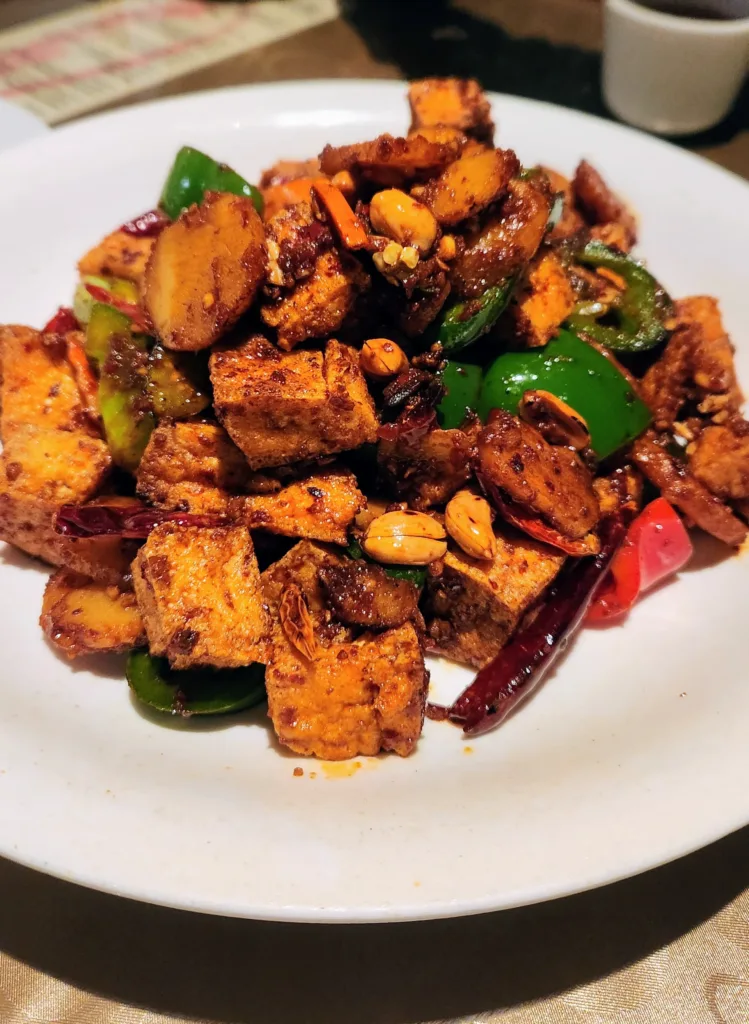
24. Tofu. Not shelf-stable like the rest of this list (keep it refrigerated), but worth including here since it belongs in the same “always have protein ready” category. PlantLove Herbed Tofu runs R69.99 per 350g at Woolworths.
Tofu and. Pepper
Spices and Flavour (3)
25. Curry powder. The single spice that does the most work across this list — turns a simple lentil or chickpea stew into a proper curry.
26. Mixed dried herbs. A basic blend (or a few separate jars — oregano, thyme, mixed herbs) rounds out tomato-based stews and soups.
27. Salt. Obvious, but worth naming — a good coarse salt makes every other item on this list taste as it should.
Sweeteners and Baking (2)
28. Brown sugar. For porridge, baking, or balancing an acidic tomato-based stew.
29. Baking powder. Keeps flatbreads, scones, and quick breads light — a small tin lasts a long time.
A South African Extra (1)
30. Rooibos tea. Not a cooking ingredient, but a genuinely South African pantry staple worth naming — naturally caffeine-free, locally grown, and a comforting constant in a plant-based kitchen.
How to Build This Pantry Without Overspending
You don’t need all 30 items on day one. Start with the legume-and-grain core — sugar beans, lentils, rice, and maize meal — since those four alone can carry you through a full week of meals (see our guide to Cheap Plant-Based Meals South Africa for exactly how). Add oils, spices, and canned staples over the following weeks as your budget allows, rather than buying everything in one large, expensive shop.
Buying legumes and grains in bulk, rather than small packets, consistently works out cheaper per meal — a pattern that holds across the verified prices in our companion piece on the cheapest plant-based protein sources in South Africa.
A Note for Daniel Fast and Faith-Based Seasons
Nearly every item on this list — beans, lentils, grains, and simple oils and spices — fits naturally within Daniel Fast guidelines, since the fast calls for whole, simple foods rather than processed ones. If you’re stocking your pantry ahead of that season, see our Daniel Fast Meal Plan South Africa and our broader guide to the Christian Plant-Based Diet.
Frequently Asked Questions
What are the most important items to buy first for a plant-based pantry in South Africa?
Start with sugar beans, lentils, rice, and maize meal—these four staples alone can cover a full week of meals and are among the cheapest items on this list.
Do I need speciality vegan ingredients to eat plant-based in South Africa?
No. Nearly everything on this list—beans, lentils, rice, maize meal, peanut butter, curry powder—is a standard item sold at every major South African supermarket.
How long do dried legumes and grains last in the pantry?
Stored in a sealed container away from moisture, dried beans, lentils, rice, and maize meal typically last many months to a year or more, making them ideal for bulk buying.
Is tofu a pantry item if it needs refrigeration?
Not technically shelf-stable, but it’s included here because it plays the same role as the pantry staples — a ready protein source to build a meal around at short notice.
Your Next Step
Want this whole list as a printable checklist you can stick inside a cupboard door? Grab the free 30-Item Plant-Based Pantry Checklist — built directly from this article, with space to tick off what you already have.
And if you want a full system for turning this pantry into a month of affordable meals, the Plant-Based Budget Blueprint course walks you through exactly that.