
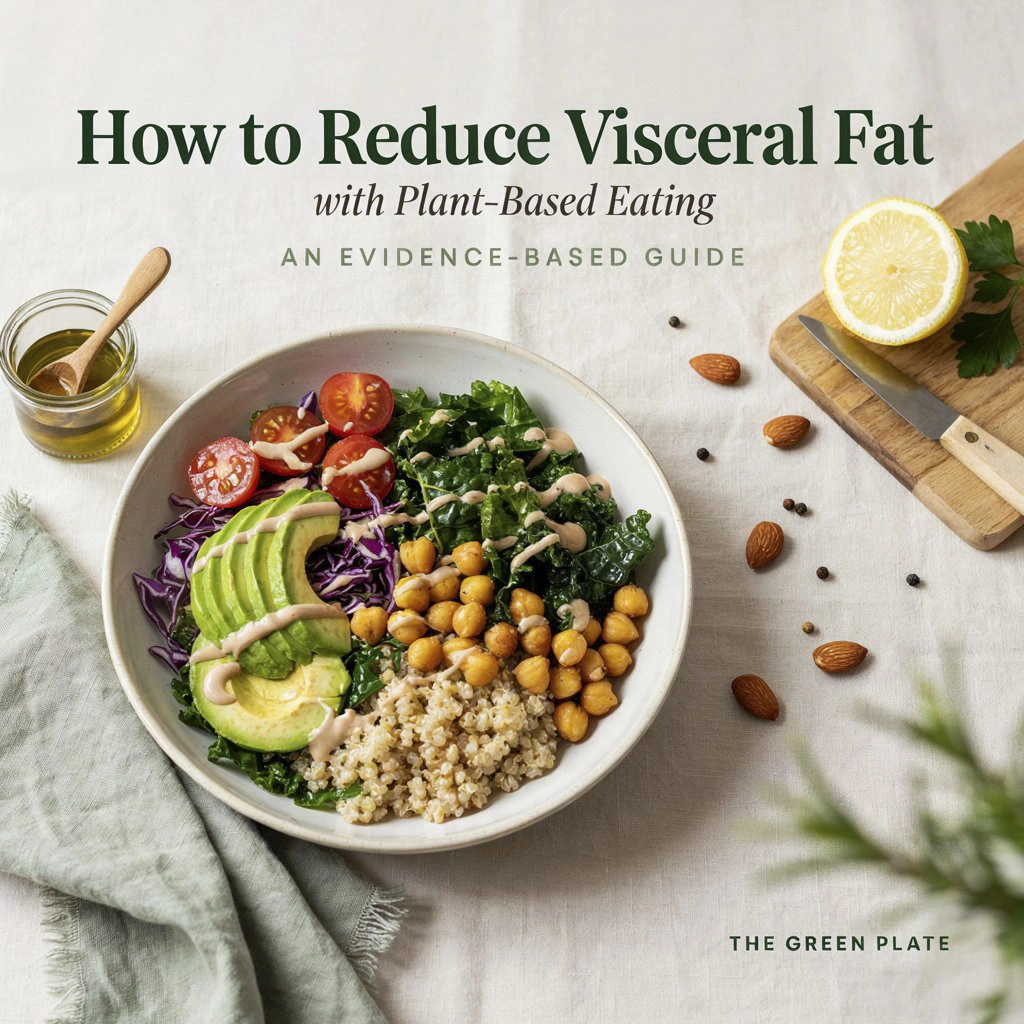
How to Reduce Visceral Fat with Plant-Based Eating: An Evidence-Based Guide
Visceral fat is not simply the fat you can see around your waist.
It sits deeper inside the abdomen, around internal organs. Higher levels of visceral fat are associated with poorer metabolic health and a greater risk of conditions such as type 2 diabetes and cardiovascular disease.
That makes reducing excess visceral fat a worthwhile health goal.
But there is a problem.
Search online, and you will find foods that supposedly “burn belly fat,” drinks that promise to “melt abdominal fat,” supplements claiming to target visceral fat, and restrictive diets promising dramatic results in days.
Your body does not work that way.
You cannot choose one food that selectively burns fat around your abdomen.
A better strategy is to improve your overall eating pattern, support healthy weight loss where appropriate, remain physically active, protect muscle, and build habits you can maintain.
Plant-based eating fits well into this approach.
Research into predominantly plant-based diets has examined body weight, waist measurements, insulin sensitivity, and visceral adiposity. Some findings are encouraging, although the evidence does not support claiming that simply becoming plant-based automatically eliminates visceral fat.
The quality of the diet still matters.
Here is how to build a practical plant-based eating pattern that supports a healthier waistline and better metabolic health.
What Is Visceral Fat?
Body fat is stored in several places.
Subcutaneous fat sits underneath your skin. It is the softer fat you can usually pinch around your abdomen.
Visceral fat is different.
It is stored deeper inside your abdominal cavity and surrounds internal organs.
Having some body fat is normal. The concern is excessive visceral adiposity, as it is associated with metabolic and cardiovascular risks.
This distinction is important because waist size and body weight tell only part of the story.
It is also why dramatic promises about “belly-fat-burning foods” should make you cautious.
No bean, vegetable, spice, tea, smoothie, or supplement selectively removes visceral fat.
Instead, focus on the overall conditions that support healthy body composition and metabolic health.
You can learn more on the Visceral Fat Blueprint After 50
Does Plant-Based Eating Reduce Visceral Fat?
The evidence needs careful interpretation.
Research has investigated predominantly plant-based diets in relation to visceral fat and other measures of metabolic health. Some studies suggest potential benefits, but results across trials are not uniform.
Plant-based diets have also been studied for their effects on body weight, blood glucose, insulin sensitivity, cholesterol, and body composition.
Again, results vary by population and diet type.
So the evidence does not justify saying:
“Eat plant-based and your visceral fat will disappear.”
It supports a more useful message.
A well-planned plant-based diet can form part of an effective strategy for healthy weight management and metabolic health.
The words plant-based, though, are not enough.
French fries can be plant-based.
Sugary drinks can be plant-based.
Biscuits, refined cereals, sweets, vegan desserts, highly processed meat substitutes, and many packaged snack foods can also be plant-based.
A diet dominated by these foods is very different from one built around beans, lentils, whole grains, vegetables, fruit, nuts, and seeds.
Food quality matters.
1. Start With Whole and Minimally Processed Plant Foods
One of the simplest improvements is to make whole and minimally processed foods the foundation of your meals.
Think:
- beans
- lentils
- chickpeas
- split peas
- oats
- potatoes
- sweet potatoes
- brown rice
- whole sorghum
- vegetables
- fruit
- nuts
- seeds
In South Africa, there is no need to build your diet around expensive imported health foods.
Many useful foods are already familiar.
Beans, lentils, oats, cabbage, carrots, tomatoes, spinach, morogo, sweet potatoes, amadumbe, maize meal, samp, sorghum, and maize can all fit.
The important question is not whether a food sounds fashionable.
Ask:
Can I build a nutritious meal around it and afford to eat it regularly?
That is where my Staple-First Method™ begins.
2. Use the Staple-First Method™
Healthy eating often becomes unnecessarily complicated.
Instead of starting with recipes, start with a meal structure.
Use this simple formula:
Staple + protein anchor + vegetables + flavour + supporting fat when appropriate.
For example:
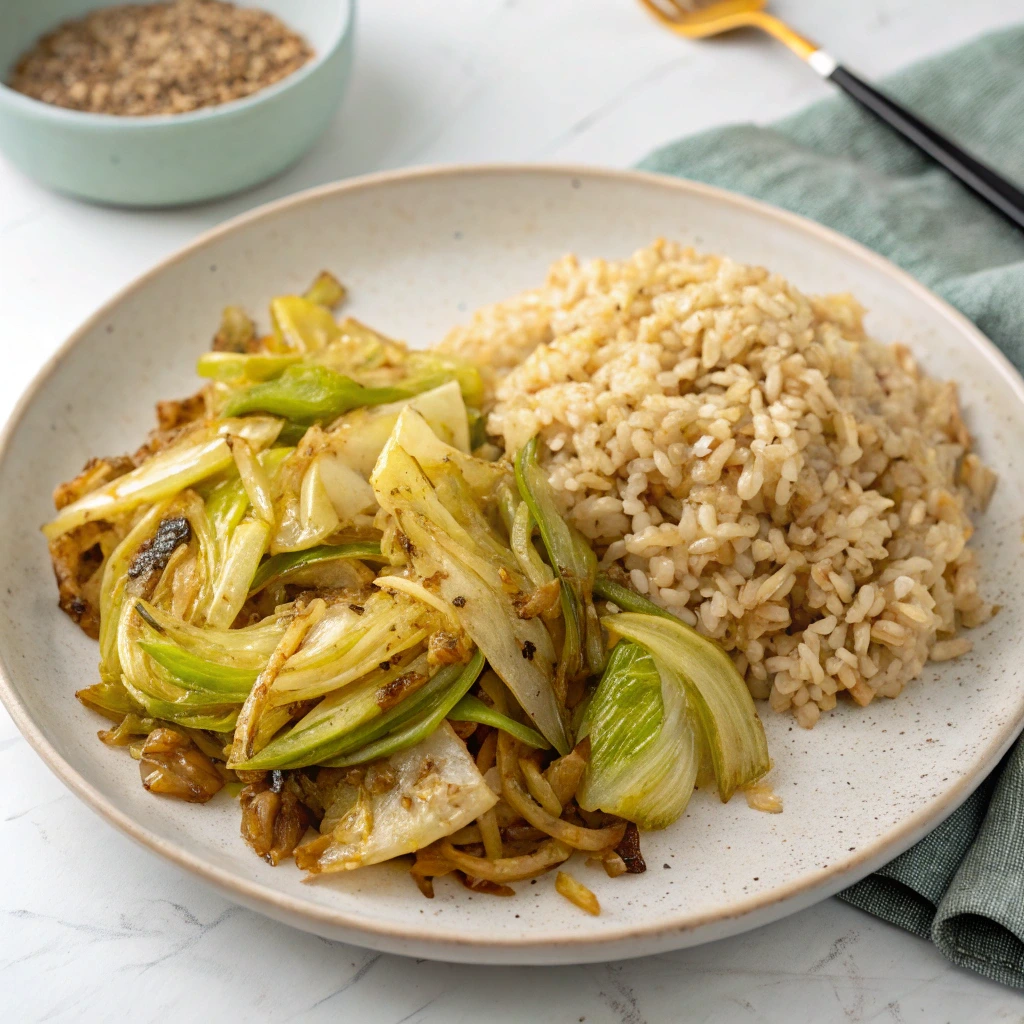
Brown rice + black beans + cabbage + tomato + spices.
Or:
Sweet potato + lentils + spinach + mustard and lemon.
Or:
Sorghum + beans + morogo + tomato and onion.
Or:
Oats + fortified soy milk + apple + ground flaxseed.
This structure gives you flexibility.
You do not have to cook the same recipe every time.
If brown rice becomes expensive, use another affordable staple.
Spinach is unavailable, use cabbage or another vegetable.
If black beans cost more than lentils, change the protein anchor.
The structure stays the same.
That makes the eating pattern easier to sustain.
3. Eat More Fibre-Rich Foods
Fibre is one of the biggest advantages of a well-designed whole-food plant-based diet.
Whole grains, vegetables, fruit, beans, lentils, chickpeas, and other pulses naturally contribute fibre.
Adults are generally encouraged to consume at least 25 grams of naturally occurring dietary fibre per day.
You do not need to reach that target with fibre powders and special supplements.
Start with food.
For example, build meals around combinations such as:
Oats and flaxseed.
Beans and brown rice.
Lentils and vegetables.
Chickpeas and sweet potato.
Sorghum and beans.
Fruit and chia seeds.
Fibre-rich foods also tend to add volume to meals.
That matters when you are trying to manage body weight without spending your day feeling deprived.
There is one important caution.
If your current diet is low in fibre, do not suddenly double or triple your intake overnight.
Increase beans, whole grains, vegetables, and seeds gradually.
Give your digestive system time to adjust.
4. Include a Protein Anchor at Major Meals
Protein becomes especially important as we get older.
Ageing is associated with changes in muscle mass and function. Weight loss can also involve loss of lean tissue if nutrition and physical activity are poorly managed.
That does not mean everyone over 50 needs the same protein target.
Individual needs differ.
A simpler rule for everyday meals is:
Include an intentional protein source at each major meal.
Useful plant-based protein anchors include:
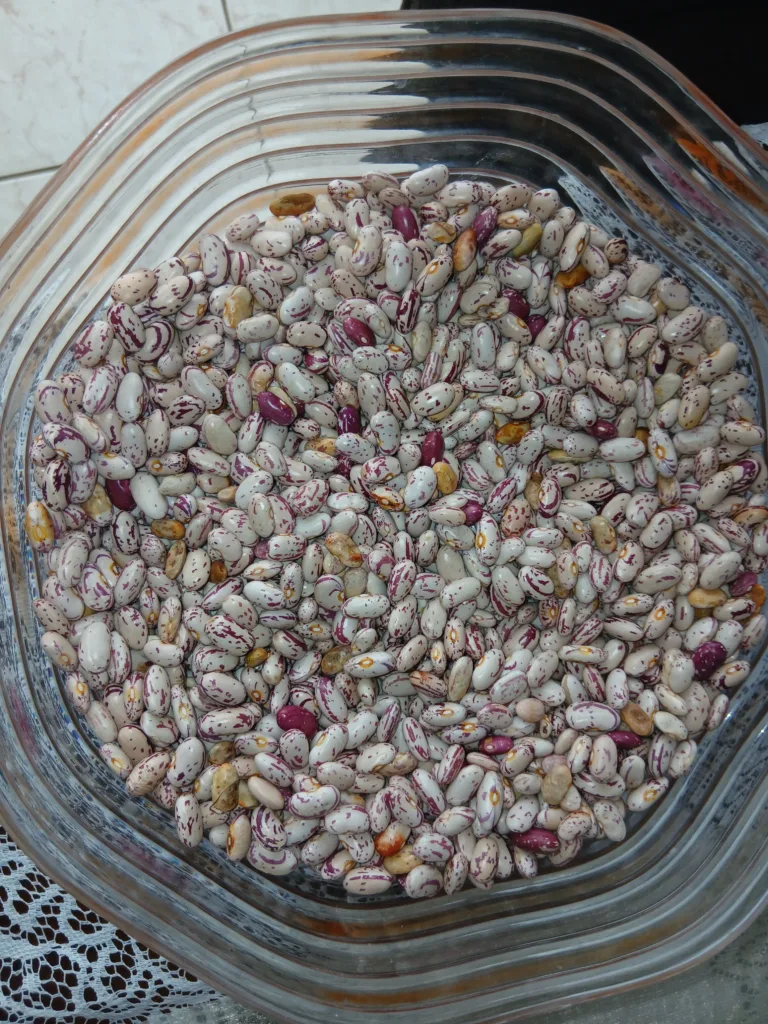
Beans.
Lentils.
Chickpeas.
Split peas.
Tofu.
Soy foods.
Peanuts.
Seeds.
A breakfast might include oats with fortified soy milk and flaxseed.
Lunch might combine sorghum and beans.
Dinner might be a red lentil curry or tofu vegetable stir-fry.
The goal is not to obsess over individual foods.
Build protein into the meal’s structure.
5. Pay Attention to Energy Density
Plant-based does not automatically mean low calorie.
This is one of the most important lessons if your goal is healthy weight loss.
Some plant foods are relatively energy-dense.
Examples include:
Nuts.
Nut butters.
Seeds.
Oils.
Avocado.
Dried fruit.
These foods can fit into a healthy eating pattern.
But portions still matter.
Take peanut butter.
A spoonful added to porridge can add flavour, fat, and protein. Several unmeasured spoonfuls can dramatically change the meal’s energy content.
You do not need to fear these foods.
Use them deliberately.
At the same time, make greater use of foods that provide substantial volume.
Vegetables, soups, legumes, potatoes, fruit, and intact whole grains can help create satisfying meals.
The goal is not to make every meal as low in calories as possible.
The goal is to build meals that support your needs while helping you maintain an appropriate overall energy intake.
6. Do Not Depend on Added Oil
There is no need to claim that all oil is harmful.
That would oversimplify the evidence.
But oils are highly energy-dense.
If you are trying to manage body weight, pouring oil freely over vegetables, salads, grains, and cooked dishes can add substantial energy without adding much food volume.
You have two practical options.
A stricter whole-food plant-based approach can exclude added oil by default.
A more flexible plant-based approach can use small amounts of predominantly unsaturated oils when appropriate.
Either way, measure rather than pour automatically.
You can also create flavour with:
Garlic.
Ginger.
Mustard.
Lemon.
Vinegar.
Paprika.
Cumin.
Curry spices.
Fresh and dried herbs.
Tomatoes.
Chilli.
Healthy food does not need to be bland.
7. Make Your Diet Affordable Enough to Repeat
The best metabolic-health diet on paper is useless if you cannot afford to follow it.
This is where staples become powerful.
Build much of your shopping list around foods such as:
Dry beans and lentils.
Oats.
Potatoes.
Sweet potatoes.
Brown rice.
Sorghum.
Samp.
Seasonal vegetables.
Frozen vegetables.
Cabbage.
Carrots.
Tomatoes.
Bananas.
Affordable seeds.
Then use more expensive foods strategically.
Batch cooking also helps.
Cook a large pot of lentils once.
Those lentils can become a lunch bowl, stuffed sweet potato, soup, bolognese, or shepherd’s pie.
Cook beans once.
Use them for breakfast toast, lunch bowls, soups, stews, or quick dinners.
This reduces food waste and decision fatigue.
8. Stop Looking for Visceral-Fat-Burning Foods
This deserves its own section.
There is no special food in your kitchen that knows where your abdominal fat is stored.
Not lemon water.
Nor apple cider vinegar.
Or chilli.
Not turmeric.
Green tea.
Not a detox smoothie.
Not one particular vegetable.
These foods or ingredients can fit into an otherwise healthy diet, but that is different from claiming that they selectively burn visceral fat.
Be especially cautious with claims such as:
“Melts belly fat.”
“Switches off fat-storage hormones.”
“Burns abdominal fat.”
“Detoxifies visceral fat.”
“Lowers insulin instantly.”
These phrases sound scientific because they refer to real biological concepts.
That does not make the promised outcome true.
Focus on the eating pattern rather than the miracle ingredient.
9. Combine Nutrition With Movement
Food is only one part of the strategy.
Physical activity also matters.
Aim to reduce long periods of inactivity and include movement you can maintain.
Walking is an excellent starting point for many people.
Muscle-strengthening exercise also deserves attention, particularly as you get older.
Maintaining muscle supports physical function and is an important part of healthy ageing.
You do not need an extreme exercise programme.
A sustainable combination of everyday movement, appropriate resistance exercise, and good nutrition is far more useful than punishing yourself with exercise after eating.
10. What About Intermittent Fasting?
Time-restricted eating has received enormous attention.
The idea is to eat within a consistent daily window and fast for the rest of the day.
It is being studied for its effects on weight and metabolic health, but results across trials are mixed.
That makes it an optional tool, not the foundation of this approach.
If eating within a consistent daily window helps you reduce unnecessary evening snacking and creates a routine you enjoy, it might be useful.
But you do not need intermittent fasting to follow a healthy plant-based diet.
It should not replace food quality, adequate nutrition, protein, fibre, physical activity, or appropriate medical care.
A Simple Visceral-Fat-Friendly Day of Plant-Based Eating
Here is what the approach might look like.
Breakfast
Apple-cinnamon oats made with rolled oats, unsweetened fortified soy milk, apple, ground flaxseed, and cinnamon.
Lunch
A sorghum and bean bowl with morogo or spinach, tomato, carrot, onion, and lemon.
Dinner
Red lentil tomato curry with vegetables and a suitable whole-grain staple.
Optional snack
Fruit with a measured portion of peanut butter, or vegetables with hummus.
Notice what is missing.
There is no detox.
No fat-burning drink.
Nor expensive superfoods.
No extreme carbohydrate restriction.
No complicated supplement protocol.
It is ordinary food organised into a useful structure.
Important Nutrients to Watch on a Plant-Based Diet
A plant-based label does not automatically guarantee nutritional adequacy.
Pay deliberate attention to vitamin B12.
A fully vegan diet requires a reliable B12 strategy through fortified foods or supplementation. Ordinary unfortified plant foods are not a dependable source.
Iodine also deserves attention. Do not assume every type of salt is iodised, and do not rely on uniodised seaweed intake.
Other nutrients worth planning include:
Calcium.
Vitamin D.
Iron.
Zinc.
Omega-3 fats.
Protein.
Fibre.
Fortified plant milks can help with nutrients such as calcium and, depending on the product, B12 and vitamin D.
Check the label.
Fortification varies widely.
A Safety Note Before Making Major Changes
If you have a diagnosed medical condition, major dietary changes sometimes require individual guidance.
This is particularly important if you use insulin or other glucose-lowering medication.
Changes in food intake and body weight can affect your glucose pattern. Do not reduce or stop medication on your own.
People with chronic kidney disease might need individual targets for protein, potassium, phosphorus, sodium, and fluids.
If you take warfarin, consistency in vitamin K intake matters. This does not mean you automatically need to stop eating leafy green vegetables.
If you take levothyroxine, medication timing matters, and large changes in soy or fibre intake can affect absorption.
Use plant-based nutrition alongside appropriate healthcare rather than treating food as a replacement for it.
The Bottom Line
You do not need to find a food that “burns” visceral fat.
Build an eating pattern that supports healthier body weight and metabolic health.
Start with affordable staples.
Add beans, lentils, chickpeas, tofu, or another intentional protein source.
Fill your meals with vegetables.
Choose whole grains and other minimally processed staples regularly.
Eat fruit.
Use nuts, seeds, peanut butter, and oils thoughtfully.
Increase fibre gradually.
Move your body.
Include muscle-strengthening activity appropriate for you.
Then repeat the meals that work.
That last step is often overlooked.
A plant-based diet only helps if you can live with it.
You do not need sixty different dinners every month.
You need a small collection of meals that fit your budget, appetite, culture, kitchen, and daily life.
Start with your next meal.
Choose the staple.
Add the protein anchor.
Add vegetables.
Keep it simple enough to make again tomorrow.
Learn more about reducing visceral fat in this book.