The Diabetes Plate Method, South African Style: How to Eat Pap and Still Manage Your Sugar
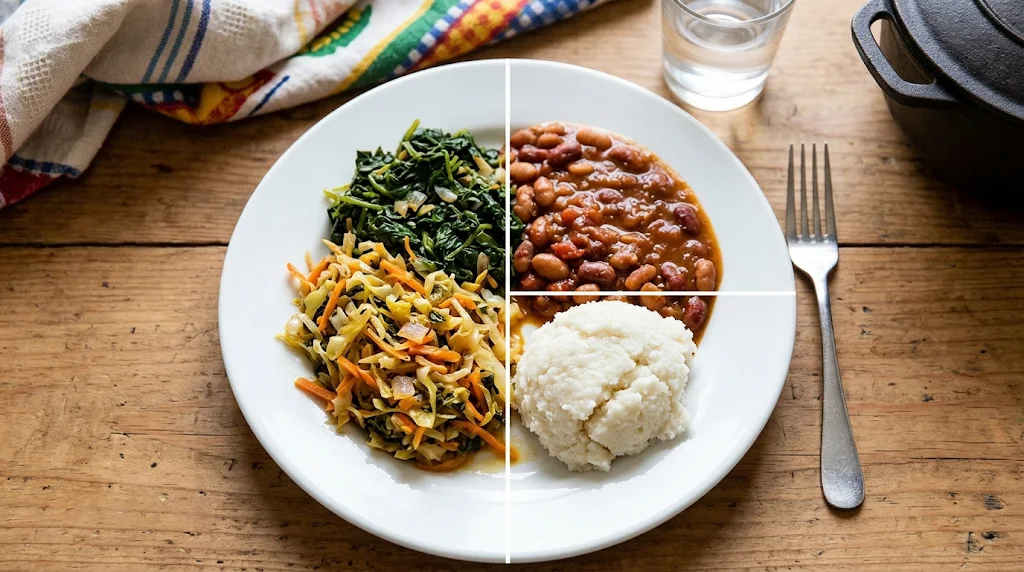
The first time a nurse told my uncle his sugar was “a bit high,” he came home, sat down at the table, and asked my aunt one question: “So I can’t eat pap anymore?”
If you’ve asked the same question, this post is for you.
Today I’m going to walk you through the diabetes plate method, South Africa style. I call it the Staple-First Plate. It’s a simple way to build blood sugar friendly meals from the foods you already know: morogo, beans, samp, mabele, amadumbe, and yes, pap.
You don’t have to give up your food, brother. You have to rearrange your plate.
A quick note before we start: This post is general education, not medical advice. If you take diabetes tablets or insulin, eating this way can lower your sugar, sometimes quickly. Speak to your doctor or clinic before making big changes, and never adjust medication on your own.
What is the diabetes plate method?
The diabetes plate method is a simple way to portion meals without counting calories or weighing food. You fill half your plate with non-starchy vegetables, a quarter with protein, and a quarter with carbohydrate foods like pap, rice, or potatoes. The US Centers for Disease Control and Prevention recommends it for people managing diabetes (CDC).
The problem?
Most plate-method guides are written for American kitchens. They talk about broccoli, grilled chicken, and quinoa. That’s not what’s in a Soweto or Mthatha kitchen on a Tuesday night.
So I rebuilt it around our staples.
Why this matters so much in South Africa
Let’s start with the honest numbers.
About 2.3 million South African adults are living with diabetes, and the International Diabetes Federation expects that to reach 3.9 million by 2050 (IDF Diabetes Atlas).
Now think about a typical South African supper plate. For many men, it’s roughly 70% starch: three scoops of pap or a mountain of rice, a piece of meat, and a spoon of gravy. Vegetables, if they show up, are a small side of chakalaka.
That plate isn’t “bad” because pap is evil. It’s a problem because almost nothing on it slows the starch down. And starch, once digested, becomes sugar in your blood.
Here’s the part that gives me hope, though.
Our grandmothers’ cooking already had the answer. Umngqusho mixed samp with beans. Morogo sat next to the pap. Peanuts went into the greens. The traditional plate was more balanced than the modern one. We just drifted away from it.
The Staple-First Plate: half, quarter, quarter
Here’s how the Staple-First Plate works.
Half the plate: vegetables.
Morogo, spinach, cabbage, carrots, tomato, onion, pumpkin leaves (imifino), green beans. Fresh, frozen, or tinned tomatoes all count. This half is the one you can go back for seconds on.
A quarter: beans, lentils, or peas.
Sugar beans, red speckled beans, red lentils, split peas, cowpeas, chickpeas, or peanuts. This is your protein and fibre anchor. In the Staple-First Method, no supper goes out without one.
A quarter: your starch.
Pap, samp, mabele, amadumbe, sweet potato, butternut, or brown rice. It stays on the plate. It just stops being the whole plate.
Why the plate works
Three things change when you move from the “70% pap” plate to the Staple-First Plate:
- There’s less starch per meal, so less sugar enters your blood at once.
- There’s much more fibre. Vegetables and beans slow down how fast starch is digested. Research reviews link eating more legumes and fibre with better blood sugar control in people with Type 2 diabetes (PMC review).
- There’s protein at every meal, so you stay full and don’t end up in the bread bin at 9pm.
So, can diabetics eat pap?
This is the question I get most, so let me answer it directly: yes, most people managing their sugar can still eat pap. The portion and what it’s eaten with matter far more than the pap itself.
I’ll go a step further, and some people won’t like this: telling South African men to “cut out starch completely” usually backfires. It often goes like this: a man cuts pap for two weeks, feels hungry and miserable, and then goes straight back to three scoops. Nothing changes.
Instead, try this:
- One fist of pap, not three scoops. Use your own hand as the measure.
- Never eat pap alone. Always put beans and vegetables next to it.
- Eat your vegetables first. Start with the morogo and beans, and finish with the pap. Studies in people with Type 2 diabetes found that eating vegetables before carbohydrates led to lower blood sugar after meals (PMC study).
- Swap in mabele a few nights a week. Sorghum porridge is a whole grain and a good change from refined maize meal.
Pap with gravy on its own is one kind of meal. Pap next to sugar beans and cabbage is a completely different one.
The hand guide: when there’s no plate to measure
At a braai, a funeral, a wedding, or the work canteen, you can’t exactly divide your plate with a ruler. Use your hand instead:
| Part of the plate | Your hand | What it looks like |
|---|---|---|
| Starch | One fist | One fist of pap or samp |
| Beans and lentils | One cupped hand, heaped | A heaped spoon of beans |
| Vegetables | Two open hands | Two big handfuls of morogo, cabbage, or chakalaka |
At a braai, here’s my rule: fill half your plate with chakalaka and salad before the meat and pap come around. By the time they arrive, there’s only room for a sensible portion.
Blood sugar friendly meals under R50
“Zama, healthy food is expensive.” I hear this every week.
But the Staple-First Plate is built on some of the cheapest foods in the shop.
This month I priced seven family suppers at Checkers and Shoprite online, and every one came in under R50 for four people (that’s about R11–R12 a plate).
Here are three of them:
- Umngqusho Power Bowl (about R47): half a 500g pack of samp and beans (R15.99 a pack at Checkers), cooked with tomato and carrot, with 300g of spinach wilted on top.
- Lentil and Sweet Potato Stew (about R47): red lentils (R29.99 for 500g at Shoprite), sweet potato, tomato, and cabbage, all in one pot in 30 minutes.
- Sugar Beans, Cabbage and Pap (about R49): a thick bean stew, fried cabbage and carrots, and one fist of pap each.
The secret is simple: dried beans and lentils cost far less than meat, and they bring the fibre that meat doesn’t. The other four suppers, full recipes, and costings are in my free guide (more on that below).
Five Staple-First rules for every supper
If you only remember one section of this post, make it this one:
- Starch moves to the side. Dish vegetables first, then beans, then starch. Whatever space is left is your starch portion.
- Beans at every supper. A bean, lentil, pea, or peanut, every night.
- Eat your vegetables first. Same food, better order.
- Water, not juice. Fruit juice and fizzy drinks are some of the fastest ways to spike your sugar. Drink water, rooibos, or tea with less sugar.
- Walk after supper. Just 10–15 minutes around the block. A review of studies found that exercise after meals reduced the post-meal blood sugar rise more than exercise before eating (Sports Medicine meta-analysis).
None of these rules costs a cent. Rule 5 might even get you some good conversation with your wife or neighbour.
Your first week on the Staple-First Plate
Don’t try to change everything at once. Here’s how I’d start:
- Days 1–2: Keep your normal meals, but halve your pap and add a big helping of cabbage or spinach.
- Days 3–4: Add beans or lentils to every supper.
- Days 5–7: Eat your vegetables first, swap juice for water, and add the after-supper walk.
By the end of the week, you’ll be eating the Staple-First way without it feeling like a “diet.” That’s the whole point. It’s not a diet. It’s how our grandmothers ate, with portions for the lives we live now.
Frequently asked questions
Is the diabetes plate method good for prediabetes too?
Yes. The plate method is used both for people with diabetes and for those trying to prevent it. If you’ve been told your sugar is “borderline,” this is a great time to start.
Can I still eat meat on the Staple-First Plate?
The Staple-First Method is plant-based, so beans and lentils fill the protein quarter. If you’re not ready to drop meat, start by making beans the main protein at least four nights a week.
Is samp better than pap for blood sugar?
Samp is usually cooked with beans (umngqusho), which makes the whole meal more balanced. The portion still matters, so keep the samp and beans to half your bowl and fill the rest with greens.
What about bread?
Bread is still a starch, so it uses up your starch quarter. If you have bread, choose seeded whole wheat, have one slice, and pair it with protein like peanut butter or beans, never just jam.
Get the free Staple-First Blood Sugar Plate guide
I’ve put everything in this post, plus a lot more, into a free 18-page guide:
- The full Staple-First Plate, with what goes in each section
- Seven family suppers under R50, with ingredient lists, methods, and costs
- A weekly shopping list with store links
- A 90-minute Sunday prep plan
- A printable fridge plate and a 7-day tracker
Download The Staple-First Blood Sugar Plate (free)
If you want to go deeper into metabolic health, liver and gut health, and weight management for men over 50, my Sovereign Men’s Health Series on Amazon picks up where this guide leaves off.
Healing is not a luxury for the few, brother. It’s a right for every African family, and it starts in your kitchen.
Sovereign health. Sovereign living.
Zama Zincume
Founder, Staple-First Method™ | EatingPlantBasedZA.com