
Men’s Mental Health: A Practical Guide to Stress, Anger, Burnout & Better Habits
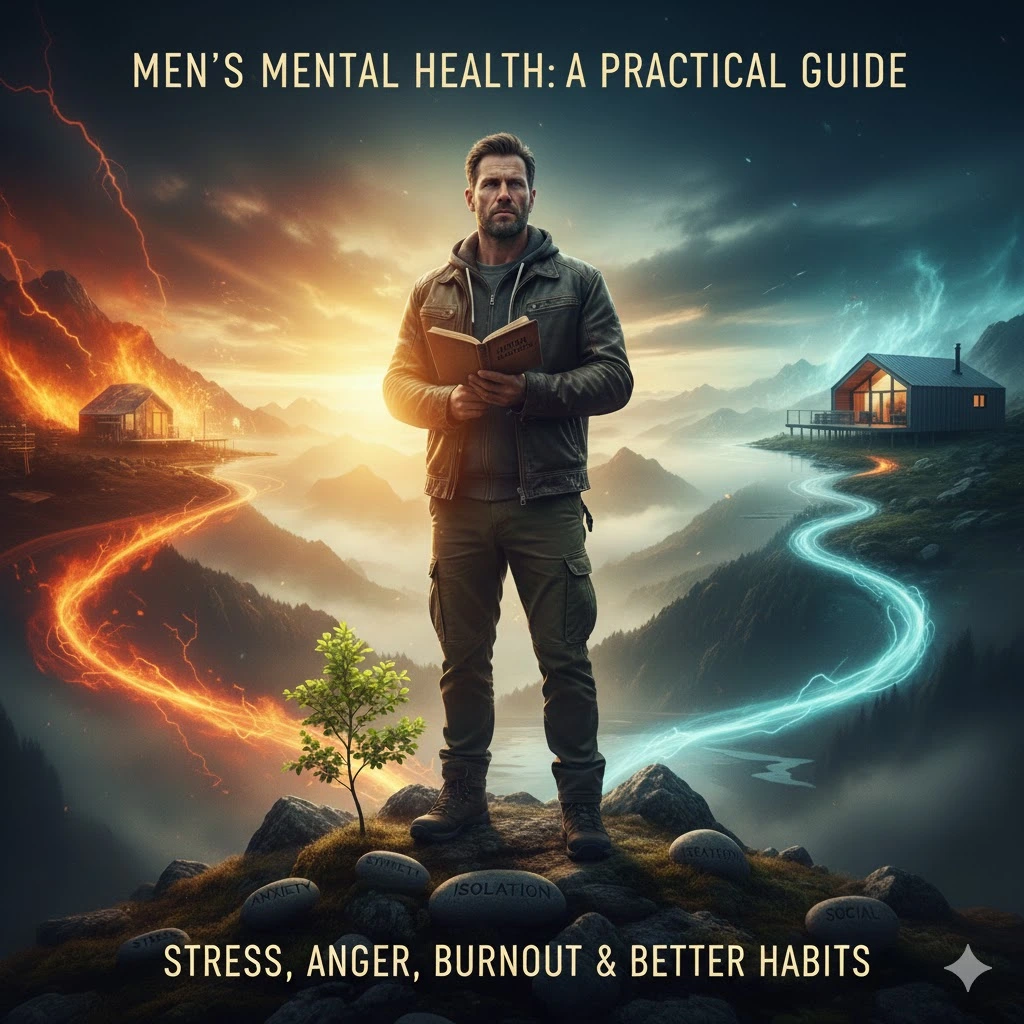
Introduction: Why Men’s Mental Health Matters in 2025
In 2025, the conversation around men’s mental health has reached a turning point.
For decades, men were told to “man up” and keep their feelings inside.
However, we now know that mental fitness is just as necessary as physical strength. Ignoring your mind doesn’t make you tough; it just makes you more likely to break under pressure.
According to statistics, 1 in 8 males have mental health problems like sadness or anxiety.
Men make up around 75% of all suicide deaths.
However, they are much less likely than women to seek help. This “silent struggle” often stems from societal pressure to appear invincible.
This practical guide to stress, anger, burnout & better habits is designed to break that silence. We will move away from complex medical jargon and focus on real-world tools.
Managing your inner world is crucial for lasting success and happiness, whether you’re a busy dad or a top professional.

By: Cottonbro Studios, https://www.pexels.com/@Cottonbro Studios
Identifying Men’s Mental Health Symptoms: Beyond Sadness
Men often experience mental health struggles differently from the “textbook” definition of sadness.
While someone might expect a depressed person to be tearful, a man might instead feel “on edge,” “restless,” or “burned out.”
Physical Red Flags Stress isn’t just in your head; it lives in your body. Common physical symptoms in men include:
- Chronic Fatigue: Feeling drained even after a whole night’s sleep.
- Digestive Issues: Constant stomach aches, bloating, or “butterflies.”
- Musculoskeletal Pain: Tightness in the neck, back, and shoulders that won’t go away.
- Headaches: Frequent tension headaches or migraines.
Behavioural Red Flags: When men feel overwhelmed, they often turn to avoidance or escapism.
You may end up working late each night to avoid going home. Or you might spend hours gaming or scrolling on your phone to “numb out.”
Men often cope with internal pressure by taking risks. This can include reckless driving or using substances.
If you snap at little things or pull away from friends, these aren’t just quirks. They show your mental health may need attention.
Using This Practical Guide to Handle Anger and Mood Swings
For many men, anger is the only “socially acceptable” emotion to show. This is why depression and anxiety in men often mask themselves as irritability.
Feeling frustrated often?
Your brain might be saying it’s overwhelmed.
The “Cool Down” Strategy: Managing anger is about creating a gap between a feeling and an action. Try these practical steps:
- The 10-Second Rule: When you feel the heat rising in your chest, stop. Count to ten slowly. This allows your “logical brain” to catch up to your “emotional brain.”
- Physical Grounding: Focus on five things you can see, four you can touch, and three you can hear. This pulls you out of your head and back into the room.
- Change the Environment: If things get tense, use a “code word” or say, “I need ten minutes.” Then, step into another room to cool down.
Logic vs. Rage Anger thrives on “should” statements: “He should have done that,” or “This shouldn’t be happening.” Practice replacing these with “would prefer” statements. Instead of “They must respect me,” try “I would prefer they respect me, but I can’t control them.” This subtle shift reduces the power the situation has over your mood.
Professional Burnout in Men: Spotting the Signs and Taking Action
The pressure to be a “provider” often leads men to tie their entire identity to their job. While ambition is good, constant “high-revving” leads to burnout.
Burnout isn’t just about feeling tired. It’s a deep state of emotional, physical, and mental exhaustion. This happens from prolonged stress.
Signs of Burnout
- Cynicism: Feeling like your work doesn’t matter or that your colleagues are incompetent.
- Reduced Performance: Tasks that used to take an hour now take three.
- Emotional Numbness: You no longer feel joy when you succeed; you feel relief that the task is over.
Practical Recovery: To prevent burnout, treat your energy like a battery. You cannot just keep drawing from it without recharging.
- The “Power of No”: Realise that every time you say “yes” to a new task, you are saying “no” to your own recovery.
- Strict Boundaries: In 2025, work follows us home on our phones. Set a “Digital Sunset” where work emails are silenced after 6:00 p.m.
- Active Rest: Passive rest is watching TV. Active rest is a hobby. It includes activities like woodworking, hiking, or reading. These engage your brain without pressure.
Sustainable Better Habits for Long-Term Mental Wellness
Building better habits is about consistency, not intensity. You don’t need to change your whole life in a day; you need to win the morning.
The Movement Habit Exercise is the most underused antidepressant. You don’t need a 2-hour gym session. Even 20 minutes of moderate exercise, such as a fast stroll, can improve your mood, according to research. It releases enough endorphins to make a difference.
The Sleep Habit: The 3-2-1 Rule. Sleep is the foundation of mental health. Without it, you cannot regulate your emotions.
- 3 hours before bed: No heavy meals or alcohol.
- 2 hours before bed: No work-related tasks.
- 1 hour before bed: No screens (blue light disrupts sleep hormones).
The Nutrition Habit: What you eat affects how you think. Too much sugar and caffeine can raise your anxiety. They can also cause “crashes” that feel like depression. Focus on whole foods and hydration.
Alcohol acts like a “depressant mask.” It can help you fall asleep, but it harms sleep quality. This often leads to more irritability the next day.
The Mindset Habit: Gratitude. It sounds simple, but training your brain to see what is going right is a skill. Each morning, think of three specific things you are grateful for. This shifts your focus from “threat detection” to “opportunity detection.”
Better Habits for Social Health: Why “Mateship” Saves Lives
Social isolation is one of the most significant risks for men’s mental health.
We often have “functional friends,” like work or sports buddies. But we may lack “emotional friends,” the ones we can really talk to.
Building Support Networks You don’t need to sit in a circle and cry. Men often connect best “shoulder-to-shoulder.” This means talking while doing an activity, like fixing a car, hiking, or playing a game.
- Initiate the Check-in: A simple text like “Hey, haven’t caught up in a bit, how are things?” can open the door.
- Join a Group: Whether it’s a “Men’s Shed,” a local run club, or a volunteer group, shared purpose creates natural bonds.
- Be Vulnerable First: When you express that you’ve been stressed, it often encourages the other person to share their own struggles. Connection is the ultimate armour against burnout.
Men’s Mental Health: Common Questions and Answers
Why do males refrain from getting mental health treatment? Many men feel that asking for help is a sign of failure or “weakness.” There is also a fear of being judged or seen as incapable at work.
Taking care of your mental health is a vital habit. It boosts your abilities, making you more capable.
What does burnout feel like for a man? It often feels like “running on empty.” You might feel detached, irritable, and physically exhausted. You might lose interest in your hobbies and feel like you are just going through the motions.
How can I help a male friend who is struggling but won’t talk about it? Don’t pressure them to “talk about their feelings” right away. Instead, invite them to do something active. While you are busy, you can mention, “I’ve noticed you’ve been a bit quiet lately, everything alright?” Let them know you’re in their corner.
Is irritability a sign of depression in men? Yes. For many men, depression doesn’t look like sadness; it seems like a “short fuse.” Constant snapping at family or coworkers is a prevalent symptom of underlying mental distress.
Taking Control: Your Journey to Better Mental Health
It’s a marathon, not a sprint, to improve your mental health.
By focusing on stress management, recognising burnout, and building better habits, you are taking the lead in your own life.
Seeking professional help, like therapy or a doctor, is key to your success.
Do you want help making a personalised 7-day “Habit Tracker” using the ideas in this guide?