
WFPB Pap and Morogo (Greens and Corn Porridge) Recipe
This recipe features an oil-free, whole-grain design and packs in nutrients.
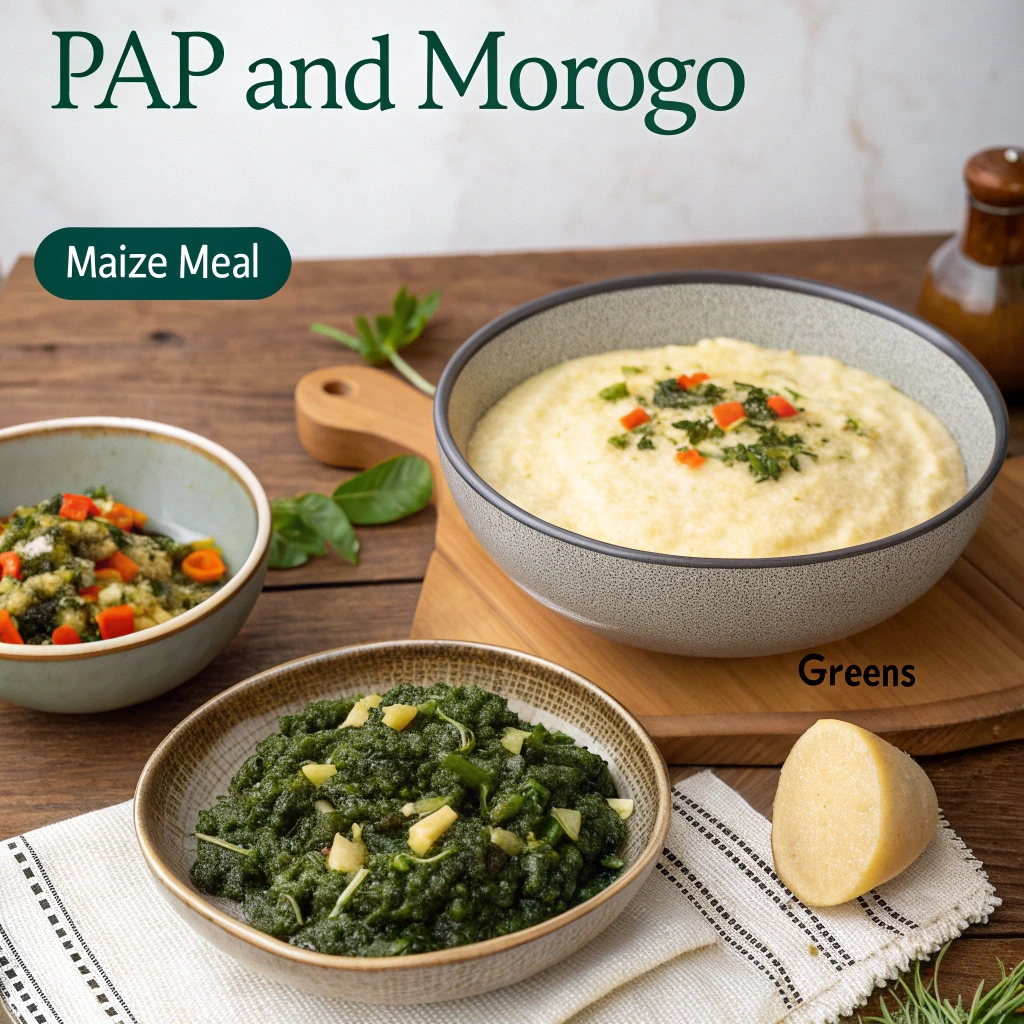
Part 1: The Pap (Whole Grain Corn Porridge)
Pap is traditionally made with maize meal (cornmeal).2 To make it WFPB, we use whole-grain cornmeal and omit any added fat or refined ingredients.
Ingredients for Pap
- 2 cups of whole grain white or yellow maize meal (cornmeal)
- 6 cups of water (or more, depending on desired consistency)
- A pinch of salt (optional, omit for strict low-sodium)
Instructions for Pap
- Boil Water: In a big pot, bring 5 cups of water to a rolling boil.
- Make a Slurry: Combine 1 cup of cold water with 2 cups of whole-grain maize meal in a separate bowl. Stir until smooth. This prevents lumps.
- Add Slurry: Slowly pour the maize meal slurry into the boiling water. Using a wooden spoon or whisk, stir continuously.
- Simmer and Thicken: Turn the heat down to low. Stir the mixture until it thickens a lot. It should look like very thick porridge or mush. This initial cooking takes about 5-10 minutes.
- Cook Slowly: Cover the pot with a tight-fitting lid. Let the pap simmer on the lowest possible heat for 45 to 60 minutes. The long, slow cook time is essential for thoroughly cooking the whole grain and developing the flavour.
- Stir and Serve: Stir the pap every 15-20 minutes to prevent scorching. Add a little extra boiling water if it becomes too stiff. The final product should be firm enough to serve in a mound but not crumbly.
Part 2: The Morogo (African Leafy Greens)
Morogo can be spinach, kale, collard greens, or traditional African greens like wild Amaranth leaves (morogo). For a WFPB approach, we “sauté” the vegetables in water or vegetable broth rather than oil.
Ingredients for Morogo
- 2 large bunches of leafy greens (e.g., spinach, kale, or a mix), rinsed well and coarsely chopped (about 8-10 cups raw)
- 1 medium onion, finely diced
- 2 cloves garlic, minced
- 1/2 cup low-sodium vegetable broth or water (for water-sautéing)
- 1 medium tomato, diced (optional, for flavour and texture)
- To taste, add salt and black pepper.
- A squeeze of fresh lemon juice (optional, added at the end for brightness)
Instructions for Morogo
- Water-Sauté: Heat a large pot or deep pan over medium heat. Add the diced onion along with a tablespoon or two of water or vegetable broth. Sauté for 5-7 minutes, until the onion is soft and translucent, adding more liquid, a splash at a time, as needed to prevent sticking.
- Add Garlic and Tomato: Add the minced garlic and the diced tomato (if using). Cook for 1-2 minutes until fragrant.
- Cook Greens: Add the chopped leafy greens to the pot. They will look overflowing, but will quickly wilt. Pour in the remaining low-sodium vegetable broth or water.
- Steam/Simmer: Cover the pot. Steam-simmer the greens for 5-10 minutes. Cook until they are tender to your liking.
- Season: Remove the lid and stir well. If preferred, add a dash of salt and pepper for seasoning. If using, stir in a squeeze of fresh lemon juice just before serving.
Serving Suggestion & WFPB Tips
- Serve: Put a good amount of whole-grain pap on a plate. Then, add nutrient-rich morogo on top.
- Boost the Plate: For a fuller WFPB meal, add a side of oil-free legumes—like black-eyed peas, lentils, or beans. You can also serve a simple relish made with chopped fresh tomato and onion.
- Flavour Tip: Add a teaspoon of nutritional yeast to the morogo at the end of cooking. This deepens the savoury flavour without using oil.
Could you adapt this recipe using different greens or adding WFPB protein sources, like lentils or mushrooms?
That’s an excellent idea. Since you support evidence-based WFPB, let’s find ways to boost this meal’s nutrition and satiety.
The base recipe is excellent, but you can boost its WFPB profile. Focus on key nutrients, keep processing to a minimum, and add more whole foods.
Enhanced WFPB Pap and Morogo: Advanced Tips
1. Pap: Maximise Whole Grain and Fibre
- Source the Best Cornmeal: Choose whole grain maize meal. It has the germ and bran, keeping important fibre and nutrients. This is often lost in refined cornmeal, like “super fine” or “instant” pap. Look for labels that say “whole grain,” “stone-ground,” or “unrefined.”
- Add a Fibre Boost: To increase the fibre and nutrients in the pap, add 1/4 cup of millet or sorghum to the maize meal slurry. This changes the texture slightly but significantly boosts the nutritional profile.
2. Morogo: Boost B12, Umami, and Creaminess (Oil-Free)
The morogo (greens) is the primary source of vitamins and minerals. We can enhance its flavour and nutritional value with two great WFPB additions:
| WFPB Booster | Benefit | How to Use in Morogo |
| Nutritional Yeast (Nooch) | Essential Vitamin B12 (if fortified) and a savory, cheesy/umami flavor without dairy or fat. | Stir in 1-2 tablespoons after the greens have cooked, right before seasoning. |
| Hemp Seeds (or Milled Flax/Chia) | Excellent source of Omega-3s, healthy fats, and protein. | Stir in 1-2 tablespoons at the very end. The slight oiliness can replace the mouthfeel of cooking with refined oil. |
| Water-Sauté Technique | Essential Vitamin B12 (if fortified) and a savoury, cheesy/umami flavour without dairy or fat. | Eliminates refined oil while retaining flavour. |
3. Complete the Meal: Introduce Legumes
A complete WFPB meal has whole carbs, like pap, plus micronutrients, such as morogo. It also includes protein and fibre from legumes.
- Simple Bean Addition: Add 1 cup of rinsed canned or precooked lentils, black beans, or black-eyed peas to the morogo mixture. Do this 5 minutes before cooking ends. This turns the side dish into a complete protein and fibre powerhouse.
Optimised WFPB Morogo Instructions (The Key Component)
For the best flavour and nutritional density:
- Water-Sauté Aromatics: Heat a large pot over medium heat. Stir in a little low-sodium vegetable broth and the chopped onion. Sauté for 5-7 minutes. Add the minced garlic and diced tomato, cooking for 2 minutes.
- Cook Greens & Beans: Add the chopped greens, the remaining vegetable broth or water, and 1 cup of precooked legumes, such as brown lentils or black-eyed peas. The greens should wilt after 10 minutes of simmering under cover.
- Boost Flavour and B12: Stir in 1-2 tablespoons of nutritional yeast and 1-2 tablespoons of hemp seeds.
- Final Seasoning: Season with salt and pepper and squeeze in some fresh lemon juice for sharpness.
This recipe is high in fibre and rich in micronutrients. It also has beneficial Omega-3s and is a good source of B12 from nutritional yeast.