
Budget-First Plant-Based Cooking with Shoprite: Your Guide
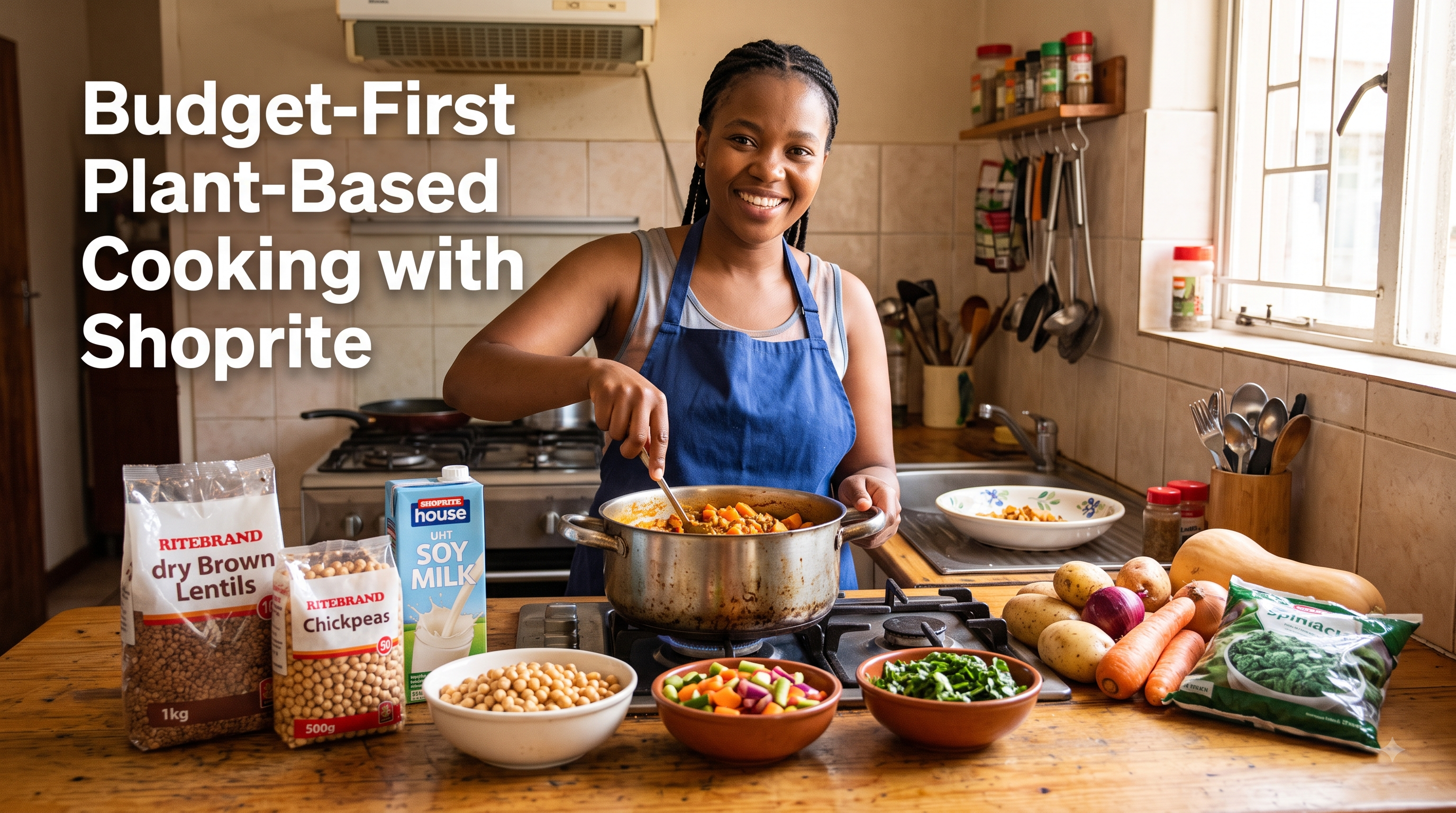
By Zama Zincume — Public Health Specialist & Plant-Based Food Writer
Quick Answer
Eating a high-protein, nutrient-dense plant-based diet in South Africa does not require high-end speciality stores or expensive imported products. By leveraging Shoprite’s budget-friendly house brands (like Ritebrand and Simple Truth) alongside staple legumes, grains, and seasonal produce, you can lower your monthly food bill while meeting all your nutritional targets.
Key Takeaways
- Affordability: Peer-reviewed comparative cost analyses show that whole-food, plant-based diets can reduce overall food expenditure by up to 30% compared with standard omnivorous diets.
- Nutritional Density: Legumes (beans, lentils, chickpeas) sourced from Shoprite offer some of the highest protein-to-cost ratios available in South African retail.
- Strategic Grocery Shopping: Sticking to store-brand staples, utilising the Xtra Savings card, buying frozen or seasonal produce, and batch cooking prevent both food waste and unnecessary strain on the budget.
- Evidence-Backed Health: Clinical research demonstrates that replacing animal fats with whole plant foods drastically reduces markers of systemic inflammation, lowers LDL cholesterol, and improves glycemic control.
Introduction: The Myth of the Expensive Plant-Based Lifestyle
When I first decided to transition toward a plant-based way of eating, I hit a massive wall of financial anxiety. Browsing online forums and high-end health blogs, I was constantly bombarded with recipe lists requiring artisanal cashew cheeses, imported hemp seeds, spirulina powders, and ultra-processed mock meats that cost more per kilogram than a prime cut of steak.
I remember standing in a boutique grocery store aisle, looking at a single tub of almond-based cream cheese that cost as much as my entire weekly produce budget, and thinking: If this is what it takes to eat plant-based, I am going to end up broke.
Thankfully, I was completely wrong.
The truth is that plant-based eating only becomes expensive when we mistake “vegan luxury alternatives” for foundational nutrition.
Once I stripped away the marketing hype and looked at how real, wholesome food is actually bought and cooked, I realised something revolutionary: the humblest, most affordable ingredients in the supermarket are inherently plant-based.
By aligning my kitchen strategy with my local Shoprite– a store accessible to millions of South Africans- I didn’t just maintain my monthly budget; I slashed my overall grocery spend by nearly a third.
In this deep-dive guide, I want to walk you through the exact blueprint I use to cook mouthwatering, highly nutritious, budget-first plant-based meals using everyday items from Shoprite. We will look at what peer-reviewed science says about the health and financial benefits of a plant-predominant diet, how to navigate Shoprite’s aisles like a seasoned pro, and how to turn simple staples into culinary wins.
What the Science Says: Health and Wallet Benefits
Before we dive into grocery lists and meal prep strategies, let’s ground our approach in solid evidence. There is a persistent myth that a plant-based diet lacks essential nutrients or that it’s an indulgence reserved for the affluent. However, robust nutritional science and health-economics research tell a very different story.
1. The Financial Reality: Cutting Costs by Up to 30%
A landmark global study led by researchers at the University of Oxford, published in The Lancet Planetary Health, analysed the costs of various dietary patterns across 150 countries. The findings were stark: in upper-middle to high-income nations, diets rich in legumes, whole grains, and vegetables were the most affordable dietary option, reducing food costs by 25% to 30% compared to typical meat-heavy diets.
Furthermore, clinical trials from the Physicians Committee for Responsible Medicine (PCRM) published in JAMA Network Open demonstrated that participants who switched to a whole-food, plant-based diet saw average daily food savings of $1.80 to $2.00 per day—primarily driven by the elimination of expensive animal proteins and fats.
When you translate these findings to South African rand at your local Shoprite, swapping out beef mince or chicken breasts for dried lentils or black beans instantly alters your household economics.
2. Cardiovascular Health and Cholesterol Management
From a clinical standpoint, replacing saturated fats (abundant in animal products) with dietary fibre and unsaturated plant fats yields immediate metabolic benefits.
Comprehensive meta-analyses published in the Journal of the American Heart Association confirm that whole-food, plant-based diets reliably reduce low-density lipoprotein (LDL) cholesterol by 10% to 15%, significantly lowering the risk of atherosclerotic cardiovascular disease.
The primary driver behind this effect is soluble fibre—found in high concentrations in oats, beans, lentils, and apples (all Shoprite staples). Soluble fibre binds to cholesterol particles in your digestive system and moves them out of the body before they can enter your bloodstream.
3. Diabetes Risk and Glycemic Control
A systematic review and meta-analysis published in PLOS Medicine, evaluating data from over 300,000 participants, found that high adherence to a plant-based diet rich in whole foods was associated with a 23% lower risk of developing type 2 diabetes. The high fibre content in legumes and intact grains slows the absorption of glucose into the bloodstream, preventing the sharp insulin spikes that drive insulin resistance over time.
For more evidence-based deep dives linking plant-based nutrition to clinical health outcomes, I highly recommend checking out the curated resources and scientific summaries at eatingplantbasedza.com, an invaluable hub for South Africans navigating this lifestyle shift.
Decoding Shoprite: The Ultimate Budget Plant-Based Hub
Shoprite is widely known as South Africa’s price leader, but many shoppers don’t realise just how well suited it is to a whole-food, plant-based lifestyle. The key to keeping your bill minimal is understanding how to navigate their store tiers, house brands, and promotional systems.
┌─────────────────────────────────────────────────────────────────┐
│                    THE SHOPRITE SAVINGS MATRIX                  │
├───────────────────────────────┬─────────────────────────────────┤
│ STRATEGY                      │ IMPACT ON YOUR BUDGET           │
├───────────────────────────────┼─────────────────────────────────┤
│ 1. Prioritize Dry Legumes     │ Saves ~60% vs. Canned Beans     │
│ 2. Shop Ritebrand / House     │ Saves 15-30% vs. Name Brands    │
│ 3. Xtra Savings Loyalty Card  │ Unlocks Instant Cash Discounts  │
│ 4. Frozen & Seasonal Produce  │ Eliminates Waste & Reduces Cost │
└───────────────────────────────┴─────────────────────────────────┘
Leveraging Store Brands: Ritebrand and Simple Truth
When you step into Shoprite, skip the flashy centre-aisle displays featuring branded processed items. Instead, look for:
- Ritebrand: Shoprite’s value brand is your best friend for absolute baselines: dry brown lentils, split peas, white rice, rolled oats, coarse salt, and canned chopped tomatoes. These items are functionally identical to high-end branded equivalents, but cost a fraction of the price.
- Simple Truth: Check for select affordable items within this line, such as whole-grain pasta, peanut butter (look for 100% peanut versions without added palm oil), and unsweetened soy or oat milk.
The Power of the Xtra Savings Card
If you don’t have an Xtra Savings card, you are leaving money on the table. Shoprite’s loyalty program isn’t based on an obscure points-accumulation model; it offers direct, immediate cash discounts at the till on everyday items like 5kg bags of maise meal, 2kg bags of rice, fresh butternut, and frozen spinach.
The Master Shopping List: Plant-Based Staples Under R500
To show you just how accessible this is, here is a breakdown of a foundational Shoprite grocery cart designed to feed an individual or a couple with nutrient-dense meals for a week, all within a modest budget.
┌────────────────────────────────────────────────────────────────────────┐
│                        SHOPRITE BASICS SHOPPING LIST                   │
├──────────────────────────┬─────────────────────────┬───────────────────┤
│ CATEGORY                 │ ITEM                    │ NUTRITIONAL ROLE  │
├──────────────────────────┼─────────────────────────┼───────────────────┤
│ Legumes & Proteins       │ Dry Brown Lentils (1kg) │ Protein, Iron     │
│                          │ Dry Chickpeas (500g)    │ Fiber, Folate     │
│                          │ Red Kidney Beans (500g) │ Zinc, Protein     │
│                          │ Firm Tofu (where available) │ Complete Protein│
├──────────────────────────┼─────────────────────────┼───────────────────┤
│ Grains & Starches        │ Rolled Oats (1kg)       │ Beta-Glucan Fiber │
│                          │ Brown or Parboiled Rice │ Complex Carbs     │
│                          │ Maize Meal / Pap (2kg)  │ Energy Base       │
│                          │ Potatoes / Sweet Potatoes│Potassium, Vit A   │
├──────────────────────────┼─────────────────────────┼───────────────────┤
│ Fresh & Frozen Produce   │ Carrots (1kg)           │ Beta-Carotene     │
│                          │ Onions (1kg)            │ Flavor, Quercetin │
│                          │ Frozen Chopped Spinach  │ Iron, Calcium     │
│                          │ Butternut Squash        │ Vitamin C & A     │
├──────────────────────────┼─────────────────────────┼───────────────────┤
│ Pantry & Flavor Builders │ Peanut Butter (100% nuts)│ Healthy Fats      │
│                          │ Curry Powder & Cumin    │ Antioxidants      │
│                          │ Soy Sauce               │ Umami / Salt      │
└──────────────────────────┴─────────────────────────┴───────────────────┘
Pro Tip on Dry vs. Canned: Canned chickpeas and kidney beans are convenient, but buying dry legumes in bags yields more than double the food volume per rand spent. A quick overnight soak and 45-minute boil is all it takes to prep them for the week!
Step-by-Step Cooking Guide: 3 High-Protein, Low-Cost Meals
To put this list into action, let’s make three core recipes that showcase how basic Shoprite staples turn into rich, deeply satisfying meals. These dishes rely on simple techniques to build massive flavour without expensive seasonings or special equipment.
Meal 1: Hearty South African Lentil & Sweet Potato Chakalaka Stir
Chakalaka is an iconic South African relish, but when it’s expanded to include protein-dense brown lentils and sweet potato, it becomes a complete, robust one-pot meal.
1. Prep the Legume Base: Prep time: 10 mins.
Rinse 1 cup of dry brown lentils under cold water. Place in a pot with 3 cups of water, bring to a boil, then reduce heat and simmer for 20-25 minutes until tender but not mushy. Drain and set aside.
2. Sauté Aromatics & Spices: Build deep flavour foundations.
Heat 1 tablespoon of sunflower oil in a large pot. Add 1 finely diced onion, 2 grated carrots, and 1 grated sweet potato. Cook for 5 minutes until soft. Stir in 1 tablespoon of mild curry powder, 1 teaspoon of smoked paprika, and 2 minced garlic cloves. Stir constantly for 60 seconds until fragrant.
3. Simmer and Combine: Allow flavours to meld.
Add 1 canned tin of Shoprite chopped tomatoes (or 3 grated fresh tomatoes) and 1/2 cup of water. Fold in your cooked lentils. Cover and simmer gently for 15 minutes until the sweet potato is tender and the sauce thickens.
4. Serve with Whole Grains: Plating.
Season with salt and black pepper to taste. Serve hot over a bed of steamed brown rice or warm maise meal pap.
Meal 2: Creamy Peanut & Spinach Chickpea Stew
Inspired by West African peanut stew, this recipe turns a jar of simple peanut butter and frozen spinach into a silky, high-protein gravy that tastes like pure luxury.
       [Sauté Onions & Garlic]
                 │
                 ▼
     [Bloom Spices (Cumin/Ginger)]
                 │
                 ▼
 [Whisk Peanut Butter + Warm Vegetable Broth]
                 │
                 ▼
    [Simmer with Soaked Chickpeas]
                 │
                 ▼
 [Stir in Frozen Spinach until Thawed & Creamy]
Ingredients:
- 1.5 cups cooked chickpeas (soaked from dry)
- 3 tablespoons 100% natural peanut butter
- 1 cup frozen chopped spinach (thawed)
- 1 onion, diced
- 2 cloves garlic, minced
- 1 teaspoon ground cumin & 1/2 teaspoon ground ginger
- 2 cups vegetable broth (made from a low-sodium stock cube)
- Salt and chilli flakes to taste
Instructions:
- Sauté the onion and garlic in a pot until translucent.
- Add the cumin and ginger, cooking for 30 seconds.
- In a cup, whisk the peanut butter with 1/2 cup of warm broth until smooth, then pour it into the pot along with the remaining broth.
- Add the cooked chickpeas and bring to a gentle simmer for 10 minutes.
- Stir in the thawed spinach and cook for another 3–5 minutes until the greens are fully incorporated and the sauce is thick and velvety. Serve over mashed potatoes or cooked rice.
Meal 3: Savoury Golden Oats with Sautéed Garlic Greens
Oats aren’t just for sweet breakfasts! Savoury oats are popular worldwide as a fast, cheap, nutrient-dense meal for lunch or dinner.
- Boil the Base: Bring 2 cups of water or vegetable broth to a boil. Add 1 cup of Shoprite rolled oats and a pinch of salt. Reduce heat and cook for 5 minutes until thick.
- Sauté the Topping: In a small skillet, sauté 1 cup of chopped shredded cabbage, 1/2 diced onion, and sliced mushrooms (or leftover veggies) with a splash of soy sauce and garlic until caramelised.
- Assemble: Scoop the warm savoury oats into a bowl, top with the sautéed vegetables, and drizzle with a few drops of sesame oil or hot sauce.
Smart Meal-Prep Blueprint for Busy Weeks
To succeed on a budget, you have to eliminate food waste. Cooking individual meals from scratch every night often results in half-used bags of vegetables rotting in the back of the fridge. Batch cooking solves this completely.
Sunday Afternoon: The Power Hour
Sunday 14:00
Soak 2 cups of dry chickpeas and 2 cups of dry black or kidney beans overnight in cold water.
Sunday Evening: Boiling & Grains
Sunday 18:00
Boil your soaked beans and lentils in separate pots. While they cook, bake a large tray of cubed butternut squash and sweet potatoes in the oven. Store cooked grains in large glass or plastic containers in the fridge.
Mid-Week Mix & Match
Wednesday 19:00
Use your pre-cooked legumes and roasted veggies as “building blocks.” Combine roasted butternut with chickpeas and curry powder for a 10-minute wrap, or toss lentils with pasta and tomato sauce for a quick Bolognese.
Friday: Clearing the Fridge
Friday 18:30
Take every remaining vegetable in your crisper drawer—carrots, onions, half-used squash—and combine them with your leftover beans in a stockpot with vegetable broth to create a hearty end-of-week soup.
Nutritional Safeguards: B12, Iron, and Protein
When cooking plant-based on a strict budget, it’s vital to ensure you aren’t sacrificing long-term nutritional adequacy. Here is how to keep your bases covered safely and affordably:
Vitamin B12: Non-Negotiable Supplementation
No matter where you shop or how healthy your diet is, Vitamin B12 cannot be reliably obtained from unfortified plant sources. Microorganisms, not plants or animals, synthesise B12.
While animal products contain B12 because animals consume bacteria or are given supplements themselves, plant-based eaters must take a direct B12 supplement (Cyanocobalamin or Methylcobalamin).
A standard bottle of B12 tablets from your local pharmacy or Shoprite Medirite counter costs very little and will last several months.
Optimising Non-Heme Iron Absorption
Plant foods contain non-heme iron (found in lentils, beans, spinach, and pumpkin seeds). Non-heme iron is slightly less easily absorbed by the human digestive tract than heme iron from meat. However, you can dramatically boost absorption by pairing iron-rich plant foods with Vitamin C in the same meal:
Non-Heme Iron (Lentils/Spinach) + Vitamin C (Lemon Juice/Tomatoes/Peppers) – Significantly Increased Bioavailability
Squeezing fresh lemon juice over your lentil stew or cooking your beans in a tomato-based sauce increases iron absorption up to threefold!
Complete Proteins Myths
You do not need to worry about “combining proteins” at every single meal. As long as you eat a varied diet that covers your daily calorie requirements through legumes, grains, nuts, and vegetables, your liver maintains an amino acid pool to build complete proteins throughout the day.
Common Pitfalls to Avoid
When starting at Shoprite, watch out for these subtle budget traps:
- Buying Vegan Speciality Cheeses and Meats Daily: These products are great treats, but using them as daily staples will instantly double your grocery bill. Treat them as occasional luxuries rather than main ingredients.
- Ignoring the Bulk Aisle / Large Bags: Buying a 500g bag of rice three times a month costs significantly more than buying one 2kg or 5kg bag. If your cash flow permits, invest in the larger sizes for non-perishable grains and legumes.
- Over-Buying Fresh Produce That Spoils: Fresh green leafy vegetables have a short shelf life. If you find yourself throwing away slimy spinach at the end of every week, switch to frozen spinach or peas. Frozen produce is flash-frozen at peak harvest, retaining full nutrient value while preventing waste.
Conclusion
Transitioning to a plant-based diet doesn’t require a lifestyle overhaul, a trip to a fancy health food store, or a huge budget. By embracing budget-first cooking with everyday Shoprite staples, you can nourish your body with clinically backed nutrition, protect your long-term health, and keep your wallet happy.
Start small this week: grab a bag of dry lentils, a bag of oats, and a couple of sweet potatoes on your next grocery run. You’ll be amazed at how far a little culinary creativity can take you!
For more peer-reviewed science, meal planning ideas, and locally tailored nutritional advice, visit eatingplantbasedza.com.