16 Science-Backed Plant-Based Foods to Reduce Visceral Fat
By Zama Zincume — Public Health Specialist & Plant-Based Food Writer
Quick Answer: No single food “melts” deep abdominal fat overnight, but replacing refined starches and saturated fats with high-fibre, minimally processed plant foods directly targets visceral adipose tissue. Clinical research shows that soluble fibre (found in oats, legumes, and apples), unsaturated fatty acids (in avocados, olive oil, and walnuts), and plant polyphenols (in green tea and leafy greens) improve insulin sensitivity, reduce systemic inflammation, and lower deep abdominal fat accumulation.
South Africans looking for a sustainable plant-based pantry: here are 16 budget-friendly staples.
You can find them at Shoprite, Checkers, Pick n Pay, or your local fresh produce market. Plus, peer-reviewed nutrition science supports them.
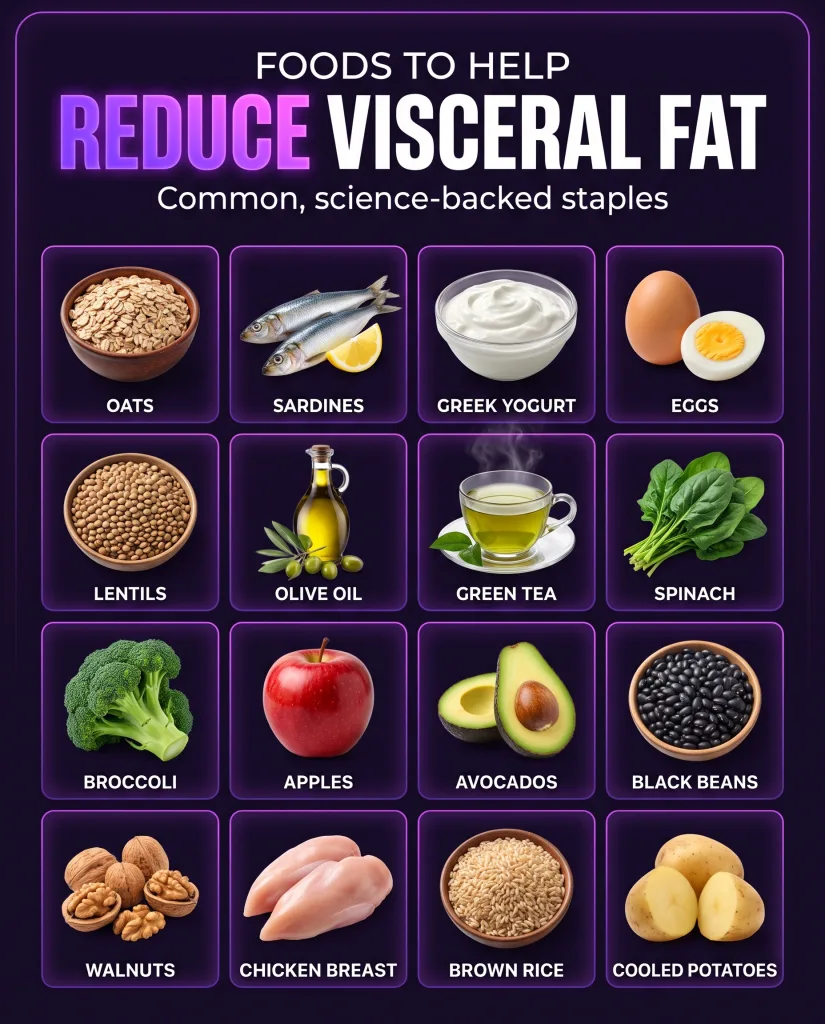
Key Takeaways: How Plant Foods Target Visceral Fat
- Visceral fat is metabolically active: Unlike subcutaneous fat stored just beneath the skin, visceral adipose tissue (VAT) surrounds internal organs like the liver and pancreas, secreting inflammatory cytokines and driving insulin resistance.
- Soluble fibre is the primary dietary lever: Clinical trials and observational cohorts show that increasing viscous, soluble fibre slows gastric emptying, blunts post-meal insulin spikes, and feeds short-chain fatty acid (SCFA)-producing gut bacteria that regulate fat storage.
- Fat quality matters more than fat elimination: Replacing saturated fats with monounsaturated fats (MUFAs) and plant-based omega-3s shifts how the body partitions lipids away from the liver and abdominal cavity.
- Plant-based eating doesn’t require imported “superfoods”: South African staples are dried sugar beans, lentils, oats, and spinach (morogo). Cooled potatoes are also common. They contain bioactive compounds studied in clinical trials.
Understanding Visceral Fat: Why Location Matters More Than Scale Weight
When people talk about “losing belly fat”, they are usually referring to two distinct biological compartments:
- Subcutaneous Adipose Tissue (SAT): The pinchable layer of fat sitting directly under the skin. While excess SAT affects overall body mass, it is relatively benign from a metabolic standpoint.
- Visceral Adipose Tissue (VAT): Deep abdominal fat stored within the peritoneal cavity, wrapping around vital organs including the liver, stomach, and intestines.
Visceral fat cells receive more blood flow. They are also more sensitive to stress hormones like cortisol.
As a result, they release free fatty acids into the portal vein, which goes straight to the liver. Over time, this triggers hepatic insulin resistance, elevated triglycerides, and chronic low-grade inflammation.
However, that same metabolic activity may work in your favour when you change how you eat.
Visceral fat changes more quickly than subcutaneous fat. So, dietary changes can affect VAT sooner when you shift your lifestyle.
Plant-based diets reduce visceral fat, according to a 2025 review published in the Journal of Human Nutrition and Dietetics. Another review published in Nutrients in 2026 validated this. Additionally, they increase insulin sensitivity.
This occurs even without calorie counting.
Summary Table: 16 Everyday Plant Foods to Reduce Visceral Fat & Their Clinical Mechanisms
| Food Staple | Primary Bioactive Compound | Physiological Mechanism | South African Pantry Context |
| 1. Rolled Oats | Beta-glucan (soluble fiber) | Slows glucose absorption; blunts insulin surges | Affordable breakfast staple; choose plain rolled or steel-cut oats |
| 2. Sugar Beans | Viscous soluble fiber & plant protein | Reduces visceral fat accumulation rate; boosts satiety | Dried red speckled beans cost ~R27–R29 per 500g |
| 3. Brown Lentils | Soluble fiber & resistant starch | Improves postprandial glycemic control and insulin sensitivity | Cooks in 20–25 minutes with no pre-soaking required |
| 4. Chickpeas | Saponins, fiber & plant protein | Enhances glucagon-like peptide-1 (GLP-1) satiety signaling | Available dried or tinned in brine |
| 5. Green Tea | Epigallocatechin gallate (EGCG) + caffeine | Modestly increases thermogenesis and abdominal fat oxidation | Steep loose leaves or bags for 3–5 minutes; skip added sugar |
| 6. Avocados | Monounsaturated fatty acids (oleic acid) | Shifts lipid partitioning away from visceral depots | Locally grown in Limpopo and Mpumalanga; widely available |
| 7. Extra-Virgin Olive Oil | MUFAs & secoiridoid polyphenols | Lowers systemic inflammation and improves hepatic lipid profile | Best used raw in dressings or over warm grains |
| 8. Walnuts | Alpha-linolenic acid (ALA) & ellagitannins | Counters obesity-induced oxidative and inflammatory stress | Keep in the fridge to prevent omega-3 oxidation |
| 9. Spinach & Morogo | Thylakoids, nitrates & insoluble fiber | Lowers dietary energy density; delays fat digestion | Fresh bunches or frozen chopped spinach are equally effective |
| 10. Broccoli | Sulforaphane (glucoraphanin) & fiber | Supports liver detoxification pathways and glycemic stability | Steam lightly to preserve myrosinase enzyme activity |
| 11. Apples | Pectin & quercetin polyphenols | Feeds butyrate-producing gut microbiota; slows gastric emptying | Eat whole with the skin intact for maximum pectin |
| 12. Cooled Boiled Potatoes | Retrograded resistant starch (RS3) | Bypasses small-intestine digestion; improves insulin sensitivity | Boil, refrigerate for 12+ hours, and eat cold or gently reheated |
| 13. Brown Rice / Sorghum | Intact bran fiber & polyphenols | Prevents rapid glycemic spikes caused by refined maize or white rice | Whole-grain sorghum (mabele) is a traditional local alternative |
| 14. Chia & Flaxseeds | Mucilage soluble fiber & lignans | Forms high-viscosity gel in the gut; regulates appetite hormones | Grind flaxseeds before eating to unlock nutrients |
| 15. Tomatoes | Lycopene & 9-oxo-octadecadienoic acid | Reduces adipose tissue inflammation and supports lipid metabolism | Cooking tomatoes with olive oil boosts lycopene absorption |
| 16. Garlic & Onions | Inulin (prebiotic fructans) & allicin | Stimulates beneficial Bifidobacteria and reduces metabolic endotoxemia | Foundational aromatics in South African stews and curries |
Deep Dive: The 16 Foods and the Scientific Evidence Behind Them
1. Rolled Oats
Oats are one of the most thoroughly studied whole grains for metabolic health. Their primary active component is beta-glucan, a viscous soluble fiber that dissolves in water to form a thick gel inside the digestive tract.
- The Evidence: Systematic reviews and meta-analyses of randomized controlled trials demonstrate that oat beta-glucan significantly lowers postprandial blood glucose and insulin responses. Because chronically elevated insulin signals the body to store excess energy in visceral depots, blunting those spikes directly reduces abdominal fat accumulation.
- How to Use It: Make traditional stovetop porridge using rolled oats instead of instant flavored packets (which often contain added sugars that counteract the glycemic benefit). Stir in a tablespoon of ground flaxseed or a handful of berries.
2. Red Speckled Sugar Beans (and Black Beans)
In South Africa, dried sugar beans are a cornerstone of affordable plant-based nutrition—and a powerhouse against visceral adiposity.
- The Evidence: A landmark five-year longitudinal study using computed tomography (CT) scans to measure abdominal fat depots found that for every 10-gram increase in daily soluble fiber intake, the rate of visceral fat accumulation decreased by 3.7%, even without changes in total calorie intake. Half a cup of cooked beans delivers roughly 2 to 3 grams of pure soluble fiber alongside 7 to 8 grams of plant protein.
- How to Use It: Soak dried sugar beans overnight to reduce cooking time and improve digestibility, then simmer with tomatoes, onions, and curry spices for a hearty bean stew served over brown rice or sorghum.
3. Brown and Green Lentils
Lentils combine slow-digesting complex carbohydrates, soluble fiber, and concentrated plant protein into a low-energy-density package.
- The Evidence: Clinical feeding trials examining pulse consumption (lentils, beans, chickpeas) show significant reductions in waist circumference and improved insulin sensitivity compared to control diets matched for calories. Furthermore, plant-based protein requires more energy to digest than refined carbohydrates and triggers stronger satiety signals via gut peptides.
- How to Use It: Brown lentils hold their shape well in salads and bobotie-style bakes, while red split lentils break down quickly into creamy dals and soups.
4. Chickpeas
Whether bought dried in bulk or tinned for weeknight convenience, chickpeas provide a unique combination of fermentable fibers and bioactive saponins.
- The Evidence: Eating chickpeas regularly helps control blood sugar. It also boosts levels of glucagon-like peptide-1 (GLP-1) and peptide YY (PYY). These hormones tell the brain when we’re full, which can reduce calorie intake.
- How to Use It: Roast drained chickpeas with smoked paprika and cumin for a crunchy afternoon snack, or blend them into homemade hummus using lemon juice, garlic, and tahini.
5. Green Tea
If you prefer swapping sugary soft drinks or sweetened rooibos for an unsweetened functional beverage, green tea is backed by substantial human clinical data.
- The Evidence: Catechin-enriched green tea was the subject of a 12-week double-blind study. Its high epigallocatechin gallate (EGCG) content caused adults who drank it to lose visceral fat. This exceeded the control group’s results. EGCG blocks the COMT enzyme, along with the caffeine found in green tea. This increases fat breakdown by keeping norepinephrine signals active.
- How to Use It: Drink 2 to 3 cups of brewed green tea daily between meals. Avoid adding sugar or honey; add a squeeze of fresh lemon juice, as vitamin C stabilizes catechins during digestion.
6. Avocados
Despite being energy-dense, whole avocados are consistently linked to leaner waistlines and healthier fat distribution in clinical research.
- The Evidence: One fresh avocado per day for 12 weeks was examined in a University of Illinois study. Abdominal fat changed noticeably in women who consumed avocados. Their visceral fat content was lower. They had a lower visceral-to-subcutaneous fat ratio. The study compared these findings with the control group. Researchers attribute this to avocados’ high monounsaturated oleic acid content. They have soluble fibre as well.
- How to Use It: Add a quarter to half an avocado to grain bowls, whole-wheat toast, or bean tacos in place of butter, mayonnaise, or processed spreads.
7. Extra-Virgin Olive Oil (EVOO)
Extra-virgin olive oil is the primary fat source in Mediterranean and plant-forward dietary patterns, which consistently outperform low-fat refined diets for reducing deep abdominal fat.
- The Evidence: The PREDIMED trial demonstrated that a diet rich in vegetables and extra-virgin olive oil decreased central fat. The therapies also improved fatty liver. Fatty liver and visceral fat are connected. Cold-pressed EVOO is different from refined oils. Significant polyphenols are retained. These are oleocanthal and hydroxytyrosol. They reduce inflammation.
- How to Use It: Drizzle 1 to 2 tablespoons over steamed vegetables, salads, or bean dishes after cooking to preserve its heat-sensitive polyphenols.
8. Walnuts
While nuts are calorie-dense, their unique physical structure and lipid profile prevent full calorie absorption while actively improving metabolic markers.
- The Evidence: Walnuts have alpha-linolenic acid (ALA). This is a plant-based omega-3 fatty acid. Studies suggest that eating a small handful (about 30 grams) is beneficial. It reduces pro-inflammatory cytokines such as TNF-alpha and IL-6. Visceral fat is associated with these cytokin. Additionally, eating walnuts enhances endothelial function. Bomb calorimetry studies show that people absorb 20% fewer calories from whole walnuts. This is lower than predicted by Atwater considerations. The cell walls of walnuts are fibrous. Enzymes struggle to break down these barriers fully.
- How to Use It: Chop walnuts over morning oats or blend them into plant-based pesto with basil, garlic, and olive oil.
9. Spinach and Traditional Leafy Greens (Morogo)
Dark leafy greens—including baby spinach, Swiss chard, kale, and indigenous South African morogo (amaranth leaves)—are among the most nutrient-dense, lowest-calorie foods available.
- The Evidence: Spinach contains insoluble fibre. This fibre adds volume to meals without adding extra calories. Thylakoids are also present. In plant chloroplasts, these membranes bind chlorophyll. Clinical research at Lund University shows that thylakoid-rich spinach extracts reduce fat absorption. They also increase levels of the satiety hormone. They also reduce appetite for highly processed foods that are sweet and salty.
- How to Use It: Wilt generous handfuls of spinach or morogo into lentil curries, bean stews, or morning smoothies.
10. Broccoli (and Cruciferous Vegetables)
Broccoli, cabbage, cauliflower, and Brussels sprouts belong to the Brassica family and contain sulfur-rich compounds called glucosinolates.
- The Evidence: When you chop or chew broccoli, glucoraphanin converts into sulforaphane. Sulforaphane activates the Nrf2 cellular defence pathway. Preclinical and clinical studies show this compound helps reduce oxidative stress in fat tissue. It also improves fasting blood glucose and insulin resistance in people with obesity.
- How to Use It: Chop broccoli 30 to 40 minutes before lightly steaming or stir-frying it, or sprinkle a pinch of mustard seed powder over cooked broccoli to reactivate myrosinase and maximise sulforaphane bioavailability.
11. Whole Apples
Whole apples deliver a synergistic combination of soluble pectin fibre and polyphenolic antioxidants concentrated largely in the peel.
- The Evidence: Eating whole apple daily lowers visceral fat. It also improves serum lipid profiles. Trials show this is better than consuming apple juice with the same number of calories. It’s also superior to control snacks. Good chewing is necessary for whole fruit. This helps your brain recognise when you’re full and slows down how quickly you eat. This helps you avoid overeating.
- How to Use It: Pair a crisp whole apple with a tablespoon of natural, sugar-free peanut butter for a balanced snack combining pectin, healthy fats, and plant protein.
12. Cooled Boiled Potatoes (Resistant Starch)
Potatoes are often unfairly demonised in weight-loss circles, yet how you prepare and cool them fundamentally transforms their metabolic impact.
- The Evidence: Bring starchy potatoes to a boil. After that, chill them for 12 to 24 hours. This process causes retrogradation. They develop Type 3 Resistant Starch (RS3) from their amylose and amylopectin starches. Clinical research shows resistant starch does not break down in the small intestine. It then reaches the colon. Gut bacteria convert it to butyrate there. This short-chain fatty acid improves insulin sensitivity. After meals, it also promotes fat burning. It can also reduce the glycaemic response by 30–40%.
- How to Use It: Boil baby potatoes on Sunday, store them in the fridge, and toss them into herbed potato salads with olive oil, mustard, and spring onions throughout the week.
13. Brown Rice and Whole-Grain Sorghum (Mabele)
Sifted maize meal, white bread, and white rice are examples of refined grains. They lack bran and germ, so they can quickly raise blood glucose and promote visceral fat storage.
- The Evidence: Whole grain eaters shed more belly fat than refined grain eaters, according to studies. This occurs over 12 weeks. It happens even if both groups consume the same number of calories. In South Africa, whole-grain sorghum (mabele) is a special native grain. It is rich in slowly digested starches. It also has 3-deoxyanthocyanidin polyphenols.
- How to Use It: Swap white rice for brown rice, pearl barley, or whole-grain sorghum porridge.
14. Chia Seeds and Ground Flaxseeds
Both chia and flaxseeds are concentrated sources of mucilaginous soluble fibre, plant-based ALA omega-3s, and phytoestrogenic lignans.
- The Evidence: A daily consumption of 25–30 grams of ground flaxseed or chia seeds is beneficial, according to clinical investigations. This may result in a smaller waist. C-reactive protein levels are also decreased. Additionally, it enhances signs of insulin resistance. When combined with fluids, these seeds can absorb up to ten times their weight in water. Gastric emptying is slowed down as a result.
- How to Use It: Stir 1 tablespoon of ground flaxseed or whole chia seeds into oats, smoothies, or plant-based yogurt. (Always grind whole flaxseeds in a coffee or spice grinder, as whole flaxseeds often pass through the digestive tract undigested.)
15. Tomatoes (Fresh and Cooked)
Tomatoes are full of lycopene. It’s a strong antioxidant. They also have 9-oxo-octadecadienoic acid (9-oxo-ODA). This is a bioactive fatty acid.
- The Evidence: A study in Molecular Nutrition & Food Research showed that lycopene lowers visceral fat. They also reduce inflammation in fat tissue. Lycopene builds up in adipocytes (fat cells). It helps reduce pro-inflammatory cytokine signalling.
- How to Use It: Cooking tomatoes in a little extra-virgin olive oil breaks down plant cell walls and converts trans-lycopene into cis-lycopene, dramatically increasing absorption. Use tinned chopped tomatoes as a base for bean stews and shakshuka.
16. Garlic and Onions (Prebiotic Alliums)
Garlic, red onions, brown onions, and leeks are key in plant-based cooking. They add great flavour. They also provide prebiotic fibres like inulin and fructooligosaccharides (FOS).
- The Evidence: An imbalance in the gut microbiota is known as dysbiosis. It increases the gut’s permeability. This allows lipopolysaccharides, which are toxins, to enter the bloodstream. Visceral fat becomes inflamed as a result. Clinical research shows that inulin-type fructans support beneficial Bifidobacteria. They fortify the intestinal barrier. They also lessen belly fat and liver fat.
- How to Use It: Start every soup, stew, or stir-fry with sautéed onions and garlic—letting crushed garlic sit for 10 minutes before heating to allow allicin formation.
Why Whole-Food Plant-Based Diets Outperform “Ultra-Processed Vegan” Diets
A key point in recent nutrition studies is the difference between two diet indexes. The 2026 Nutrients review highlights this. One is the Healthful Plant-Based Diet Index (hPDI). The other is the Unhealthy Plant-Based Diet Index (uPDI).
Not all plant-based diets lower visceral fat. Diets heavy in refined grains and sugary beverages can trigger insulin spikes. The same is true with processed vegan meats and deep-fried snacks. They cause the liver to produce triglycerides from excess sugar. As a result, fat accumulates around the organs.
To maximise visceral fat reduction on a plant-based diet:
- Prioritise intact cell walls: Eat whole beans, intact grains, whole fruits, and crunchy vegetables rather than juices, powders, or refined flours.
- Eliminate liquid sugars: Fructose in sugary drinks is metabolised almost exclusively by the liver and is one of the strongest dietary drivers of visceral and hepatic fat.
- Pair fibre with plant protein at every meal: Combining legumes with whole grains and leafy greens maximizes satiety and keeps post-meal blood glucose steady.
Practical 1-Day South African Sample Menu Using These 16 Staples
Putting clinical nutrition into practice does not require complicated recipes or expensive speciality ingredients. Here is how you can incorporate nearly all 16 foods into a single day of eating:
- Breakfast: Warm rolled oats cooked with water or unsweetened soy milk, topped with 1 tablespoon of ground flaxseeds, chopped walnuts, and diced fresh apple. Serve with a cup of unsweetened green tea.
- Lunch: Cooled boiled baby potato and chickpea salad tossed with diced tomatoes, red onion, fresh spinach, and a dressing of extra-virgin olive oil, lemon juice, and crushed garlic.
- Afternoon Snack: Sliced avocado on whole-grain toast or a small handful of roasted spiced chickpeas.
- Dinner: Rich South African sugar bean and brown lentil curry simmered with garlic, onions, tinned tomatoes, and morogo, served over whole-grain sorghum (mabele) or brown rice with steamed broccoli on the side.
For more plant-based foods for reducing visceral fat naturally, grab this cookbook.
Frequently Asked Questions (FAQ)
Can any single food spot-reduce belly fat on its own?
No. Spot reduction through a single food or targeted abdominal exercise is physiologically impossible. Visceral fat decreases when your overall dietary pattern lowers chronic insulin levels, reduces systemic inflammation, and creates a modest, sustainable energy balance. However, foods high in soluble fiber and polyphenols preferentially support visceral fat loss compared to refined foods of equal calories.
How long does it take to reduce visceral fat on a whole-food plant-based diet?
Clinical trials typically measure significant reductions in visceral adipose tissue area within 8 to 16 weeks of consistent dietary change. Because visceral fat is more metabolically active than subcutaneous fat, people often notice a reduction in waist circumference and improved fasting blood sugar before seeing dramatic changes on the bathroom scale.
Do I need to count calories to lose visceral fat with these foods?
Most clinical studies on whole-food, plant-based diets find that participants spontaneously reduce their daily energy intake by 300 to 500 calories without intentional restriction. High water and fiber volume physically stretches stomach mechanoreceptors and slows digestion, triggering fullness hormones naturally.
Are tinned beans and frozen vegetables as effective as fresh or dried ones?
Yes. Tinned beans (rinsed well under running water to remove excess sodium) retain their soluble fiber, resistant starch, and plant protein. Similarly, frozen spinach and broccoli are blanched and flash-frozen within hours of harvest, preserving their vitamins, fiber, and glucosinolates while offering a budget-friendly, zero-waste option.
Scientific References & Further Reading
- Hairston, K. G., et al. (2012). Lifestyle factors and 5-year abdominal fat accumulation in a minority cohort: the IRAS Family Study. Obesity, 20(2), 421–427. (Demonstrating a 3.7% reduction in visceral fat accumulation per 10g increase in soluble fiber).
- Nagao, T., Hase, T., & Tokimitsu, I. (2007) / Zhang, Y., et al. (2012). A green tea extract high in catechins reduces body fat and cardiovascular risks in humans / Effects of catechin-enriched green tea beverage on visceral fat loss in adults with a high proportion of visceral fat.
- Khan, N. A., et al. (2021). Avocado Consumption, Abdominal Adiposity, and Oral Glucose Tolerance Among Persons with Overweight and Obesity. The Journal of Nutrition, 151(9), 2513–2521.
- Musa-Veloso, K., et al. (2021). A systematic review and meta-analysis of randomized controlled trials on the effects of oats and oat processing on postprandial blood glucose and insulin responses. The Journal of Nutrition, 151(2), 341–351.
- Plant-Based Diets as a Therapeutic Strategy for Obesity (2026). Nutrients, 18(21), 3592.
- Effect of Predominantly Plant-Based Diets on Visceral Fat: A Systematic Review and Meta-Analysis (2025). Journal of Human Nutrition and Dietetics, 38(2), e70055.
Disclaimer: This article is for informational and educational purposes only and does not replace individualized medical advice. If you have diabetes, kidney disease, or gastrointestinal conditions, consult a registered dietitian or healthcare provider before making major dietary changes.