Author: Zama Zincume

Going Vegan: 90-Day Transition Plan — Your Guide

Going Vegan: 90-Day Transition Plan — Your Guide

Here’s your step-by-step guide to going vegan. Thinking of going vegan but not sure where to start? You’re not alone. I’ve helped many South Africans, including myself, go from curious to confident. The truth is, you can build a strong vegan lifestyle in just 90 …

Health Benefits of Eating Plant-Based Foods in South Africa (Updated Scientific Evidence 2026)

Health Benefits of Eating Plant-Based Foods in South Africa (Updated Scientific Evidence 2026)

Introduction Here’s your updated scientific evidence for the health benefits of eating plant-based foods in South Africa 2026. South Africa is seeing a rise in non-communicable diseases. These include heart disease, type 2 diabetes, obesity, and some cancers. Interest in plant-based eating is growing. More …

Affordable, Evidence-Based Plant-Based Eating in South Africa

Affordable, Evidence-Based Plant-Based Eating in South Africa

Hi there — I’m Zama Zincume from Eating Plant-Based South Africa, and today I’m taking you on a journey to discover how affordable, evidence-based plant-based eating isn’t just a dream for the privileged in South Africa.

With food prices rising and health concerns growing, switching to a plant-based way of eating that’s backed by science and practical for local budgets is more critical than ever.

In this article, you’ll learn what the evidence says, exactly how to build a budget-friendly plant-based pantry in South Africa, where to shop, how to cook, and how you can make this work for your wallet and your health.

Evidence-Based Benefits: What the Science Says in South Africa

When we talk about evidence-based plant-based eating, we mean dietary patterns shown in research to support health, particularly in the South African context.

The Food-Based Dietary Guidelines for South Africa emphasise eating vegetables and fruit every day, making starchy foods part of most meals, and include the key message: “Eat dry beans, split peas, lentils and soya regularly.”

Plant-forward patterns that prioritise legumes, whole grains, vegetables and fruit are linked with lower risks for certain chronic diseases and improved fibre and micronutrient intake.

When tailored to South African foods and culture, these patterns are both relevant and realistic.

Affordability in Today’s Market: Reading the Price Signals

Food inflation continues to pressure household budgets, but the good news is that baskets built around legumes, grains and seasonal produce can hold costs down.

Legumes and grains on display

Watching unit prices, leaning on house brands, and choosing locally available staples help you stretch your rand further while keeping meals nutritious.

Modelling studies show that shifting a typical SA “healthy basket” toward legumes and whole foods can reduce overall costs compared to animal-protein-centred baskets.

Core SA Staples for an Affordable, Evidence-Based Plant-Based Pantry

Affordable, Evidence-Based Plant-Based Proteins in South Africa

  • Dry beans (sugar beans, black beans), lentils, split peas — protein, fibre and superb value per serving.
  • Soya mince — versatile, shelf-stable, widely available.
  • Chickpeas — dried (best value) or canned (convenient).

Budget-Friendly, Evidence-Based Starchy & Whole-Grain Bases in South Africa

  • Maize meal (pap), brown rice, oats, barley, samp & beans (umngqusho), potatoes and sweet potatoes.

Affordable, Evidence-Based Vegetables & Fruit in South Africa

  • Prioritise in-season produce and use frozen veg as a price-stable, nutritious backup.

Affordable, Evidence-Based Fats & Flavour in South Africa

  • Small amounts of canola or olive oil, unsweetened peanut butter, herbs and spice mixes (Cape Malay curry, peri-peri, chakalaka).

Cost-Savvy Protein Math: Rands-per-Serving Comparisons

When you compare “R per 10 g protein,” cooked dried beans, lentils and split peas consistently beat pricier animal-based proteins and many imported meat analogues.

  • Dried > canned for lowest cost, but canned wins for convenience when time/energy is tight.
  • Tofu can be budget-friendly from Asian/Indian groceries; always compare unit price (R/100 g).
  • Do quick “protein math” at the shelf to see the value clearly.

Smart Shopping in SA: Where to Buy Affordable Plant-Based Foods

  • National chains: Checkers, Shoprite, Pick n Pay, Food Lover’s Market — watch weekly specials and use loyalty points.
  • Wholesale/Discounters: Bulk beans, rice and oats if you have storage.
  • Street & municipal markets: Seasonal produce is often at lower prices than fully packaged alternatives.
  • House brands: Often the best value for staples.
  • Clearance (“yellow-sticker”): Freeze fruit/veg nearing sell-by dates to cut waste and costs.
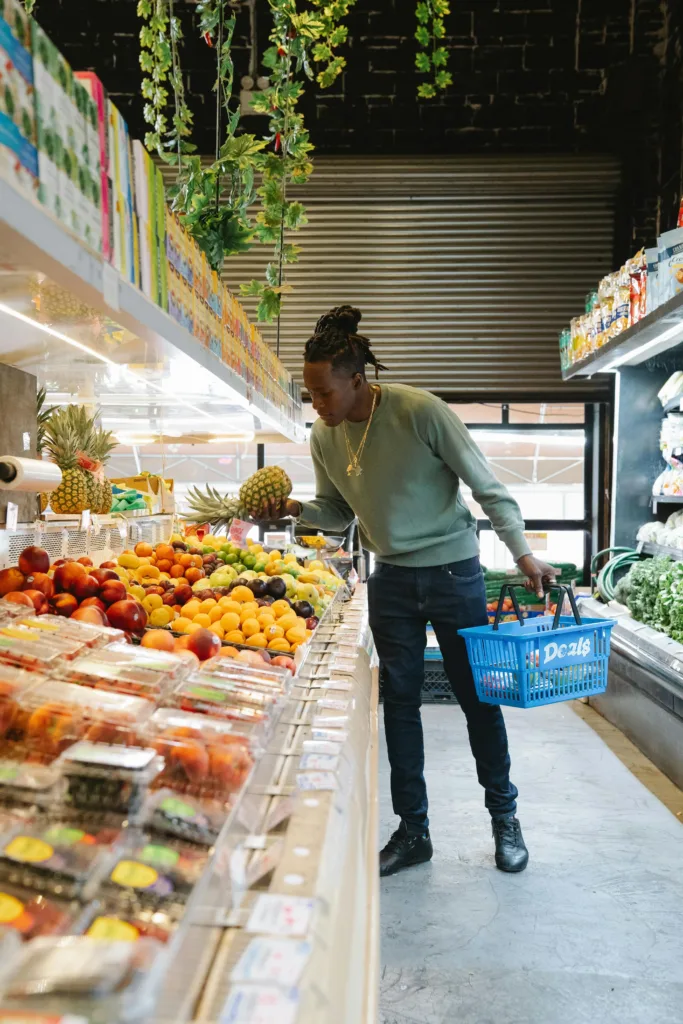
Man in grocery store picking pineapples.

By Greta Hoffman (https://www.pexels.com/@GretaHoffman

Electricity-Aware Cooking to Keep Total Meal Costs Down

  • Use a pressure cooker or slow cooker for legumes to reduce cooking time and electricity use.
  • Batch-cook beans and grains, then portion and freeze so you cook once and eat many times.
  • Rely on one-pot meals and thermos- or insulated-cooking methods during load shedding.

Seven-Day “Affordable, Evidence-Based Plant-Based Eating in South Africa” Menu

Breakfasts

  • Oats with water or a fortified plant milk, topped with frozen berries and a spoon of peanut butter.
  • Maize-meal porridge (pap) with mashed banana and ground flaxseed.
  • Overnight oats with chia, apple and cinnamon (rotate fruit as seasons change).

Lunches

  • Umngqusho (samp & beans) with morogo (wild spinach) and a tomato-onion salad.
  • Lentil breyani with brown rice, mixed vegetables and warming spices.
  • Chickpea “mayo” sandwiches on whole-grain bread with crunchy veg.

Dinners

  • Sugar-bean stew (beans, carrots, potatoes) with pap and steamed greens.
  • Peanut-butter spinach (morogo) with sweet-potato mash and corn.
  • Soya-mince chilli (soya mince, beans, tomatoes, spices) on brown rice.

Snacks & Batch-Prep

  • Home-popped popcorn with a sprinkle of paprika.
  • Carrot sticks with hummus (made from chickpeas).
  • Turn leftover legumes into mini patties for breakfast or snacks.

Meal-Prep and Storage for Affordability

  • Soak and cook large batches of beans or lentils, then freeze in flat, labelled bags for quick use.
  • Cook grains (brown rice, barley) and freeze in single-meal portions.
  • Designate a weekly “big pot” meal, then eat leftovers or freeze portions for later.
  • Track avoided waste — it’s real money saved.

Evidence-Based Micronutrient Checklist on a Budget

  • Iron: Legumes plus vitamin-C-rich foods (citrus, peppers) to enhance absorption.
  • Calcium: Dark greens (morogo, kale), fortified plant milks/yoghurts when affordable.
  • Zinc: Beans, lentils and wholegrains.
  • Omega-3: Ground flaxseed or chia; small portions of walnuts if budget allows.
  • Iodine: Use iodized salt (standard in SA).
  • Vitamin B12: Essential if entirely plant-based — rely on fortified foods or consider a budget-friendly supplement.

SA-Specific Price-Savvy Swaps & Recipes

  • Swap meat stews for sugar-bean or lentil stews.
  • Use soya mince instead of beef mince in chilli or bolognese.
  • DIY patties from mashed beans/lentils instead of imported vegan burgers.
  • Choose maize meal or brown rice as your base over costlier imported grains.
  • Go spice-first: Cape Malay curry with lentils, chakalaka beans, peri-peri bean bowls.

Shopping List: “Affordable, Evidence-Based Plant-Based Eating in South Africa”

  • 1 kg dry beans (sugar beans or black beans)
  • 500 g lentils
  • 1 kg brown rice or samp & beans mix
  • 1 kg maize meal
  • Large bag of oats
  • Frozen mixed vegetables (±1 kg) or seasonal fresh veg
  • 2 kg sweet potatoes/potatoes
  • Unsweetened peanut butter
  • Small bottle of olive or canola oil
  • Ground flaxseed or chia
  • Seasonal fruit (bananas, apples, oranges)
  • Whole-grain bread
  • Tofu (budget brand)
  • Herbs & spices (paprika, curry powder, peri-peri, garlic, onion)

Note: Costs vary by region and specials, but planning and unit-price comparisons keep totals low.

Common Mistakes That Make Plant-Based Eating Expensive in SA

  • Over-reliance on imported, ultra-processed “vegan meats”.
  • Ignoring seasonal produce cycles.
  • Cooking only tiny batches (higher energy and time costs).
  • Food waste from poor planning or unused leftovers.

FAQs — People Also Ask About Affordable, Evidence-Based Plant-Based Eating in South Africa

Is a plant-based diet really cheaper in South Africa?

Yes — centring meals on legumes, maize meal, brown rice, and seasonal veg typically reduces costs while maintaining high nutrition.

What are the cheapest high-protein plant foods in South Africa?

Dry beans, lentils, split peas and soya mince lead the pack, with tofu a smart buy from Asian/Indian groceries.

How can I eat plant-based food on a tight budget during load shedding?

Batch-cook with a pressure cooker, portion and freeze, rely on one-pot meals, and keep canned legumes handy for quick prep.

Where can I find SA-specific guidance for healthy eating?

See the Food-Based Dietary Guidelines for South Africa (linked below) for evidence-based, locally relevant guidance.

Do I need supplements on a budget with a plant-based diet?

Prioritise fortified foods and consider a low-cost B12 supplement if fully plant-based; keep an eye on iron, calcium, omega-3 and iodine.

Are plant-based meat alternatives worth it for tight budgets?

They’re convenient, but staples like beans, lentils and grains deliver better nutrition per serving; use analogues occasionally.

Conclusion

Switching to affordable, evidence-based plant-based eating in South Africa is absolutely possible — and wise.

You’ve got the evidence, budget-smart tools and local context — now it’s time to act.

Download my free Plant-Based on a Budget Toolkit for a printable shopping list, batch-cook plan and meal-prep checklist.

Join my newsletter for weekly specials, South African plant-based recipes and community support from fellow budget-conscious plant-eaters.


The Ultimate Guide to Vegan South Africa 2026

The Ultimate Guide to Vegan South Africa 2026

Updated for 2026 • South Africa In this guide Introduction Here’s your ultimate guide to vegan South Africa 2026. If someone told me ten years ago that South Africa would become one of the most exciting vegan destinations in the world, I’d have laughed and …

Why Whole Foods Beat Supplements Every Time

Why Whole Foods Beat Supplements Every Time

By Zama Zincume · Updated 10 November 2025 Key points: Jump to: Introduction: Why I Say “Whole Foods Beat Supplements Every Time” I recommend whole foods over supplements because real foods package vitamins, minerals, phytochemicals and fibre together—exactly how the body evolved to use them. …

Quick & Easy WFPB Recipe Ideas

Quick & Easy WFPB Recipe Ideas

These are your quick & easy WFPB recipe ideas.

I’ve categorised these to cover standard meal times and types.

Breakfast (Ready in < 10 minutes)

RecipeKey IngredientsQuick Tips
“Speedy” Overnight OatsRolled oats, plant milk (e.g., soy/oat), chia seeds, cinnamon, fruit (e.g., banana, berries).Prep the night before in a jar, grab-and-go in the morning. Use frozen berries for extra cooling.
Simple “Scramble” ToastTofu (firm/extra-firm), turmeric (for colour), kala namak (black salt – for eggy flavour), nutritional yeast, whole-grain bread.Crumble the tofu directly into a pre-heated pan. Takes $< 5$ minutes to cook.
Microwave-Baked Sweet PotatoSweet potato, peanut butter (no added sugar/oil), dash of cinnamon.Pierce the potato several times and microwave for 4-8 minutes (depending on size). Slice open and top.

Lunch (Ready in < 15 minutes)

RecipeKey IngredientsQuick Tips
4-Ingredient Chickpea “Tuna” Salad WrapCanned chickpeas (rinsed), small dollop of WFPB mayo/mustard (optional: mashed avocado), celery (or grated carrot), whole-wheat wrap/pita.Mash the chickpeas roughly with a fork. Mix ingredients and wrap. High in protein.
Easy Lentil Soup (Batch Cook Base)Pre-cooked/canned lentils, low-sodium vegetable broth, diced onion/carrots/celery (optional), can of crushed tomatoes.Batch Prep: Make a big pot of the base. For a quick lunch, heat a portion and add a handful of spinach at the end.
“Power Bowl” AssemblyCooked grain (e.g., brown rice/quinoa – prep ahead), canned/steamed corn, canned black beans, salsa/lemon juice, avocado slices.Canned chickpeas (rinsed), a small dollop of WFPB mayo/mustard (optional: mashed avocado), celery (or grated carrot), and a whole-wheat wrap/pita.

Dinner (Ready in < 20 minutes)

RecipeKey IngredientsQuick Tips
1-Pan Speedy Black Bean Stir-FryCanned black beans, frozen stir-fry vegetable mix, low-sodium soy sauce/tamari/coconut aminos, garlic powder.Cook the beans and frozen veg together in one pan. Serve over leftover rice (if available) or even alone.
Pasta with 3-Ingredient SauceWhole-wheat pasta, jar of passata/crushed tomatoes, minced garlic, dried oregano/basil.While the pasta cooks, sauté the garlic briefly and add the passata and herbs. Mix with drained pasta. Simple and satisfying.
Baked Potato with Hummus & Steamed GreensPotato (russet/sweet), ready-made WFPB hummus, frozen broccoli/spinach.Microwave or bake the potato (if time allows, use the oven), steam the greens, and serve topped with hummus and a sprinkle of paprika.

WFPB “Quick & Easy” Strategy Tips:

  1. Embrace Canned/Frozen: Don’t be afraid of using canned beans/lentils (rinsed well) and frozen vegetables/fruit. They are equally nutritious and save significant time on chopping and cooking.
  2. The “Cook Once, Eat Thrice” Rule: Spend 1-2 hours on Sunday to batch-cook a staple. You can make brown rice, quinoa, or a big pot of beans. These can serve as bases for several meals during the week.
  3. Use Herbs & Spices Freely: To keep recipes WFPB (low in oil, sugar, and salt), add flavour boosters. Use vinegars, lemon juice, lime juice, and nutritional yeast. Also, add garlic, ginger, and pungent spices like curry powder, smoked paprika, and chilli flakes.

Here are a few detailed recipes for your delight.

4-Ingredient Speedy Chickpea “Tuna” Salad Wrap

This whole-food, plant-based recipe uses chickpeas for a hearty, classic-sandwich feel. It’s great for a quick lunch or dinner.

Quick Stats

  • Prep Time: 5 minutes
  • Cook Time: 0 minutes
  • Yields: 2 servings

Ingredients (The 4 Core Components)

  1. Legume Base: 1× standard 400g can of Chickpeas, rinsed and drained.
  2. Binder/Moisture: 1/4 Avocado (or 2 Tbsp WFPB oil-free mayonnaise/mustard, if using).
  3. Crunch/Texture: 1/4 cup finely diced Celery (or 1/2 grated carrot).
  4. Wrap: 2 Whole-Wheat Tortillas/Pitas (check labels for minimal oil/sugar).

Flavour Boosters (Highly Recommended)

  • 1 Tbsp Nutritional Yeast (for a “cheesy” depth).
  • 1/2 tsp Garlic Powder or Onion Powder.
  • 1/4 tsp Smoked Paprika (adds depth).
  • Black Pepper and a squeeze of Lemon Juice.

Instructions

  1. Mash the Chickpeas: Place the rinsed and drained chickpeas in a bowl. Use a fork or potato masher to roughly mash them. You want a chunky texture—not a smooth paste—to mimic flaked tuna.
  2. Add the Binder: Mash the 1/4 avocado directly into the bowl with the chickpeas. Mix well until everything is creamy and coated.
  3. Mix & Flavour: Add the diced celery/carrot, nutritional yeast, garlic powder, smoked paprika, and a pinch of black pepper. Mix thoroughly until evenly combined. Taste, and add a squeeze of lemon juice for brightness, if desired.
  4. Assemble and Serve: Spoon the chickpea mixture down the centre of each whole-wheat tortilla or pita. Roll up tightly.
  5. Bonus WFPB Tip: To add even more nutrients, layer in a handful of fresh spinach or rocket (arugula) before rolling the wrap.

20-Minute Quick Lentil & Sweet Potato Curry

20-minute quick lentil & sweet potato curry, perfect quick & easy WFPB recipe.

This one-pot recipe is full of flavour. It’s ready as quickly as cooking rice or warming whole-wheat rotis.

Quick Stats

  • Prep Time: 5 minutes
  • Cook Time: 15 minutes
  • Yields: 4 servings

Ingredients

CategoryItemQuantityNotes
Base & BulkCanned Brown or Green Lentils2 x 400g cansRinsed and drained (the key to speed!)
Diced Sweet Potato1 mediumPeel and dice into 1 cm cubes.
Diced Onion1 mediumFinely chopped.
Can of Diced Tomatoes1 x 400g canIncluding the juice.
Flavour & SpicesCurry Powder (Mild or Medium)2 TbspUse a good quality South African blend.
Turmeric Powder1 tspFor colour and anti-inflammatory benefits.
Garlic & Ginger1 Tbsp (crushed/paste)Or two cloves of fresh garlic + 1 tsp of fresh ginger.
Vegetable Broth (Low-Sodium)1/2 cup (125ml)To thin the curry and sauté without oil.
GarnishFresh Coriander/CilantroHandfulChopped, for serving.

Instructions

  1. Water Sauté (Oil-Free Start): Heat a large pot or deep pan over medium-high heat. Add the diced onion and two tablespoons of the vegetable broth. Cook, stirring often, for 3-4 minutes until softened, adding a splash more broth if the pan gets dry.
  2. Aromatics & Spices: Add the garlic and ginger paste and cook for 30 seconds until fragrant. Immediately stir in the curry powder and turmeric. Cook for another minute, stirring continuously to toast the spices and release their flavour.
  3. Build the Curry: Add the diced sweet potato, canned tomatoes, and the remaining vegetable broth. Bring the mixture to a boil, then reduce the heat, cover, and let it simmer for 8-10 minutes, or until the sweet potato is fork-tender.
  4. Add Lentils: Stir in the rinsed and drained canned lentils. The lentils are already cooked, so they need to heat through and absorb the flavour. Simmer, uncovered, for another 4-5 minutes.
  5. Serve: Taste and adjust seasoning. If you need more salt, use a dash of low-sodium soy sauce/tamari. Serve hot, garnished generously with fresh chopped coriander.

Serving Suggestion (WFPB Style)

  • Serve over a small portion of brown rice or quinoa (ideally batch-cooked ahead of time) for a complete meal.
  • Serve with a side of quickly steamed or water-sautéed Morogo (African leafy greens) or spinach.
How to Master Your Personal Finances in SA

How to Master Your Personal Finances in SA

This is your comprehensive guide on how to master your personal finances in SA. Yes, we advocate for healthy living and evidence-based reversal of chronic diseases. However, living well and healthy whilst struggling financially is stifling your wellness. The journey to financial freedom can feel …

Dr Greger’s WFPB Framework in South Africa

Dr Greger’s WFPB Framework in South Africa

Here’s the report on Dr Greger’s WFPB framework in South Africa. The global conversation about public health now focuses on dietary reform. Experts see this as a key way to reduce the burden of non-communicable diseases. Dr Michael Greger is key to this shift. His …

How I Prep a Week of Plant-Based Meals Under R500

How I Prep a Week of Plant-Based Meals Under R500

Let me tell you how I take on one of the biggest food-budget headaches—and win. I’m talking about how I prep a week’s worth of plant-based meals for under R500.

Yes, you read that right: seven days, whole-food vegan-friendly, budget-tight, and still delicious.

How I Prep a Week of Plant-Based Meals Under R500: Hook, Promise & Who This Helps

Here’s the deal: food prices in South Africa keep climbing, you’re busy, you want nutrition, not gimmicks.

And you’d like it to cost less than R500 for the whole week of meals. That’s precisely what this article delivers.

I’ll walk you through my budget boundaries, shopping list, batch-cooking flow, 7-day menu and smart swaps—all in the context of eating plant-based in SA.

Under R500: My Ground Rules, Budget Assumptions & Portion Targets (SA Context)

To keep things realistic, I’m assuming one adult, no meat substitutes that cost an arm and a leg, and shopping at mainstream grocery stores or local markets in a mid-size city in KwaZulu-Natal.

I’ll aim for ~3 meals + 1 snack per day, over 7 days.

Calories?

Good nutrition?

Yep.

Plant-based staples like pulses, grains and seasonal veg make the budget stretch. According to SA guidelines, legumes form an essential part of a healthy, affordable diet.

“How I Prep a Week of Plant-Based Meals Under R500″: What R500 Buys Right Now in SA

So what exactly does this R500 budget cover?

Think: dry beans, lentils, rice or maize meal, seasonal vegetables (cabbage, butternut, carrots, potatoes), fruit (bananas/apples), some spices, and a basic oil.

Because pulses are cheap and nutrient-dense, they’re a core part of my shopping. Research shows that legumes are both cost-effective and beneficial for health.

Budget Staples I Always Use for Plant-Based Meal Prep Under R500 (What & Why)

Here are the staples I lean on and why they keep the cost low while delivering nutrition:

  • Dry beans, lentils, split peas, soya mince/chunks – high in protein and fibre, low cost.
  • Grains: maize meal, brown rice, oats, maybe whole-wheat pasta – good volume and energy.
  • Vegetables: onions, carrots, cabbage, butternut/pumpkin, spinach or morogo – seasonal and local favourites.
  • Fruit: bananas, apples – affordable, fibre-rich snacks.
  • Flavour boosters: basic curry powder, garlic, lemons, chilli, stock cube – inexpensive but high impact.

By mainly using whole foods (no fancy vegan cheeses or niche substitutes) and shopping smart (bulk, house brands, seasonal veg) I stay within budget and still cover the nutritional bases.

The Under-R500 Shopping List (Quantities & Estimated Spend)

Here’s a sample shopping list with approximate quantities.

Adjust local pricing as needed. This is how I allocate the budget to hit under R500:

  • Dry beans/split peas/lentils – e.g. 2 kg total
  • Brown rice or maize meal – e.g. 1.5 kg
  • Oats – large pack
  • Cabbage – 1 whole head
  • Carrots – bag
  • Butternut/pumpkin – 1 large
  • Spinach or morogo (or leafy green) – 1 large bag
  • Onions – bag
  • Bananas – bunch
  • Apples – bag
  • Tinned tomatoes – 2 x cans
  • Basic oil (small bottle), stock cube, garlic, curry powder/chilli

With sane pricing (and savvy use of specials and bulk buys), this list can come in under R500.

The key: shop store-brands, choose dried legumes over canned, pick seasonal veg.

For context: SA food-basket reports show that pulses remain among the more affordable, nutrient-dense foods.

How I Meal-Prep on Sunday in 90 Minutes (Batch Flow That Stays Under R500)

Here’s how I spend my Sunday block of time to set up the week:

1. Soak the beans/lentils overnight if needed (for tougher beans) so they cook faster.

2. Cook a big pot of beans/lentils and split into portions.

3. Cook a large batch of grain (rice or maize meal) and perhaps pasta for the week.

4. Make three modular “sauces” or base stews: – Tomato-lentil curry – Sugar-bean chilli/stew with cabbage & carrots – Veggie marinara with pasta + lentils

5. Roast a tray of mixed seasonal veg (butternut, carrots, onion, spinach at the end) for sides or lunches.

6. Prep raw slaw (cabbage/carrot/leafy green) portioned for lunches.

7. Portion fruit and prepare overnight oats or porridge for breakfast.

8. Package everything into labelled containers so you know what you’ll eat each day. This flow means you’ll hit Monday ready to go and eliminate “what’s for dinner?” stress mid-week.

7-Day Plan: How I Eat a Week of Plant-Based Meals Under R500 (Menu Overview)

Here’s my menu blueprint – you can swap foods but maintain structure:

Breakfasts: oats or maize-meal porridge + banana/fruit + a spoon of seeds/peanut butter.

Lunches: Grain + legumes + roasted veg/slaw (Monday: rice + bean curry + slaw; Tuesday: maize meal pap + bean stew + veggie; etc).

Dinners: – Monday: Tomato-lentil curry + brown rice.

– Tuesday: Sugar-bean stew + maize meal.

– Wednesday: Veggie marinara with pasta + lentils.

– Thursday: Roasted butternut & carrot + beans + rice.

– Friday: Lentil chilli + maize meal.

– Saturday: Leftover medley (mix of sauces + veg + grain).

– Sunday: “Treat” plant-based dinner using remaining veg/beans (e.g., bean tacos using wraps if bought or rolled maize meal cakes).

Snacks: banana/apple, carrot sticks, popcorn (cheap) or a piece of fruit + a handful of seeds. With this structure, you get variety, simplicity, minimal waste, and all within budget.

Smart Swaps to Stay Under R500 Across Seasons & Stores

Because prices fluctuate and different stores cost different amounts, these swaps keep you on track:

– Butternut ↔ pumpkin (use whichever is cheaper)

– Cabbage ↔ spinach/morogo (leafy green) – Beans ↔ split peas/lentils (whichever has sale)

– Rice ↔ maize meal (if maize meal is cheaper) – Store-brand spices/oil ↔ premium brand – the flavour difference can be negligible.

Also: compare unit prices (R per kg or R per 100 g) rather than only the pack price. Local markets or greengrocers may beat supermarkets for seasonal veg.

Nutrition Check: Protein, Iron, Zinc, Calcium, Omega-3 on a Budget

Plant-based doesn’t mean nutritional compromise—and on this budget, it can still hit well:

Protein: The beans, lentils, soya mince, and grains provide ample protein. E.g., pulses deliver ~twice the protein of many grains.

Iron: Beans/legumes provide non-haem iron; pair them with vitamin C-rich veggies (tomatoes, cabbage) to boost absorption.

Zinc & Calcium: Lentils, beans, and green leafy veg contribute; if you choose fortified plant milk (optional), you can boost calcium.

Omega-3: A small spoon of ground flaxseed or chia seed (if the budget allows) is a great low-cost source. The point: you don’t need exotic super-foods—whole plant staples will do the job when you plan smart.

Food Safety & Storage: Keep Your R500 Prep Fresh All Week

Batch-prep is fantastic, but you must pay attention to storage:

– Cool cooked food within 2 hours and refrigerate.

– Portion and label with date.

– Re-heat to steaming before serving.

– Freeze any portion you won’t eat within 3–4 days to avoid waste.

– Soak beans/legumes where required and rinse well to reduce digestion issues (bloat/gas) as recommended in the SA dietary guidelines.

SA-Specific Ways I Keep Plant-Based Meal Prep Under R500

Because you’re in South Africa (and I am too), here are local tricks I use: – Buy large (2 kg-ish) bags of dry legumes when they’re on special.

– Choose in-season produce and watch the markets (smaller stores often have better deals).

– Embrace local staples like maize meal & samp & beans.

– Use a pressure cooker (if you have one) to save energy/time—important given load shedding and rising electricity cost.

– Check store loyalty cards, specials, and clearance veg bins.

– Cook once, eat twice: freeze half of each batch or reserve for next day lunch.

This local lens makes the “under R500” goal really work.

Mistakes That Blow the R500 Budget (And How I Avoid Them)

Here are pitfalls I’ve learned to dodge:

– Buying too many “meat substitute” products (they’re convenient but costly).

– Relying purely on fresh, exotic veg—stick to seasonal local.

– Skipping the plan and buying on impulse.

– Not cooking in bulk (so you end up buying take-away).

– Letting waste pile up—portion, freeze, finish leftovers.

FAQs: How to Prep a Week of Plant-Based Meals Under R500 — People Also Ask

Is R500 realistic for one person for a week in South Africa?

Absolutely—to one adult, yes. If you use the staples above, shop smart (bulk, house brands, seasonal), and avoid high-cost substitutes, you can easily stay under R500. It becomes harder if you add premium veganised products, organics only, or a family of four, but for one, it’s very doable.

What are the cheapest high-protein plant-based foods in SA?

Dry beans, lentils, split peas, and soya mince/chunks top the list. They’re inexpensive per serving, nutrient-rich and widely available.

How do I get enough protein without pricey meat alternatives?

Simple strategy: combine legumes + grains (complementary proteins), stick to whole foods. For example, beans + maize meal or lentils + brown rice. You’ll get good protein, fibre, and minerals. No need to buy every new vegan “meat”

How can I keep variety without overspending?

Rotate your base staples and sauces as in the 7-day menu. Use one base stew and switch up the spices, grains, and veggies. Seasonal swaps help. That keeps your meals interesting without adding cost.

Can I do this without a pressure cooker?

Yes—soak tougher beans overnight, simmer them. The key is batch cooking and using your time wisely. A pressure cooker helps speed things up, but it isn’t essential.

What about B12 and iodine?

Good question. On a plant-based diet, you’ll want to ensure you get enough B12 (via fortified foods or a low-cost supplement) and use iodised salt for iodine. This article focuses on everyday budget meals, but keep these micronutrients on your radar.

Is this plan kid-friendly?

Definitely, use milder spices, mash bean stews if needed, and turn the lunches into wraps or bowls with toppings that kids like. The budget stays the same.

Conclusion & Your Turn to Prep a Week of Plant-Based Meals Under R500

So there you have it: exactly how I prep a week of plant-based meals under R500 in South Africa. It’s about smart staples, batch cooking, savvy local pricing, and minimal waste.

Now it’s your turn.

Download your shopping checklist, pick your Sunday batch-cook time, shop with your budget in mind—and tag me on socials when you hit your under-R500 goal.

Let’s show that healthy, plant-based eating doesn’t need to cost the earth.

Brown Rice and Sautéed Cabbage Recipe

Brown Rice and Sautéed Cabbage Recipe

WFPB, oil-free brown rice and sauteed cabbage recipeHere’s your WFPB, oil-free brown rice and sauteed cabbage recipe. This recipe avoids oil by relying on a small amount of water or vegetable broth for sautéing, in line with typical WFPB recommendations. Yields: 4 Servings Prep time: …