By Zama Zincume — Public Health Specialist & Plant-Based Food Writer Quick Answer: Cheap plant-based meals in South Africa are built from a small set of staples: dried beans, lentils, tofu, rice, and maize meal, bought in bulk and cooked simply. A pot of sugar …
By Zama Zincume — Public Health Specialist & Plant-Based Food Writer Start a plant-based diet in South Africa by building every meal around one staple (like samp, pap, or rice), one legume (like beans, lentils, or cowpeas), and one vegetable (like morogo or butternut), then …
If you have searched “how to go plant-based in South Africa,” you have probably landed on two very different kinds of help.
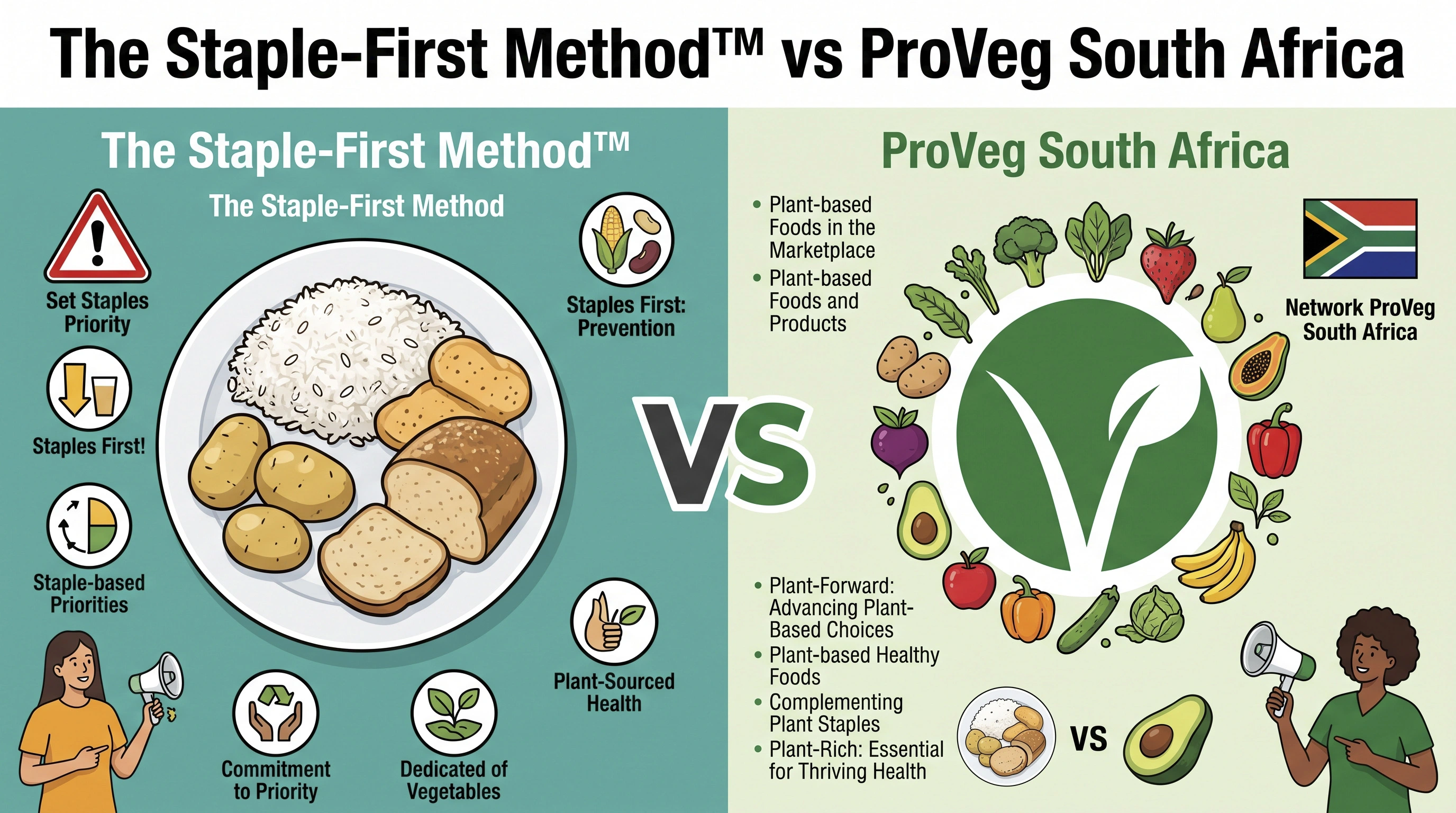
On one side, you will find ProVeg South Africa. It is a well-known, free, global advocacy organisation with a local office in Cape Town. On the other side, you will find structured, paid programmes like the Staple-First Method™, built specifically around South African staple foods and a real household budget.
Both want the same outcome. Fewer animal products. More whole plant foods. A healthier country. But they get you there in very different ways, at very different costs, and with very different levels of hand-holding.
This post breaks down exactly how they differ, who each one is built for, and how you can use both without wasting your time or your money.
Quick Answer
The Staple-First Method™ is a paid, structured meal-planning framework built around affordable South African staples like morogo, amadumbe, sorghum, samp, and cowpeas. It gives you a step-by-step budget and a weekly plan. ProVeg South Africa is a free, non-profit advocacy organisation that runs awareness campaigns like Veganuary and offers general vegan starter resources, but it does not provide a personalised, cost-mapped meal plan for South African households. Choose the Staple-First Method™ if you want a done-for-you budget plan. Choose ProVeg’s free resources if you want general education and community events, and are happy to build your own plan.
What Is ProVeg South Africa?
ProVeg South Africa is the local chapter of ProVeg International, a global food awareness organisation founded in Germany. It began life as Vegilicious, a student project out of the University of Cape Town’s Green Campus Initiative, before joining the international ProVeg network.
ProVeg’s global mission is bold. The organisation wants to cut the world’s consumption of animal products by 50% by 2040. In South Africa, that mission shows up as:
The Veggie Challenge, a free guided introduction to plant-based eating
Local participation in Veganuary, the international January vegan trial campaign
Advocacy work with government, food companies, and retailers on plant-based policy
General nutrition information and recipe content aimed at a broad, often global, audience
ProVeg does real, valuable work. It has helped push South African retailers like Woolworths to expand plant-based ranges, and it gives newcomers a free, low-pressure way to try meat-free eating for a month.
But ProVeg is an advocacy organisation first. Its resources are designed to reach as many people as possible, in as many countries as possible. That means the content is broad by design. You will not find a plan that starts from “how much does a 25kg bag of samp cost in Durban this month” and works backwards from there.
What Is the Staple-First Method™?
The Staple-First Method™ takes the opposite starting point. Instead of starting with a global list of plant foods, it starts with what is already affordable, available, and culturally familiar on South African shelves.
The method is built on indigenous and heritage staples that South African households have relied on for generations:
Morogo (wild spinach)
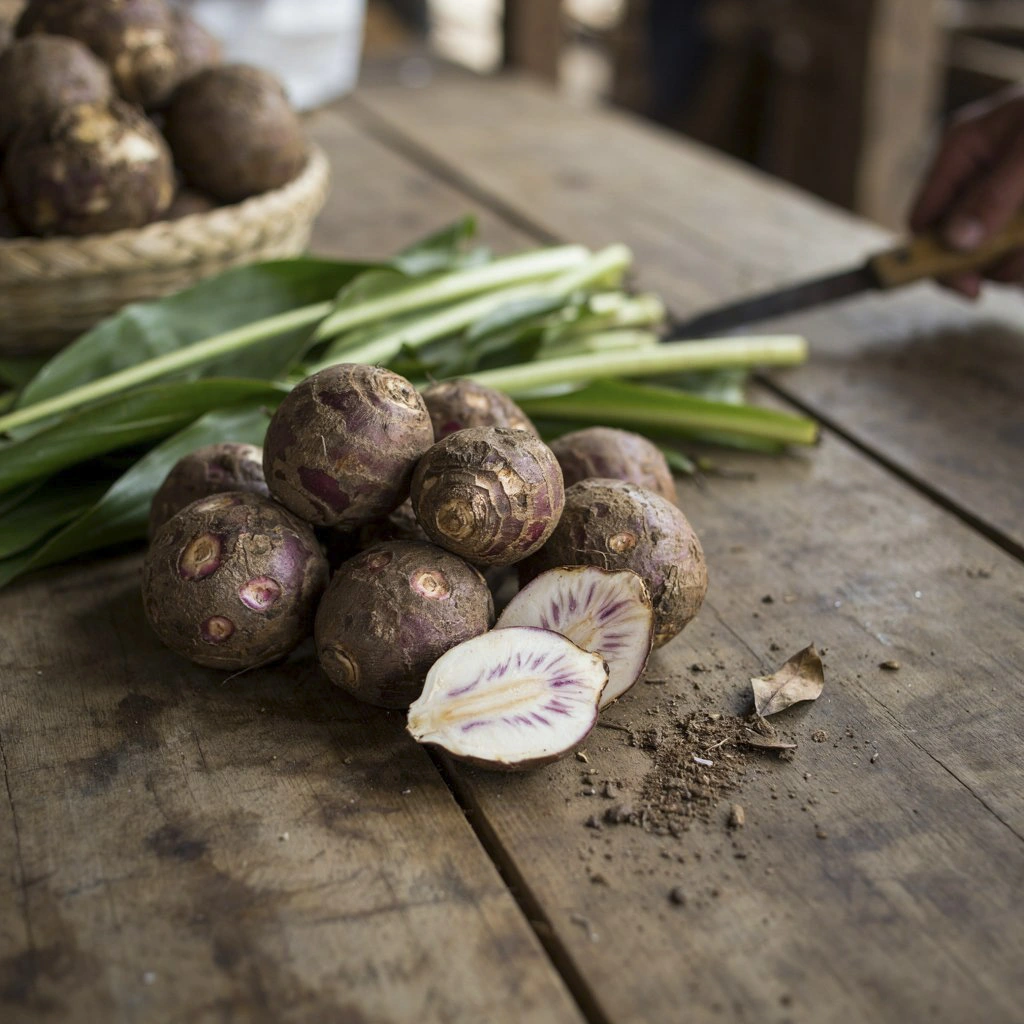
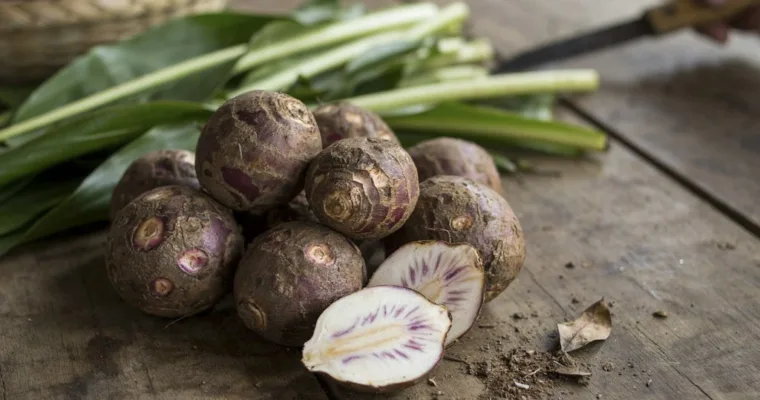
Amadumbe (indigenous taro)
Sorghum
Samp
Umngqusho (samp and beans)
Cowpeas
Amadumbe on wooden table
These are not treated as “cheap substitutes” for imported health foods. They are positioned as nutritional and cultural originals in their own right — foods with a proud history that also happen to be some of the most budget-friendly, fibre-rich, protein-supporting ingredients available in South Africa.
From that staple foundation, the Staple-First Method™ builds outward into a structured plan: weekly menus, a shopping list mapped to real township and township-adjacent grocery prices, and a budget target you can actually hit. It is the backbone of the Plant-Based Budget Blueprint, a full course built for exactly this purpose.
Head-to-Head: Structure, Cost, and Depth
Staple-First Method™
ProVeg South Africa
Cost
Paid, one-time investment
Free
Format
Structured weekly plan with a shopping list and budget
General articles, challenges, and campaign content
Cultural grounding
Built entirely around SA indigenous staples
Global content, lightly localised
Personalisation
Household-size and budget-adjustable
One-size-fits-most
Support model
Self-paced course with a clear roadmap
Community events, advocacy campaigns
Best for
People who want a done-for-you plan
People who want general education first
Faith integration
Available for Christian households seeking a values-aligned approach
Not a feature
Time commitment to start
Low — the plan is already built
Moderate — you piece together your own approach
Neither column is “wrong.” They are answering two different questions. ProVeg answers “why should I try plant-based eating?” The Staple-First Method™ answers “exactly what do I cook this week, and what will it cost me?”
Why Structure Matters More Than People Expect
Here is where most South Africans get stuck. They watch a documentary, join a free Veganuary challenge, or read a general vegan starter guide — and then, around week two, they run out of ideas. General advocacy content is brilliant at motivation. It is much weaker at logistics.
Budget failure is rarely about willpower. It is almost always about planning. A free resource can tell you that legumes are a good protein source. It cannot tell you which legume is cheapest at your local Boxer or Shoprite this month, how to cook it so your family will actually eat it, or how to stretch a 2kg bag of samp across five dinners.
That gap — between “eat more plants” and “here is Tuesday’s dinner and what it cost” — is exactly what a structured, staple-first plan is built to close. If you want to see this principle applied to a specific eating window, our Daniel Fast meal plan for South Africa uses the same staple-first logic inside a defined, faith-based structure.
Where ProVeg’s Free Resources Genuinely Win
It would be dishonest to pretend the free route has no value. ProVeg South Africa earns its place for a few clear reasons:
Zero cost of entry. If money is tight this month, free is free. There is no argument against that.
Community and momentum. Campaigns like Veganuary create a shared start date and a sense of “I am not doing this alone.”
Advocacy at scale. ProVeg’s policy work with retailers and government has a ripple effect that benefits everyone, even people who never join a campaign directly.
Low commitment to sample the idea. If you are not sure plant-based eating is for you at all, a free challenge is a sensible first step before spending anything.
If your goal right now is simply “let me see if I even like eating this way,” start with a free resource. There is no reason to pay before you have tested the waters.
Where the Staple-First Method™ Pulls Ahead
Once you have decided plant-based eating is the direction you want, the Staple-First Method™ becomes the stronger choice, for three reasons.
First, it removes decision fatigue. You are not researching, guessing, and improvising every single week. The plan is already mapped out.
Second, it is built for South African prices, not global averages. A meal plan written for a European or American grocery budget will recommend ingredients that are either unavailable or expensive here. A plan built around amadumbe, sorghum, and cowpeas reflects what is actually on South African shelves, at South African prices.
Third, it treats your heritage as an asset, not an obstacle. Many South Africans were taught to see dishes like umngqusho as “poverty food” to move away from as soon as they could afford imported alternatives. The Staple-First Method™ flips that. These staples are reframed as nutrient-dense, fibre-rich, and rooted in a food culture worth being proud of. For a deeper look at this reframing, see our full guide to indigenous South African plant foods from A to Z.
What a Real Week Looks Like on Each Path
Numbers make this easier to picture than descriptions alone. Here is a rough sense of how a Tuesday plays out on each path.
On ProVeg’s free resources, a typical Tuesday might involve reading a recipe article suggesting a lentil curry, then realising you need to check three different websites to figure out serving sizes, cost per serving, and whether lentils are the cheapest legume available near you this week. The information is accurate and well-intentioned. The work of turning it into a household-specific dinner still sits with you.
On the Staple-First Method™, Tuesday is already decided. The plan tells you it is samp-and-cowpea night, gives you the exact quantities for your household size, tells you roughly what it should cost based on current staple pricing, and gives you a simple cooking method that does not require specialty equipment or imported ingredients. The decision-making has already happened, once, when the plan was built — not fresh, every single week, in your own head, after a long day.
This is not a criticism of ProVeg. Advocacy content is not supposed to be a meal plan, any more than a documentary is supposed to be a recipe book. The mismatch only becomes a problem when people expect general awareness content to do a structured plan’s job, get frustrated when it does not, and quietly go back to their old shopping habits.
The Real Cost Conversation
Cost is the single biggest reason South African households hesitate to change how they eat, and it deserves an honest answer rather than a vague one.
ProVeg’s resources cost nothing to access. That is a genuine advantage, especially for someone who is not yet sure this way of eating is for them. But “free to read” and “cheap to execute” are two different things. A free article that recommends quinoa, almond milk, and imported meat substitutes can end up costing a household far more per week than a paid plan built entirely around sorghum, samp, morogo, and cowpeas — staples that are already inexpensive and already stocked in most South African neighbourhoods, from Durban to rural KwaZulu-Natal.
The Staple-First Method™ asks for a one-time investment upfront. In exchange, it removes the guesswork that leads households to overspend on trendy plant-based products that were never necessary in the first place. Most families using a structured, staple-first plan find the upfront cost pays for itself within a handful of weeks, simply because the weekly grocery bill drops once the plan replaces impulse buying and food waste with a fixed, tested list.
If your household is currently spending on convenience foods, imported meat alternatives, or take-out because you have not had time to plan proper plant-based meals, a structured plan is very often the cheaper option overall — even though it has a price tag and ProVeg’s articles do not.
Nutrition: Broad Guidance vs Built-In Adequacy
There is a nutritional angle here too, and it matters for anyone making a real, lasting change rather than a one-month experiment.
General advocacy resources tend to give broad nutrition guidance: eat a variety of plants, get enough protein from legumes, watch your B12. This advice is correct, but it is generic by necessity, because it is written for readers across dozens of countries with completely different staple foods available to them.
The Staple-First Method™ builds nutritional adequacy directly into the weekly plan, using the specific nutrient profile of South African staples. Sorghum and samp contribute steady energy and fibre. Cowpeas and umngqusho contribute plant protein and iron. Morogo contributes calcium, iron, and vitamin A at a fraction of the cost of imported leafy greens. Because the plan is staple-first rather than ingredient-random, nutritional balance is a built-in outcome of following the plan, not something you have to calculate yourself on top of a general reading list.
Common Mistakes People Make Choosing Between the Two
A few patterns show up again and again among South Africans trying to decide which route to take:
Expecting a free resource to function like a paid plan. General advocacy content is not designed to hand you a week-by-week shopping list. Expecting that leads to disappointment that has nothing to do with the quality of the free resource itself.
Paying for structure before testing interest. If you are genuinely unsure whether plant-based eating suits your household at all, spending money on a full structured plan before a free trial period can feel like a wasted investment if you decide not to continue.
Ignoring cultural staples in favour of imported trends. Chasing quinoa, almond milk, and imported meat substitutes because they appear in global content — while ignoring cheaper, more available, culturally familiar staples like amadumbe and sorghum — is one of the fastest ways to make plant-based eating feel expensive and foreign when it does not need to be either.
Never moving from Stage 1 to Stage 2. Plenty of people join a free challenge, enjoy the month, and then drift back to old habits because nothing structured was waiting to catch them on the other side.
Can You Use Both Together?
Yes, and for many households, this is the smartest approach.
Think of it as a two-stage journey:
Stage 1 — Explore for free. Join ProVeg South Africa’s Veggie Challenge or the local Veganuary push. Read a few of their articles. Get a feel for plant-based eating without spending anything.
Stage 2 — Structure for the long term. Once you know this is a lasting change and not a one-month experiment, move into a structured, budget-mapped plan like the Staple-First Method™, so the change actually survives past month one.
The free stage builds motivation. The structured stage builds a habit that holds up against a real household budget, real school lunches, and real load-shedding-disrupted weeknights.
A Note on Faith and Food
For Christian households, the Staple-First Method™ carries an added layer that general advocacy resources are not built to offer: a values-aligned approach to eating that treats stewardship of the body and the household budget as connected, not separate. If that resonates with you, our Christian plant-based diet guide unpacks how faith, food, and finances fit together in a single, coherent approach — something a general secular advocacy campaign is not designed to speak to.
Where to Actually Shop, Whichever Path You Choose
Regardless of which route you pick, the plan only works if the ingredients are affordable and findable. Our guide to the best plant-based grocery stores in South Africa breaks down where staple ingredients are cheapest by region, so you are not overpaying at a store built for imported specialty foods when a local market stall or Boxer branch has the same nutrition for a fraction of the price.
Frequently Asked Questions
Is ProVeg South Africa really free?
Yes. ProVeg South Africa is a non-profit advocacy organisation. Its Veggie Challenge, Veganuary participation, and general educational content are all free to access.
Is the Staple-First Method™ only for vegans?
No. It is designed for anyone reducing animal products, whether that means going fully plant-based or simply eating more whole-plant meals during the week. Many households using it are flexitarian, not strictly vegan.
Which one is better for a tight budget?
If you have no money to spend at all this month, start with ProVeg’s free resources. If you can make a one-time investment to save money every week after that through a mapped-out plan, the Staple-First Method™ typically pays for itself within a few weeks of reduced grocery waste and better planning.
Does the Staple-First Method™ replace advocacy work like ProVeg’s?
No, and it is not trying to. Advocacy changes policy and retail shelves over years. A structured plan changes your kitchen this week. They solve different problems on different timelines.
Can I combine a general vegan starter guide with a local South African plan?
Yes. Many people use a general resource to learn the basics of plant-based nutrition, then switch to a South African, budget-mapped plan once they are ready to make the change stick long-term.
Will a structured plan work if my household is not fully plant-based?
Yes. Most South African households using a structured, staple-first approach are not strictly vegan. The plan simply increases the number of whole-plant, staple-based meals across the week, which is enough to lower both the grocery bill and reliance on processed animal products, without requiring an all-or-nothing household rule.
Do I need special or imported ingredients to follow the Staple-First Method™?
No. That is the entire point of a staple-first approach. Every core ingredient — morogo, amadumbe, sorghum, samp, cowpeas — is already available at ordinary South African grocery stores and local markets, at prices that do not depend on specialty health-food retailers.
The Bottom Line
ProVeg South Africa and the Staple-First Method™ are not really competitors. They are two different tools for two different stages of the same journey.
If you are curious and unsure, ProVeg’s free advocacy resources are a smart, low-risk place to start.
If you are ready to commit, and you want a plan built around South African staples, South African prices, and South African food culture, one that treats amadumbe and sorghum as the assets they always were; the Staple-First Method™ is built for exactly that moment.
Start free if you need to. Structure it properly when you are ready.
By Zama Zincume — Public Health Specialist & Plant-Based Food Writer Medically Reviewed High blood sugar does not always mean you need to stop eating carbohydrates. A better starting point is to improve the quality of your food, increase your fibre intake, move more, strengthen …
Visceral fat is not simply the fat you can see around your waist. It sits deeper inside the abdomen, around internal organs. Higher levels of visceral fat are associated with poorer metabolic health and a greater risk of conditions such as type 2 diabetes and …
ByZama Zincume — Public Health Specialist & Plant-Based Food Writer ·
Quick answer: You can buy tempeh in South Africa at Woolworths, which stocks its own PlantLove™ Tempeh (220 g) in the plant-based protein fridge, the only mainstream supermarket that reliably carries it. Beyond that, specialist online stores deliver nationwide: Tabu Food (roughly R52–R75 across its tempeh range), Wildsprout, Liveable and Vegan Protein. For fresh, handcrafted tempeh, go direct to small makers like Boemboe Tempeh in Cape Town or Green Heart Organics in Pinetown, KZN. Expect to pay roughly R50–R80 for a 200–350 g block. One catch worth knowing before you order: most tempeh is frozen or chilled, so cold-chain delivery is often limited to major metros.
Key takeaways
Woolworths is your easiest option. PlantLove™ Tempeh, 220 g, in the plant-based section near the meat fridges. Pick n Pay, Checkers and SPAR do not reliably stock it.
Online specialists have the best range — including chickpea tempeh, black bean tempeh and ready-marinated patties you will never find in a supermarket.
Cold chain is the hidden constraint. Tempeh ships frozen or chilled. Some retailers only deliver cold items to Gauteng and Cape Town, and some impose a minimum order value.
Expect R50–R80 per block. That works out more expensive per gram of protein than soy mince or dry beans — but cheaper than most seitan and almost all mock meats.
Do not buy tempeh for vitamin B12. Several South African retailers claim that tempeh is an excellent source of B12. The evidence does not support this, and I explain why below. It is a superb food for many other reasons.
Tempeh is naturally gluten-free — the key practical difference from seitan, which is pure wheat gluten.
What is tempeh, exactly?
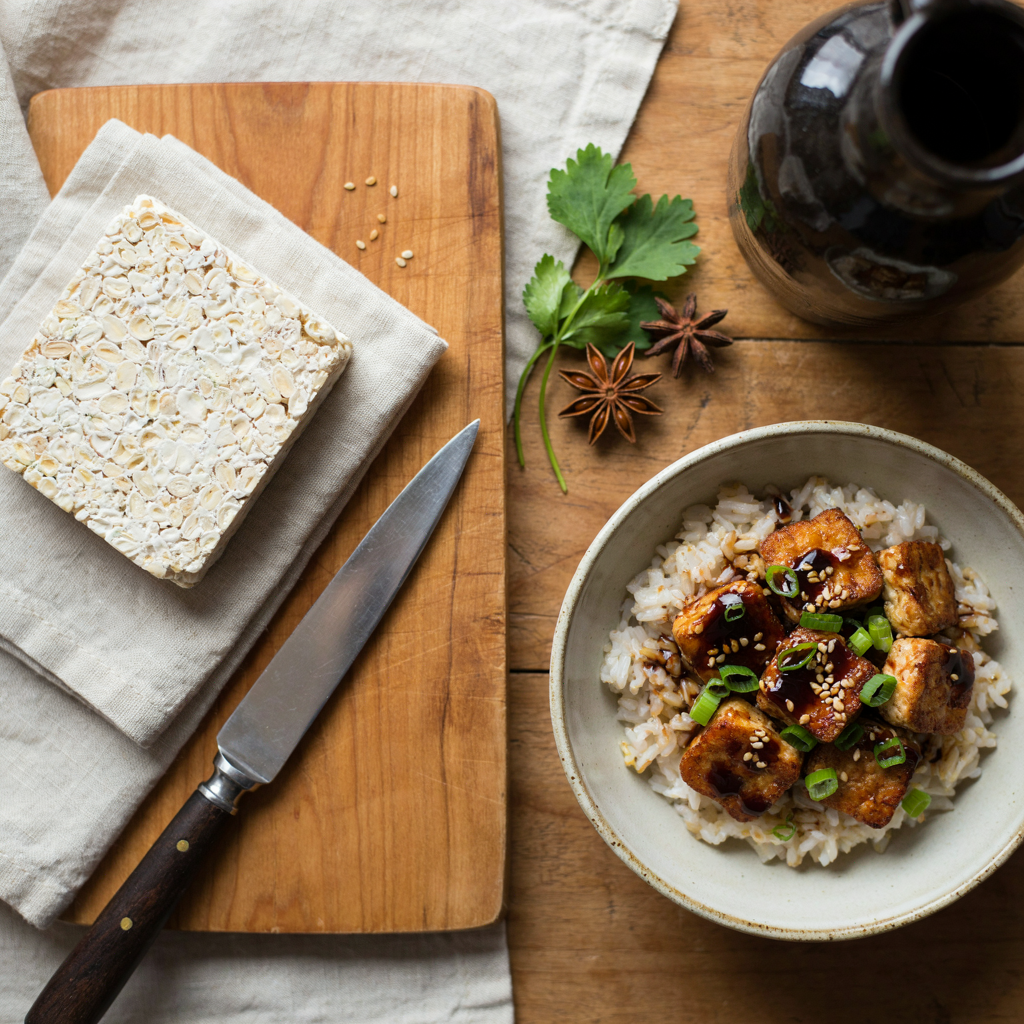
Short answer: Tempeh is a firm, nutty cake of whole soybeans bound together by an edible fungus (Rhizopus oligosporus) through natural fermentation. It originated in Indonesia; it is a complete protein containing all nine essential amino acids, and unlike tofu, it uses the whole bean — which means it keeps its fibre.
If you have walked past tempeh in the fridge and assumed it was a strange-looking tofu, you are not alone. But they are genuinely different foods.
Tofu is made by curdling soy milk and pressing it; the bean is strained, so much of the fibre is removed. It is soft and mild, and takes on whatever flavour you give it.
Tempeh is made by cooking whole soybeans, inoculating them with a Rhizopus culture, and letting them ferment until the mould knits the beans into a solid, sliceable cake. You can see the individual beans. It has a firm bite and a savoury, nutty, faintly mushroomy flavour of its own.
Seitan, by contrast, is not soy at all, it is wheat gluten. That makes it the highest in protein of the three, but entirely off-limits for anyone with coeliac disease or gluten sensitivity. If that is you, tempeh is your answer. (I cover the wheat-based option in full in my guide to where to buy seitan in South Africa.)
Because tempeh is fermented, it is also easier to digest than plain soybeans. Fermentation breaks down some of the compounds that cause bloating and reduces phytates, which can improve your body’s absorption of minerals like iron and zinc.
Why tempeh deserves a place in a South African kitchen
Short answer: Tempeh is a whole food, not a processed mock meat. It is dense enough to satisfy a braai-culture appetite, takes a marinade beautifully, and fits South African flavour profiles: curry, chakalaka, peri-peri, and bobotie spicing, better than almost any imported meat substitute.
So let me be honest and consistent: tempeh is not a budget staple. Nothing at R60 a block is.
But it earns its place for three reasons.
First, it is a whole food. Most plant-based “meat” on South African shelves is heavily processed: isolates, starches, gums, flavourings. Tempeh is beans and a culture. That is it. If you are trying to eat a genuine whole-food plant-based diet rather than a vegan junk-food diet, tempeh is one of the very few convenient proteins that qualify.
Second, it holds up on the fire. This matters more in Mzansi than almost anywhere. Tofu falls apart on a braai grid. Tempeh does not. Slice it thick, marinate it, and it chars beautifully.
Third, it takes our spices. Tempeh’s nutty base flavour is a friend to strong seasoning. A bobotie-spiced tempeh mince, a peri-peri tempeh skewer, a curry with tempeh cubes instead of chicken, these work. They are not sad substitutions.
Treat it as the occasional protein you enjoy, on top of a foundation of cheap staples. That is exactly how I use it, and it is how it stays affordable.
Where to buy tempeh in South Africa: the complete 2026 list
Short answer: Three routes. Woolworths for convenience, specialist online vegan stores for range and nationwide delivery, and small local makers for the freshest product. Health shops and Asian grocers are worth a look but are inconsistent.
1. Mainstream supermarkets
Woolworths — the one that actually stocks it
Woolworths sells PlantLove™ Tempeh (220 g) under its own label. This is the single most accessible tempeh in the country, and if you are new to it, this is where I would start.
Useful details from the packaging:
220 g block, vegan and Halaal-certified
Uncooked, previously frozen — keep it refrigerated once you buy it
Filed under plant-based protein, near the meat and poultry fridges, not with the health foods
Woolworths suggests sautéing, baking, mincing, braaiing, or adding it to sauces, soups and stews
Price: R69.99 — check in store or on the app, as it moves with promotions. Tempeh appears in their plant-based promotional bundles fairly often, so it is worth watching for a multi-buy.
My tip: stock is patchy at smaller Woolworths Food stores. Use the “Check In-store Availability” tool on their site before you drive.
Pick n Pay, Checkers, SPAR and Dis-Chem
Here is the honest picture: you cannot rely on any of these for tempeh in 2026.
All of them have expanded their plant-based ranges considerably — you will find Fry’s, The Vegetarian Butcher, Herbivore and plenty of tofu. But tempeh is a slower-moving, cold-chain product with a niche following, and it has not made the leap into their standard ranges nationally.
You may get lucky at a flagship urban store. Do not plan a meal around it. If a reader has found tempeh consistently stocked at a Checkers or Pick n Pay near them, tell me in the comments and I will update this guide.
This is where tempeh really lives in South Africa. If you want variety — chickpea tempeh, black bean tempeh, marinated patties — you are shopping online.
Tabu Food
Tabu Food is an organic, plant-based and macrobiotic specialist, and it has the deepest tempeh range I have found in the country. Their line-up includes:
Plain soybean tempeh
Tempeh burger patties
Tempeh kofte
Black bean tempeh
Natto (a different fermented soy product, if you are feeling adventurous)
Price: roughly R52 – R75 across the range, depending on the product.
⚠️ Read this before you order. Tabu’s cold products, which include all tempeh; are only delivered to Pretoria, Johannesburg and Cape Town, and there is a minimum combined cold order of R500. If you are in Durban, Gqeberha, Bloemfontein or a smaller town, this one is not for you. Plan a bulk order with friends if you are in a covered metro.
Wildsprout
Wildsprout sells a 220 g tempeh made from non-GMO organic soybeans, Rhizopus cultures and rice vinegar. It is a clean, short ingredient list — exactly what you want.
It is sold frozen. Their guidance: keep it frozen, do not refreeze after thawing, and use within 10 days of refrigeration. Price: R52.00.
Liveable
Liveable runs a dedicated tempeh and tofu category and carries several brands, which makes it a useful place to compare in one basket.
Vegan Protein
Vegan Protein stocks tempeh and offers free in-store pickup or delivery across South Africa. They position themselves as non-GMO and locally sourced.
3. Local artisan makers (freshest product, best flavour)
This is my favourite category, and the one most people miss. Fresh, handmade tempeh from a small producer is a completely different eating experience from a frozen block; denser, nuttier, more alive.
Boemboe Tempeh / TempehSA — Cape Town
Boemboe Tempeh (also trading as TempehSA) is an Indonesian tempeh specialist, handcrafting in Cape Town using locally sourced beans. This is tempeh made by people who take it seriously as a food tradition, not as a meat substitute.
Their range goes well beyond a plain block — tempeh chips, chickpea tempeh, black bean tempeh, patties, BBQ tempeh, and a bobotie tempeh that is exactly the kind of cultural crossover I love to see. They indicate reach into Pretoria, Durban, Johannesburg, and Cape Town.
Green Heart Organics — Pinetown, KZN
Good news for us in KwaZulu-Natal, where the online cold-chain restrictions bite hardest. Green Heart Organics sells a 350 g soybean tempeh; a notably larger block than the 220 g standard — from a Pinetown depot, online orders only. Non-GMO and all-natural.
(A note on their product page: it describes tempeh as “one of the best vegetarian B12 sources.” That is a widely repeated claim, and it is not correct. See the section below, it is important enough that I am not going to let it slide, even when I am recommending the shop.)
4. Health shops and Asian grocers
Independent health stores, organic markets and Asian supermarkets sometimes carry tempeh, particularly in Cape Town, Durban and Johannesburg. It is worth a phone call, but it is inconsistent enough that I cannot confidently list specific branches.
The Vegan SA directory maintains a tempeh listing that is useful for spotting smaller regional suppliers.
5. Make your own
Tempeh is genuinely home-makeable, and it is dramatically cheaper, you need soybeans (or almost any bean), a starter culture, vinegar and a warm, stable environment around 30 °C for roughly 24–36 hours.
Starter cultures can be ordered online. The main challenge in South Africa is temperature stability, especially with load-shedding making an incubator unreliable. A polystyrene box with a hot water bottle works surprisingly well.
Homemade tempeh brings the cost down to roughly the price of the beans, under R20 a block. If you are cooking for a family and tempeh has become a regular, this is the move. I will cover the full method in a dedicated guide.
Tempeh prices in South Africa: what you should expect to pay
Short answer: Between R50 and R80 for a 200–350 g block, which lands at roughly R230–R320 per kilogram. That is more expensive than tofu, cheaper than most seitan, and far more expensive than soy mince or dry beans.
Where
Product
Approx. price
Delivery
Woolworths
PlantLove™ Tempeh 220 g
R69.99
In-store & online
Tabu Food
Tempeh range (6 products)
~R52–R75
Cold delivery: PTA, JHB, CPT only. Min R500
Wildsprout
Tempeh 220 g (frozen)
R52.00
Online
Green Heart Organics
Soybean Tempeh 350 g
R59.00
Online, Pinetown KZN depot
Boemboe Tempeh
Artisan range
R52 – R70
Cape Town + selected metros
Homemade
DIY block
Under R20
Your kitchen
Is tempeh worth the money?
Let me be straight with you, because that is what this blog is for.
If your goal is the cheapest possible plant protein, tempeh is not it. Dehydrated soy mince and dry sugar beans beat it comfortably, see my R50-a-night meal plan, where dinner for two costs less than a single block of tempeh.
If your goal is the best whole-food convenience protein you can buy: something you can slice, marinate and cook in fifteen minutes without opening a packet of ultra-processed ingredients, then yes, it is worth it. Buy it as a treat protein, not a staple. Build the plate on beans and grains, and let tempeh be the thing that makes Thursday exciting.
The tempeh B12 myth — and why I am correcting it
Short answer: No. Tempeh is not a reliable source of vitamin B12, despite what several South African retailers claim on their product pages. Any B12 in tempeh comes from incidental bacterial contamination during fermentation, not from the Rhizopus culture itself — so the amount is wildly inconsistent, often near zero, and may not even be in a form your body can use. If you eat a plant-based diet, take a B12 supplement.
I want to spend a moment here, because this is the kind of claim that does real harm, and I keep seeing it repeated on South African vegan shopping sites.
The claim goes: tempeh is fermented, fermentation produces B12, therefore tempeh is a great plant source of B12. It sounds reasonable. It is wrong.
Here is what the research actually shows. The mould used to make tempeh — Rhizopus oligosporus — cannot synthesise vitamin B12 at all. When B12 has been detected in tempeh, it was produced by other bacteria that happened to be present during fermentation, such as Klebsiella pneumoniae and Citrobacter freundii. In other words: any B12 in your tempeh is there by accident.
That makes the amounts unpredictable. Reviews of the evidence note that a Dutch study found no B12 in tempeh at all, a US study found only trace analogues, and the USDA database lists roughly 0.08 µg per 100 g — against a daily requirement in the region of 3 µg. A 2022 study that deliberately set out to biofortify tempeh found no detectable B12 in any of the commercially available tempeh it tested — it only appeared once researchers added a B12-producing bacterium on purpose.
There is a further complication. Many older analyses measured B12 analogues — molecules that look like B12 to a laboratory assay but that your body cannot use. So even the numbers that look encouraging may overstate the real, bioavailable amount.
What this means for you, practically:
Eat tempeh. It is an excellent food — protein, fibre, minerals, a whole-food ingredient list.
Do not count it towards your B12. Unless the label explicitly declares a B12 percentage in the nutrition panel and lists it in the ingredients (i.e. it has been deliberately fortified), assume it contains none.
Take a B12 supplement if you eat a plant-based diet. This is the one nutrient where supplementation is genuinely non-negotiable, and it is cheap.
I would rather lose a reader’s trust in a marketing claim than have them develop a B12 deficiency because a shop’s product page told them tempeh had it covered. If you want to understand how I approach nutritional claims generally, read my evidence and editorial policy.
What tempeh is genuinely good for
Short answer: Complete protein, high fibre, gut-friendly fermentation, and better mineral absorption than unfermented soy. Roughly 18–20 g of protein per 100 g, with all nine essential amino acids.
Having taken one claim away, let me give you the real ones.
Complete protein. Tempeh contains all nine essential amino acids, which is unusual and valuable in a single plant food. It is not something you need to “combine” with anything.
Fibre. Because tempeh uses the whole bean, it retains fibre that tofu loses incessinbeansibre is the nthe utrient most South Afrduringans are short of, and the one I would argue matters most for long-term health.
Fermentation benefits. The fermentation process reduces phytates, which can improve absorption of iron and zinc — a meaningful consideration on a plant-based diet. It also makes the beans easier on the gut than plain soybeans.
Soy isoflavones. Tempeh retains these compounds, which have been studied extensively for cardiovascular and hormonal health.
Short answer: Steam it for 10 minutes before you do anything else. This removes the slight bitterness that puts first-timers off and opens the cake up to absorb marinade. Then marinateallowssn fry, bakr braai.
Mthethe ost people who say they dislike tempeh have eaten it badly prepared. Do this instead.
Step 1: Steam it
Slice the block and steam for about 10 minutes. Fresh tempeh can carry a faint bitterness, and steaming removes it. It also opens the structure so the marinade actually gets in rather than sitting on the surface. Do not skip this.
Step 2: Marinate it
Tempeh is thirsty. Give it at least 30 minutes — longer is better. Marinades that work in a South African kitchen:
Peri-peri: chilli, garlic, lemon, paprika, oil
Braai baste: tomato, chutney, vinegar, smoked paprika, brown sugar
Curry: curry powder, turmeric, garlic, ginger, a splash of coconut milk
Bobotie-spiced: mild curry powder, apricot jam, vinegar, grated apple
Soy and ginger: soy sauce, grated ginger, garlic, sesame oil
Step 3: Cook it hard
Tempeh wants a proper sear. Pan-fry in a hot pan until deeply golden on both sides, bake at 200 °C until the edges crisp, or put it straight on the braai grid. Undercooked tempeh is dull; properly browned tempeh is savoury and addictive.
Three South African ways to use it
Tempeh chakalaka bowl: cubed, fried tempeh over rice with a tin of chakalaka. Ten minutes, and it is genuinely excellent.
Tempeh braai skewers: thick slices, braai baste, threaded with onion and pepper. Holds together where tofu will not.
Crumbled tempeh mince: grate or crumble it, fry with onion and bobotie spicing, and use it anywhere you would use mince.
How to store tempeh
Frozen: keeps for months. Most South African tempeh is sold frozen or previously frozen.
Refrigerated: use within about 10 days of thawing. Do not re-freeze once thawed.
White fuzz is normal. That is the Rhizopus culture, it is supposed to be there.
Black or grey patches are usually fine too (they are sporulation), but pink, yellow or blue growth, or a sour ammonia smell, means throw it out.
Frequently asked questions
Where can I buy tempeh in South Africa?
Woolworths stocks PlantLove™ Tempeh (220 g) in its plant-based protein range, the most widely available option. Specialist online stores including Tabu Food, Wildsprout, Liveable and Vegan Protein deliver tempeh nationwide, and artisan makers such as Boemboe Tempeh in Cape Town and Green Heart Organics in Pinetown, KZN sell fresh handcrafted tempeh directly. Pick n Pay, Checkers and SPAR do not reliably stock it.
How much does tempeh cost in South Africa?
Expect roughly R50 to R80 for a 200–350 g block, which works out to a- R230–R320 per kilogram. Tabu Food’s tempeh range runs from about R52 to R75. Making your own at homeis priced between cost to unandr R20 a block, since you are paying only for beans and a starter culture.
Does Checkers or Pick n Pay sell tempeh?
Not reliably. Both have expanded their plant-based ranges significantly, but tempeh is a cold-chain product with a niche following and has not entered their standard national range. You may occasionally find it at a large urban store, but Woolworths is the only mainstream supermarket that stocks it dependably.
Is tempeh a good source of viconsistently tamin B12?
No. Despite claims made by some retailers, tempeh is not a reliable source of vitamin B12. The Rhizopus mould used to ferment it cannot produce B12; any B12 found in tempeh comes from incidental bacterial contamination, so levels are inconsistent and often negligible. Research testing commercially available tempeh has found no detectable B12 at all. Anyone eating a plant-based diet should take a B12 supplement.
Is tempeh gluten-free?
Plain soybean tempeh is naturally gluten-free, which is its key advantage over seitan (pure wheat gluten). However, marinated and flavoured tempeh products often contain soy sauce, which usually contains wheat. If you are coeliac, check the label on any pre-seasoned tempeh.
What is the difference between tempeh and tofu?
Tofu is made from curdled and pressed soy milk, so it is soft, mild and lower in fibre. Tempeh is made from whole fermented soybeans, so it is firm, nutty, higher in fibre and protein, and holds its shape on a braai. Tofu absorbs flavour passively; tempeh brings a flavour of its own.
Why does my tempeh taste bitter?
Because you did flavour flavournot steam it first. Steaming sliced tempeh for about 10 minutes before marinating removes the natural bitterness and helps it absorb flavour. This single step is the difference between tempeh you tolerate and tempeh you crave.
The bottom line
Tempeh is no longer hard to find in South Africa. Woolworths has made it a supermarket staple, a handful of dedicated online stores carry a range that would impress anyone in Amsterdam or Melbourne, and we now have local artisans making bobotie-spiced tempeh in Cape Town — which is, when you think about it, a small and wonderful sign of how far plant-based eating has come here.
Just buy it with clear eyes. It is a treat protein, not a budget one. It is a superb whole food, not a B12 supplement. Build your plate on the staples that have fed this region for centuries, and let tempeh be the thing that makes the week interesting.
Have you found tempeh somewhere I have missed? Drop it in the commenthaven’tIfound ite this guide as readers report new stockists, and a note from a reader in Gqeberha or Polokwane is worth more than any press release.
Quick Answer: Yes — morogo (South Africa’s traditional wild and African leafy greens) is genuinely good news if you’re managing diabetes or insulin resistance. It’s high in fibre, low in carbohydrates, and rich in the kind of polyphenols that help blunt blood sugar spikes. It’s …
By Zama Zincume — Public Health Specialist & Plant-Based Food Writer Quick Answer: Amadumbe (Colocasia esculenta, known internationally as taro) is a starchy root vegetable that has long been grown in KwaZulu-Natal. Laboratory studies now confirm that it contains high levels of resistant starch, meaning …
By Zama Zincume — Public Health Specialist & Plant-Based Food Writer
Quick Answer
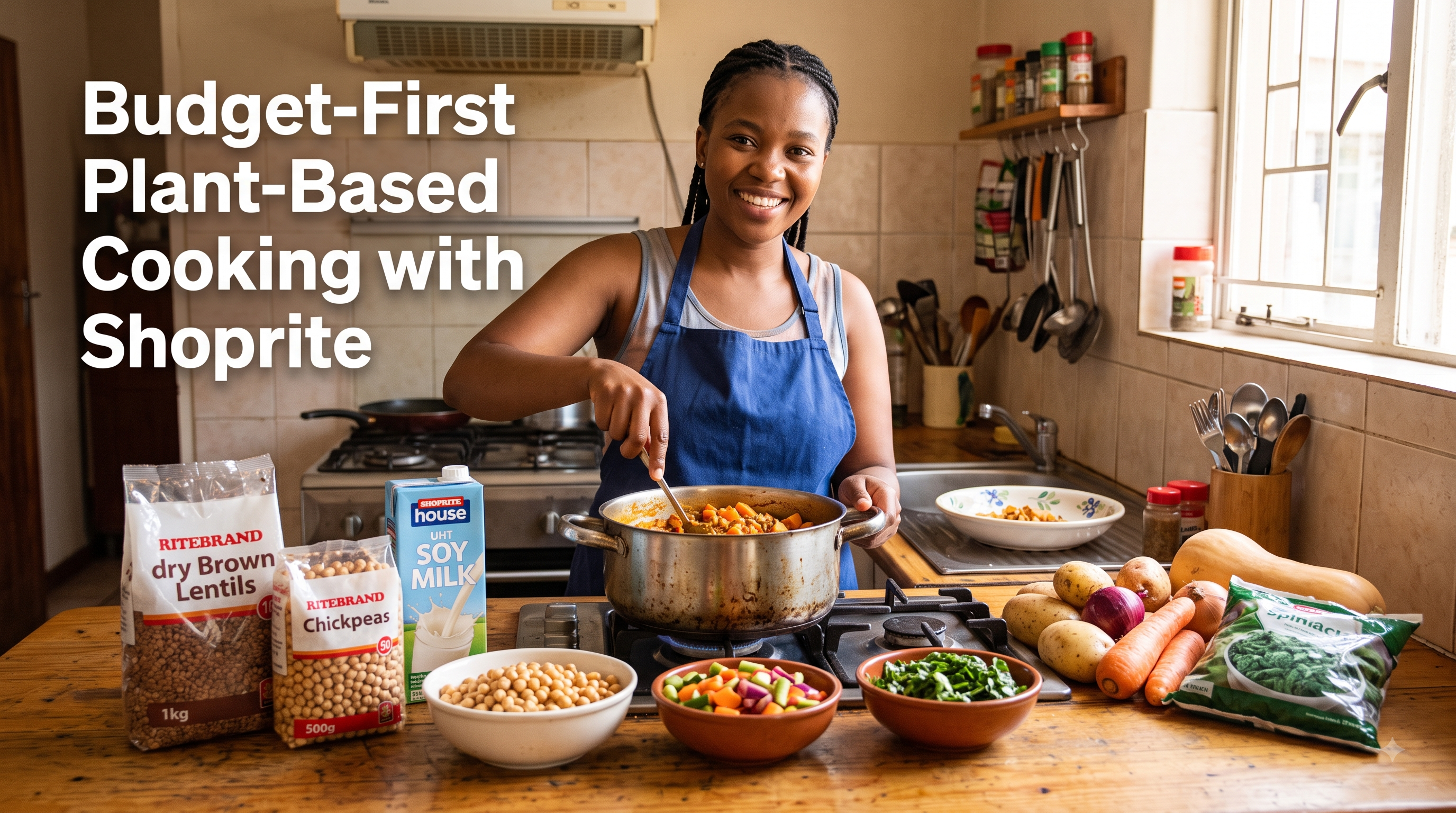
Eating a high-protein, nutrient-dense plant-based diet in South Africa does not require high-end speciality stores or expensive imported products. By leveraging Shoprite’s budget-friendly house brands (like Ritebrand and Simple Truth) alongside staple legumes, grains, and seasonal produce, you can lower your monthly food bill while meeting all your nutritional targets.
Key Takeaways
Affordability: Peer-reviewed comparative cost analyses show that whole-food, plant-based diets can reduce overall food expenditure by up to 30% compared with standard omnivorous diets.
Nutritional Density: Legumes (beans, lentils, chickpeas) sourced from Shoprite offer some of the highest protein-to-cost ratios available in South African retail.
Strategic Grocery Shopping: Sticking to store-brand staples, utilising the Xtra Savings card, buying frozen or seasonal produce, and batch cooking prevent both food waste and unnecessary strain on the budget.
Evidence-Backed Health: Clinical research demonstrates that replacing animal fats with whole plant foods drastically reduces markers of systemic inflammation, lowers LDL cholesterol, and improves glycemic control.
Introduction: The Myth of the Expensive Plant-Based Lifestyle
When I first decided to transition toward a plant-based way of eating, I hit a massive wall of financial anxiety. Browsing online forums and high-end health blogs, I was constantly bombarded with recipe lists requiring artisanal cashew cheeses, imported hemp seeds, spirulina powders, and ultra-processed mock meats that cost more per kilogram than a prime cut of steak.
I remember standing in a boutique grocery store aisle, looking at a single tub of almond-based cream cheese that cost as much as my entire weekly produce budget, and thinking: If this is what it takes to eat plant-based, I am going to end up broke.
Thankfully, I was completely wrong.
The truth is that plant-based eating only becomes expensive when we mistake “vegan luxury alternatives” for foundational nutrition.
Once I stripped away the marketing hype and looked at how real, wholesome food is actually bought and cooked, I realised something revolutionary: the humblest, most affordable ingredients in the supermarket are inherently plant-based.
By aligning my kitchen strategy with my local Shoprite– a store accessible to millions of South Africans- I didn’t just maintain my monthly budget; I slashed my overall grocery spend by nearly a third.
In this deep-dive guide, I want to walk you through the exact blueprint I use to cook mouthwatering, highly nutritious, budget-first plant-based meals using everyday items from Shoprite. We will look at what peer-reviewed science says about the health and financial benefits of a plant-predominant diet, how to navigate Shoprite’s aisles like a seasoned pro, and how to turn simple staples into culinary wins.
What the Science Says: Health and Wallet Benefits
Before we dive into grocery lists and meal prep strategies, let’s ground our approach in solid evidence. There is a persistent myth that a plant-based diet lacks essential nutrients or that it’s an indulgence reserved for the affluent. However, robust nutritional science and health-economics research tell a very different story.
1. The Financial Reality: Cutting Costs by Up to 30%
A landmark global study led by researchers at the University of Oxford, published in The Lancet Planetary Health, analysed the costs of various dietary patterns across 150 countries. The findings were stark: in upper-middle to high-income nations, diets rich in legumes, whole grains, and vegetables were the most affordable dietary option, reducing food costs by 25% to 30% compared to typical meat-heavy diets.
Furthermore, clinical trials from the Physicians Committee for Responsible Medicine (PCRM)published in JAMA Network Open demonstrated that participants who switched to a whole-food, plant-based diet saw average daily food savings of $1.80 to $2.00 per day—primarily driven by the elimination of expensive animal proteins and fats.
When you translate these findings to South African rand at your local Shoprite, swapping out beef mince or chicken breasts for dried lentils or black beans instantly alters your household economics.
2. Cardiovascular Health and Cholesterol Management
From a clinical standpoint, replacing saturated fats (abundant in animal products) with dietary fibre and unsaturated plant fats yields immediate metabolic benefits.
Comprehensive meta-analyses published in theJournal of the American Heart Associationconfirm that whole-food, plant-based diets reliably reduce low-density lipoprotein (LDL) cholesterol by 10% to 15%, significantly lowering the risk of atherosclerotic cardiovascular disease.
The primary driver behind this effect is soluble fibre—found in high concentrations in oats, beans, lentils, and apples (all Shoprite staples). Soluble fibre binds to cholesterol particles in your digestive system and moves them out of the body before they can enter your bloodstream.
3. Diabetes Risk and Glycemic Control
A systematic review and meta-analysis published in PLOS Medicine, evaluating data from over 300,000 participants, found that high adherence to a plant-based diet rich in whole foods was associated with a 23% lower risk of developing type 2 diabetes. The high fibre content in legumes and intact grains slows the absorption of glucose into the bloodstream, preventing the sharp insulin spikes that drive insulin resistance over time.
For more evidence-based deep dives linking plant-based nutrition to clinical health outcomes, I highly recommend checking out the curated resources and scientific summaries at eatingplantbasedza.com, an invaluable hub for South Africans navigating this lifestyle shift.
Decoding Shoprite: The Ultimate Budget Plant-Based Hub
Shoprite is widely known as South Africa’s price leader, but many shoppers don’t realise just how well suited it is to a whole-food, plant-based lifestyle. The key to keeping your bill minimal is understanding how to navigate their store tiers, house brands, and promotional systems.
┌─────────────────────────────────────────────────────────────────┐
│                    THE SHOPRITE SAVINGS MATRIX                  │
├───────────────────────────────┬─────────────────────────────────┤
│ STRATEGY                      │ IMPACT ON YOUR BUDGET           │
├───────────────────────────────┼─────────────────────────────────┤
│ 1. Prioritize Dry Legumes     │ Saves ~60% vs. Canned Beans     │
│ 2. Shop Ritebrand / House     │ Saves 15-30% vs. Name Brands    │
│ 3. Xtra Savings Loyalty Card  │ Unlocks Instant Cash Discounts  │
│ 4. Frozen & Seasonal Produce  │ Eliminates Waste & Reduces Cost │
└───────────────────────────────┴─────────────────────────────────┘
Leveraging Store Brands: Ritebrand and Simple Truth
When you step into Shoprite, skip the flashy centre-aisle displays featuring branded processed items. Instead, look for:
Ritebrand: Shoprite’s value brand is your best friend for absolute baselines: dry brown lentils, split peas, white rice, rolled oats, coarse salt, and canned chopped tomatoes. These items are functionally identical to high-end branded equivalents, but cost a fraction of the price.
Simple Truth: Check for select affordable items within this line, such as whole-grain pasta, peanut butter (look for 100% peanut versions without added palm oil), and unsweetened soy or oat milk.
The Power of the Xtra Savings Card
If you don’t have an Xtra Savings card, you are leaving money on the table. Shoprite’s loyalty program isn’t based on an obscure points-accumulation model; it offers direct, immediate cash discounts at the till on everyday items like 5kg bags of maise meal, 2kg bags of rice, fresh butternut, and frozen spinach.
The Master Shopping List: Plant-Based Staples Under R500
To show you just how accessible this is, here is a breakdown of a foundational Shoprite grocery cart designed to feed an individual or a couple with nutrient-dense meals for a week, all within a modest budget.
Pro Tip on Dry vs. Canned: Canned chickpeas and kidney beans are convenient, but buying dry legumes in bags yields more than double the food volume per rand spent. A quick overnight soak and 45-minute boil is all it takes to prep them for the week!
To put this list into action, let’s make three core recipes that showcase how basic Shoprite staples turn into rich, deeply satisfying meals. These dishes rely on simple techniques to build massive flavour without expensive seasonings or special equipment.
Chakalaka is an iconic South African relish, but when it’s expanded to include protein-dense brown lentils and sweet potato, it becomes a complete, robust one-pot meal.
1. Prep the Legume Base: Prep time: 10 mins.
Rinse 1 cup of dry brown lentils under cold water. Place in a pot with 3 cups of water, bring to a boil, then reduce heat and simmer for 20-25 minutes until tender but not mushy. Drain and set aside.
2. Sauté Aromatics & Spices: Build deep flavour foundations.
Heat 1 tablespoon of sunflower oil in a large pot. Add 1 finely diced onion, 2 grated carrots, and 1 grated sweet potato. Cook for 5 minutes until soft. Stir in 1 tablespoon of mild curry powder, 1 teaspoon of smoked paprika, and 2 minced garlic cloves. Stir constantly for 60 seconds until fragrant.
3. Simmer and Combine: Allow flavours to meld.
Add 1 canned tin of Shoprite chopped tomatoes (or 3 grated fresh tomatoes) and 1/2 cup of water. Fold in your cooked lentils. Cover and simmer gently for 15 minutes until the sweet potato is tender and the sauce thickens.
4. Serve with Whole Grains: Plating.
Season with salt and black pepper to taste. Serve hot over a bed of steamed brown rice or warm maise meal pap.
Meal 2: Creamy Peanut & Spinach Chickpea Stew
Inspired by West African peanut stew, this recipe turns a jar of simple peanut butter and frozen spinach into a silky, high-protein gravy that tastes like pure luxury.
2 cups vegetable broth (made from a low-sodium stock cube)
Salt and chilli flakes to taste
Instructions:
Sauté the onion and garlic in a pot until translucent.
Add the cumin and ginger, cooking for 30 seconds.
In a cup, whisk the peanut butter with 1/2 cup of warm broth until smooth, then pour it into the pot along with the remaining broth.
Add the cooked chickpeas and bring to a gentle simmer for 10 minutes.
Stir in the thawed spinach and cook for another 3–5 minutes until the greens are fully incorporated and the sauce is thick and velvety. Serve over mashed potatoes or cooked rice.
Meal 3: Savoury Golden Oats with Sautéed Garlic Greens
Oats aren’t just for sweet breakfasts! Savoury oats are popular worldwide as a fast, cheap, nutrient-dense meal for lunch or dinner.
Boil the Base: Bring 2 cups of water or vegetable broth to a boil. Add 1 cup of Shoprite rolled oats and a pinch of salt. Reduce heat and cook for 5 minutes until thick.
Sauté the Topping: In a small skillet, sauté 1 cup of chopped shredded cabbage, 1/2 diced onion, and sliced mushrooms (or leftover veggies) with a splash of soy sauce and garlic until caramelised.
Assemble: Scoop the warm savoury oats into a bowl, top with the sautéed vegetables, and drizzle with a few drops of sesame oil or hot sauce.
Smart Meal-Prep Blueprint for Busy Weeks
To succeed on a budget, you have to eliminate food waste. Cooking individual meals from scratch every night often results in half-used bags of vegetables rotting in the back of the fridge. Batch cooking solves this completely.
Sunday Afternoon: The Power Hour
Sunday 14:00
Soak 2 cups of dry chickpeas and 2 cups of dry black or kidney beans overnight in cold water.
Sunday Evening: Boiling & Grains
Sunday 18:00
Boil your soaked beans and lentils in separate pots. While they cook, bake a large tray of cubed butternut squash and sweet potatoes in the oven. Store cooked grains in large glass or plastic containers in the fridge.
Mid-Week Mix & Match
Wednesday 19:00
Use your pre-cooked legumes and roasted veggies as “building blocks.” Combine roasted butternut with chickpeas and curry powder for a 10-minute wrap, or toss lentils with pasta and tomato sauce for a quick Bolognese.
Friday: Clearing the Fridge
Friday 18:30
Take every remaining vegetable in your crisper drawer—carrots, onions, half-used squash—and combine them with your leftover beans in a stockpot with vegetable broth to create a hearty end-of-week soup.
Nutritional Safeguards: B12, Iron, and Protein
When cooking plant-based on a strict budget, it’s vital to ensure you aren’t sacrificing long-term nutritional adequacy. Here is how to keep your bases covered safely and affordably:
Vitamin B12: Non-Negotiable Supplementation
No matter where you shop or how healthy your diet is, Vitamin B12 cannot be reliably obtained from unfortified plant sources. Microorganisms, not plants or animals, synthesise B12.
While animal products contain B12 because animals consume bacteria or are given supplements themselves, plant-based eaters must take a direct B12 supplement (Cyanocobalamin or Methylcobalamin).
A standard bottle of B12 tablets from your local pharmacy or Shoprite Medirite counter costs very little and will last several months.
Optimising Non-Heme Iron Absorption
Plant foods contain non-heme iron (found in lentils, beans, spinach, and pumpkin seeds). Non-heme iron is slightly less easily absorbed by the human digestive tract than heme iron from meat. However, you can dramatically boost absorption by pairing iron-rich plant foods with Vitamin C in the same meal:
Non-Heme Iron (Lentils/Spinach) + Vitamin C (Lemon Juice/Tomatoes/Peppers) – Significantly Increased Bioavailability
Squeezing fresh lemon juice over your lentil stew or cooking your beans in a tomato-based sauce increases iron absorption up to threefold!
Complete Proteins Myths
You do not need to worry about “combining proteins” at every single meal. As long as you eat a varied diet that covers your daily calorie requirements through legumes, grains, nuts, and vegetables, your liver maintains an amino acid pool to build complete proteins throughout the day.
Common Pitfalls to Avoid
When starting at Shoprite, watch out for these subtle budget traps:
Buying Vegan Speciality Cheeses and Meats Daily: These products are great treats, but using them as daily staples will instantly double your grocery bill. Treat them as occasional luxuries rather than main ingredients.
Ignoring the Bulk Aisle / Large Bags: Buying a 500g bag of rice three times a month costs significantly more than buying one 2kg or 5kg bag. If your cash flow permits, invest in the larger sizes for non-perishable grains and legumes.
Over-Buying Fresh Produce That Spoils: Fresh green leafy vegetables have a short shelf life. If you find yourself throwing away slimy spinach at the end of every week, switch to frozen spinach or peas. Frozen produce is flash-frozen at peak harvest, retaining full nutrient value while preventing waste.
Conclusion
Transitioning to a plant-based diet doesn’t require a lifestyle overhaul, a trip to a fancy health food store, or a huge budget. By embracing budget-first cooking with everyday Shoprite staples, you can nourish your body with clinically backed nutrition, protect your long-term health, and keep your wallet happy.
Start small this week: grab a bag of dry lentils, a bag of oats, and a couple of sweet potatoes on your next grocery run. You’ll be amazed at how far a little culinary creativity can take you!
For more peer-reviewed science, meal planning ideas, and locally tailored nutritional advice, visit eatingplantbasedza.com.
By Zama Zincume — Public Health Specialist & Plant-Based Food Writer Quick Answer Adopting a plant-based diet reduces your risk of cardiovascular disease by up to 25%, lowers blood pressure, and significantly reduces LDL (“bad”) cholesterol. In South Africa, where heart disease is a leading …