
How to Eat Plant-Based in South Africa for R50 a Night
Read Time: 12 Minutes
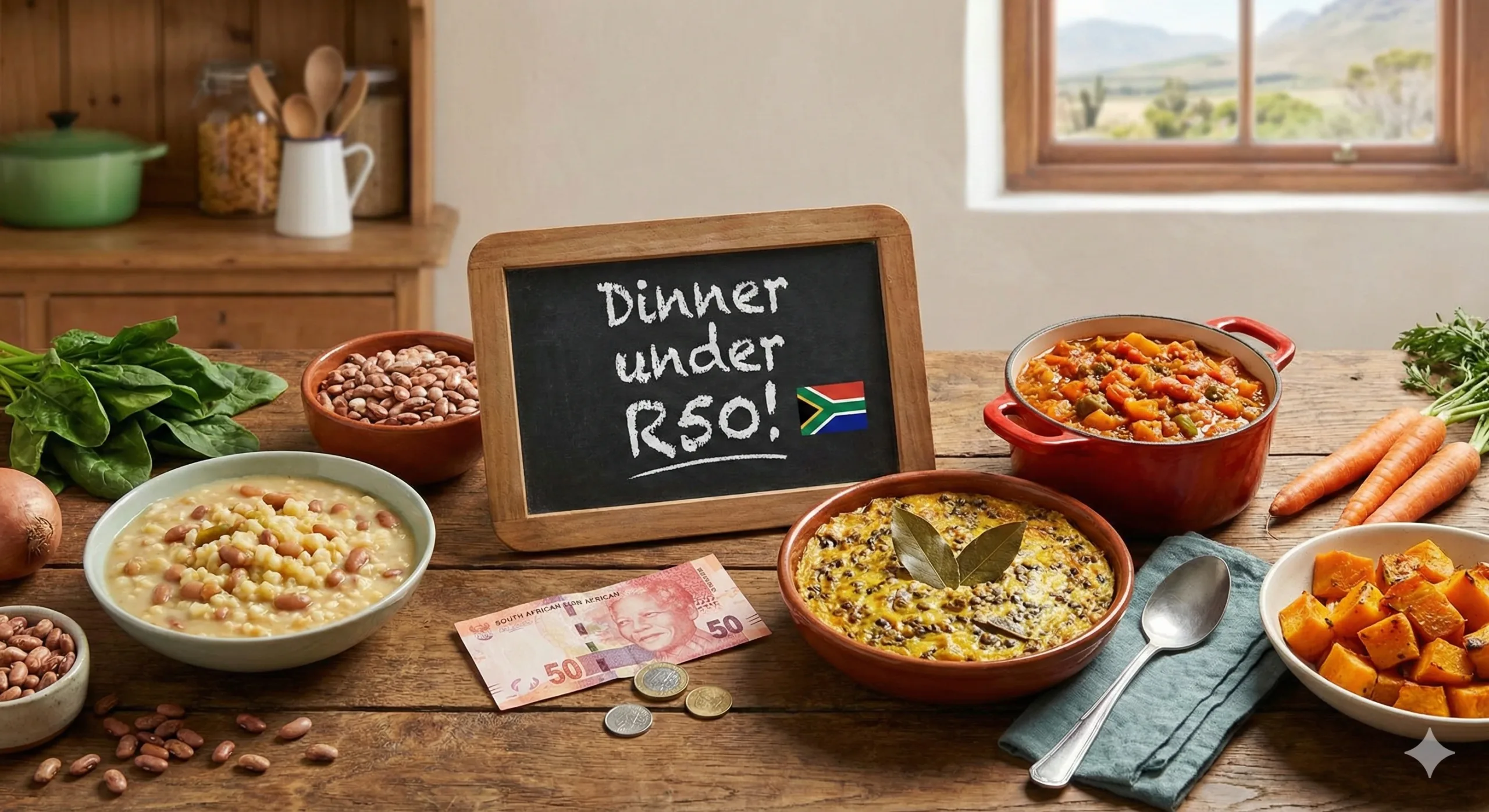
Let’s answer the question on how to eat plant-based in South Africa for R50 a night.
Let’s be real for a second—have you walked down the refrigerated aisle at your local supermarket lately?
Grocery shopping in South Africa is tough right now. Cheddar cheese prices are in the triple digits, and chicken costs a fortune. It feels less like a chore and more like an extreme sport.
We are all feeling the pinch.
Whether you shop at Woollies, Checkers, or a local spaza shop, the cost-of-living crisis is real. It’s an unwelcome guest at every dinner table.
Here’s the good news the diet industry often hides: a Whole Food Plant-Based (WFPB) diet can be very cheap. It’s one of the most affordable ways to live in South Africa.
Forget the myths.
You don’t need imported açai berries, fake meats that cost R100 a box, or organic kale massaged with tears of joy.
To eat well in Mzansi, you need to go back to basics. You need the foods our gogos cooked. You need the staples that fill tummies without emptying wallets.
I challenged myself to a “Budget Blitz”: 7 wholesome, filling dinners that cost roughly R50 to put on the table.
Disclaimer: Prices fluctuate by province and season. This guide assumes you have basic pantry staples like oil, salt, and curry powder. We’ll calculate the cost of the ingredients used, not the cost of the entire packet. But even so, these meals are a steal!
Ready to save money and get your glow back?
Let’s get cooking.
The Golden Rules of the R50 Dinner
Before we get to the recipes, we need to talk strategy. You cannot eat for R50 a night if you are buying convenience food.
Here is the game plan:
1. Dry Beans > Tinned Beans
Convenience costs money.
A tin of beans might cost R18. A 500g bag of dry beans costs roughly R25 but yields the equivalent of four tins once cooked. That brings your cost down to about R6 per “tin.”
Soak them overnight, boil a big batch on Sunday, and freeze them.
2. The “Dirty Dozen” (Vegetable Edition)
Stick to the vegetables that South African soil produces in abundance.
Cabbage, spinach (morogo), carrots, butternut, potatoes, and onions are your best friends.
Avoid out-of-season items like peppers or avocados when they are R20 a pop.
3. Spice is Life
Plant-based food is only dull if you don’t season it.
A R50 meal tastes like a R200 meal if you use the right spices.
Stock up on bulk packs of:
- Curry Powder (Hot or Mild)
- Turmeric
- Cumin (Jeera)
- Smoked Paprika
- Stock Cubes (Vegetable or “Beef” flavour—many widely available brands are accidentally vegan!)
The 7-Day R50 Meal Plan
Here is your roadmap for the week. These meals serve 2 adults or 2 adults + 2 small children (with some sides).
Day 1: The Monday Classic – Creamy Samp & Beans (Umngqusho) 🥣
Comfort in a bowl. This is the ultimate Xhosa classic. It’s naturally vegan if you leave out animal fat. Plus, it’s full of lasting energy.
Why it works: It uses two of the cheapest ingredients on the shelf: dried corn kernels (samp) and sugar beans.
The Cost Breakdown (Approx):
- 2 Cups Samp: R8
- 1 Cup Sugar Beans: R7
- 1 Onion & 2 Potatoes: R10
- Curry Powder & Stock: R5
- Total: ~R30 (Leaves budget for a side of spinach!)
The Method:
- Soak: Ideally, soak your samp and beans together overnight. If you forget, boil them in water for 30 minutes, drain, and continue.
- Simmer: Place the soaked mix in a large pot. Cover with water (about 3cm above the grain). Bring to a boil, then reduce to a low simmer. Let it go for at least 2 hours. Keep checking the water level—it gets thirsty!
- Flavour Base: In a separate pan, fry a diced onion and curry powder until soft. Add diced potatoes and a vegetable stock cube dissolved in a little hot water.
- Combine: When the samp is soft and creamy, stir in your onion and potato mix. Cook for another 30 minutes. This will soften the potatoes a bit. It makes the dish richer and thicker.
- Serve: Season with salt and plenty of black pepper.
Chef’s Tip: Stir in a spoon of peanut butter at the end for an extra protein kick and creaminess. Don’t knock it ’til you try it!
Day 2: Taco Tuesday – Lentil & Walnut Mince Tacos 🌮
Who says tacos have to be expensive? We are swapping beef for lentils. Brown lentils have a meaty texture and absorb flavour perfectly.
Why it works: Lentils are high in iron and fibre. You can get a “mince” texture for much less money. Mix them with grated carrots or walnuts (if budget allows).
The Cost Breakdown (Approx):
- 1 Cup Brown Lentils (Dry): R6
- 2 Carrots (Grated): R4
- Taco Seasoning (DIY with Cumin/Paprika): R5
- 6-8 Soft Tortillas (Store bought or homemade): R25
- Cabbage Slaw (for topping): R5
- Total: ~R45
The Method:
- Cook the Lentils: Boil the lentils until tender but not mushy (about 20 mins). Drain well.
- The “Mince”: Sauté diced onion in a pan. Add the grated carrots and cook until soft.
- Spice It: Add your cooked lentils to the pan along with cumin, paprika, garlic powder, and a splash of soy sauce (for that umami depth). Mash slightly with the back of a fork.
- Assemble: Warm your tortillas in a dry pan. Load them up with the lentil mix.
- Top It: Instead of expensive guacamole, make a crunchy slaw with shredded cabbage and a squeeze of lemon juice.
Day 3: Mid-Week Warmer – Sweet Potato & Chickpea Curry 🍛
Wednesday calls for something bright and warming. This curry freezes beautifully, so make double if you can!
Why it works: Sweet potatoes are often sold in bulk bags on the side of the road for cheap. They provide bulk and sweetness that balance the spice.
The Cost Breakdown (Approx):
- 2 Large Sweet Potatoes: R10
- 1 Tin Chickpeas (or dry equivalent): R12
- 1 Tin Coconut Milk (The splurge item!): R20
- Onion, Garlic, Ginger: R5
- Rice to serve: R5
- Total: ~R52 (Slightly over, but worth it!)
The Method:
- Prep: Peel and cube the sweet potatoes. Chop the onion and garlic, and grate a thumb-size piece of ginger.
- Fry: Sauté the aromatics (onion, garlic, ginger) in a pot. Add 2 tbsp of mild curry powder and 1 tsp turmeric. Fry for 1 minute to release the oils.
- Simmer: Add the sweet potato cubes and toss to coat in the spice. Pour in the coconut milk and half a tin of water.
- Cook: Simmer for 15 minutes until potatoes are tender.
- Finish: Add the drained chickpeas and cook for 5 more minutes. Add a squeeze of lemon juice to cut through the richness.
- Serve: Ladle over fluffy white or brown rice.
Budget Hack: If coconut milk is too pricey this week, use generic vegetable stock instead. Thicken the sauce by mashing two boiled potatoes into the liquid.
Day 4: The Local Legend – Soy Mince Bobotie 🇿🇦
You cannot have a South African meal plan without Bobotie. We use dehydrated soy mince. It is the cheapest protein source in the country.
Why it works: Soy mince, such as Knorr or generic brands, is rich in Zinc and Iron. It’s also shelf-stable and very inexpensive. It perfectly absorbs the sweet/sour flavours of Bobotie.
The Cost Breakdown (Approx):
- 1 Cup Dry Soy Mince: R8
- Handful of Raisins: R5
- Onion & Apple (grated): R8
- Plant Milk + 1 tbsp Chickpea Flour (for the topping): R10
- Yellow Rice (Rice + Turmeric): R5
- Chutney/Jam: R5
- Total: ~R41
The Method:
- Rehydrate: Soak the soy mince in boiling water with a beef-style (vegan) stock cube. Let it fluff up.
- The Base: Sauté onion and grated apple (the secret to a good Bobotie). Add mild curry powder.
- The Mix: Add the soaked mince, a big dollop of apricot jam or chutney, a splash of vinegar, and raisins. Simmer until the liquid reduces, and it’s sticky and savoury. Transfer to a pie dish.
- The Egg-Free Topping: Whisk together ½ cup of unsweetened soy/oat milk with 2 tbsp of chickpea flour and a pinch of turmeric. It should be the consistency of thick cream.
- Bake: Pour the topping over the mince. Tuck in a few bay leaves. Bake at 180°C for 25 minutes until the top is set and golden.
Day 5: One-Pot Wonder – Spicy Chakalaka Rice & Beans
Friday night means we are tired. We want flavour, but not dishes. Enter the One-Pot Wonder.
Why it works: Chakalaka is a flavour in a tin (or bottle). It does all the hard work for you. Combined with rice and beans, it forms a complete protein.
The Cost Breakdown (Approx):
- 2 Cups Rice: R8
- 1 Tin Chakalaka (Mild or Hot): R15
- 1 Tin Red Kidney Beans (drained): R15
- Frozen Mixed Veg (1 cup): R8
- Total: ~R46
The Method:
- The Base: In a large pot, fry the rice in a bit of oil for 2 minutes (this prevents it from going mushy).
- Combine: Add the tin of Chakalaka, the drained beans, and the frozen veg.
- Liquid: Add 4 cups of water (or stock). Stir well.
- Steam: Bring to a boil, then cover tightly and turn the heat to the lowest setting. Do not peek! Let it steam for 15-20 minutes.
- Fluff: Turn off the heat and let it sit for another 5 minutes. Open the cover, fluff with a fork, and serve.
Day 6: Soup Saturday – Hearty Butternut & Red Lentil Soup
Red lentils are magic. They dissolve when cooked, thickening soups without cream.
Why it works: Butternut squash is often sold in large bags at a low cost. This soup is sweet, savoury, and incredibly filling thanks to the lentils.
The Cost Breakdown (Approx):
- 1 Large Butternut: R15
- 1 Cup Red Lentils: R10
- Onion & Carrot: R5
- Stock Cube: R2
- Flour + Yeast (for homemade vetkoek/steamed bread): R10
- Total: ~R42
The Method:
- Chop: Peel and chop the butternut, carrot, and onion.
- Boil: Throw all veggies and the red lentils into a large pot. Cover with water/stock.
- Cook: Boil until the vegetables are soft and the lentils have broken down (about 25 mins).
- Blend: Use a stick blender (or masher) to smooth it out. Season with salt, pepper, and a dash of nutmeg.
- The Side: Serve with homemade “Dombolo” (steamed bread) or Vetkoek. Flour, water, yeast, sugar, and salt are all you need!
Day 7: Sunday Roast Alternative – Roast Veggie & Quinoa/Couscous Salad 🥗
Sundays are for using up what’s left in the fridge before the new week starts.
Why it works: Roasting vegetables concentrates their flavour. This is a “clean out the fridge” meal.
The Cost Breakdown (Approx):
- Whatever veg is left (Potatoes, Carrots, Pumpkin): R0 (Already bought!)
- Couscous or Quinoa (or leftover rice): R15
- Chickpeas (roasted): R10
- Dressing (Oil, Lemon, Mustard): R5
- Total: ~R30
The Method:
- Roast: Chop all leftover sturdy veggies into uniform chunks. Toss in the oil and roast at 200°C until the edges are crispy.
- Crunch: On a separate tray, roast the drained chickpeas with paprika until golden and crunchy (about 20 mins).
- Grain: Prepare your couscous (pour boiling water over it and cover!).
- Toss: Mix the roasted veggies, crunchy chickpeas, and grains in a big bowl.
- Dress: Whisk olive oil, lemon juice, and a teaspoon of mustard. Pour the dressing over the warm salad, allowing it to absorb.
Final Thoughts for the Frugal Foodie
Eating plant-based food in South Africa isn’t just for those who shop at pricey health stores. It is for everyone. It is for the student in Braamfontein, the mom in Soweto, and the family in the suburbs.
Eat simple foods like beans, lentils, grains, and root vegetables. This way, you follow how humans have eaten for centuries. It’s cleaner, it’s kinder to the planet, and right now, it’s the best thing you can do for your bank account.
Will you try the R50 Challenge?
If you whip up any of these meals, tag me on Instagram! I want to see your “Local is Lekker” creations. And if you have a secret budget tip that I missed, drop it in the comments below—we need all the help we can get!
Did you love this meal plan? Subscribe to the newsletter to get my free “Budget Shopping List” PDF sent straight to your inbox!
For a deeper understanding, download Eating Plant-Based on a Budget: Second Edition.
1 thought on “How to Eat Plant-Based in South Africa for R50 a Night”