
Best Plant-Based Nuts and Seeds Recipes in South Africa
Fuel your body the WFPB way!
Find the best whole food, plant-based nuts and seeds recipes in South Africa. Enjoy dishes like Dukkah and rusks while discovering their proven health benefits.
Introduction: The WFPB Heroes on the South African Table
South Africa boasts a rich culinary heritage.
Chefs know it for its vibrant flavours and diverse ingredients. There’s also a growing focus on health and sustainability.
Amidst this evolution, the Whole Food Plant-Based (WFPB) diet is gaining significant traction—and for good reason.
It’s a diet centred on fresh fruits, vegetables, whole grains, legumes, nuts, and seeds. It limits or avoids animal products, oils, refined sugars, and refined flours.
At the heart of this diet’s success are nuts and seeds.
Many people underestimate or fear fats because of their content. Fats are essential for living longer, staying heart-healthy, and avoiding diseases.
This article is your go-to guide for the best plant-based nut and seed recipes in South Africa. It’s based on solid evidence.
It will help you add these dishes to your whole-food, plant-based lifestyle.
We’ll explore nutritional science and feature local South African favourites. Plus, we’ll share tasty, oil-free, sugar-free WFPB twists on beloved SA classics.
Tradition and taste may coexist in healthy eating!
The Science Behind the Crunch: Evidence-Based Benefits
Eating nuts and seeds every day is key to the WFPB diet. This advice is based on years of robust scientific research.
These tiny powerhouses pack essential micronutrients, healthy fats, and fibre. They significantly boost health.
The Nutritional Superstars
- Omega-3 Fatty Acids (ALA): Alpha-linolenic acid (ALA) is abundant in walnuts, chia seeds, and flaxseeds. This is an essential plant-based source of Omega-3 fats. ALA helps lower chronic inflammation in the body. This is important because inflammation drives many non-communicable diseases (NCDs). Consistent consumption of ALA-rich seeds supports The Power of Omega-3 ALA for Heart Health.
- Heart-Healthy Fats: Whole nuts, like almonds, macadamias, and pecans, are rich in unsaturated fats. This is different from the saturated fats found mainly in animal products and processed oils. These fats can improve cholesterol levels. They lower LDL (bad) cholesterol and reduce the risk of heart disease.
- Fibre for Gut Health: Nuts and seeds are exceptionally high in dietary fibre, which is vital for the Role of fibre in a Healthy South African Gut. Fibre helps digestion and keeps you regular. It also feeds good gut bacteria. As a result, short-chain fatty acids (SCFAs) are produced. SCFAs are essential for immune function and brain health.
- Mineral Density: They are potent sources of minerals often lacking in the standard Western diet.
- Magnesium is key for muscle function, nerve signals, and blood sugar control. You can find it in pumpkin seeds, almonds, and cashews.
- Zinc: Essential for wound healing and immune system performance (rich in sunflower and pumpkin seeds).
- Vitamin E is a potent antioxidant. It’s found in high amounts in sunflower seeds. It helps protect cells from damage.
WFPB and Disease Prevention
Studies consistently show that incorporating nuts and seeds into a WFPB eating pattern contributes to lower rates of:
- Cardiovascular Disease: Healthy fats, fibre, and antioxidants work together. They help keep arteries flexible and blood pressure in check.
- Type 2 Diabetes: The high fibre and healthy fats slow glucose absorption. This helps control blood sugar levels.
- Obesity: Many studies show that eating nuts can help with weight management. Even though they are high in calories, nuts are very filling. They keep you feeling full longer.
In summary, choosing whole nuts and seeds over refined oils and saturated fats is a wise WFPB choice. This decision brings substantial, measurable health benefits.
WFPB Nuts & Seeds for the South African Table
The WFPB approach emphasises whole ingredients. We pick whole almonds, not almond oil. We also choose ground flaxseeds instead of flaxseed oil.
South Africa is fortunate to be a significant producer of several world-class nuts. Choosing local is not only sustainable but often more affordable.
| WFPB Staple | SA Availability/Focus | WFPB Use Case |
| Pecan Nuts | Widely grown in SA; excellent source of antioxidants. | Raw chopping over oats, ground into pie crusts, or used in ‘nut loaf’ recipes. |
| Macadamia Nuts | SA is a major global producer and is high in monounsaturated fats. | Creamy dairy-free sauces, WFPB ‘cheese’ alternatives, or crumbled salad toppings. |
| Sunflower Seeds | Highly affordable and rich in Vitamin E, Magnesium, and Zinc. | The ultimate Cashew alternative for creamy sauces, added to bread doughs, or homemade nut/seed butter. |
| Pumpkin Seeds (Pips) | Excellent source of zinc and protein. | Toasted as a snack, sprinkled on pap, or added to salad dressings. |
| Ground Flaxseeds (Linseeds) | Essential for Omega-3 ALA absorption. | SA is a major global producer, high in monounsaturated fats. |
The WFPB Difference: Always choose raw or dry-roasted, unsalted, and unflavoured varieties. For the best cost and freshness, check out Purchasing Affordable Nuts and Seeds in Bulk in SA.
Recipe Section 1: Savoury Staples
One key part of WFPB cooking is using whole nuts and seeds. They help create rich, creamy textures and bold flavours. Plus, you don’t need refined oils or dairy.
Creamy Sunflower Seed South African Curry Base (Oil-Free)
Many creamy curries rely on coconut cream or dairy. This WFPB recipe features sunflower seeds. They are a cost-effective and nutritious substitute for cashews. This makes them ideal for creating a creamy base in lentil or bean bunny chow.
Sunflower seeds have more protein, fibre, and minerals like magnesium and vitamin E than cashews.
This makes them an excellent option for a WFPB budget.
Ingredients:
- 1 cup raw, unhulled sunflower seeds, soaked in hot water for 30 minutes.
- 1 cup water (or vegetable broth).
- 1 large onion, chopped.
- 3 cloves garlic, minced.
- 1 tbsp mild SA curry powder.
- 1 tsp turmeric.
- 1/2 tsp smoked paprika (for depth).
- Juice of 1/2 lemon.
- Salt-free vegetable bouillon powder, to taste.
Method:
- Drain and rinse the soaked sunflower seeds.
- In a food processor, blend the soaked seeds with the 1 cup of water until completely smooth. This is your thick, oil-free cream.
- Sauté the onion in a splash of water/broth (no oil) until soft, then add garlic, curry powder, and turmeric. Cook for 1 minute until fragrant.
- Add the sunflower cream, lemon juice, and bouillon powder. Bring to a gentle simmer after stirring well.
- Mix this base with cooked chickpeas, butter beans, or lentils. You’ll get a hearty, authentic, and fully WFPB curry.
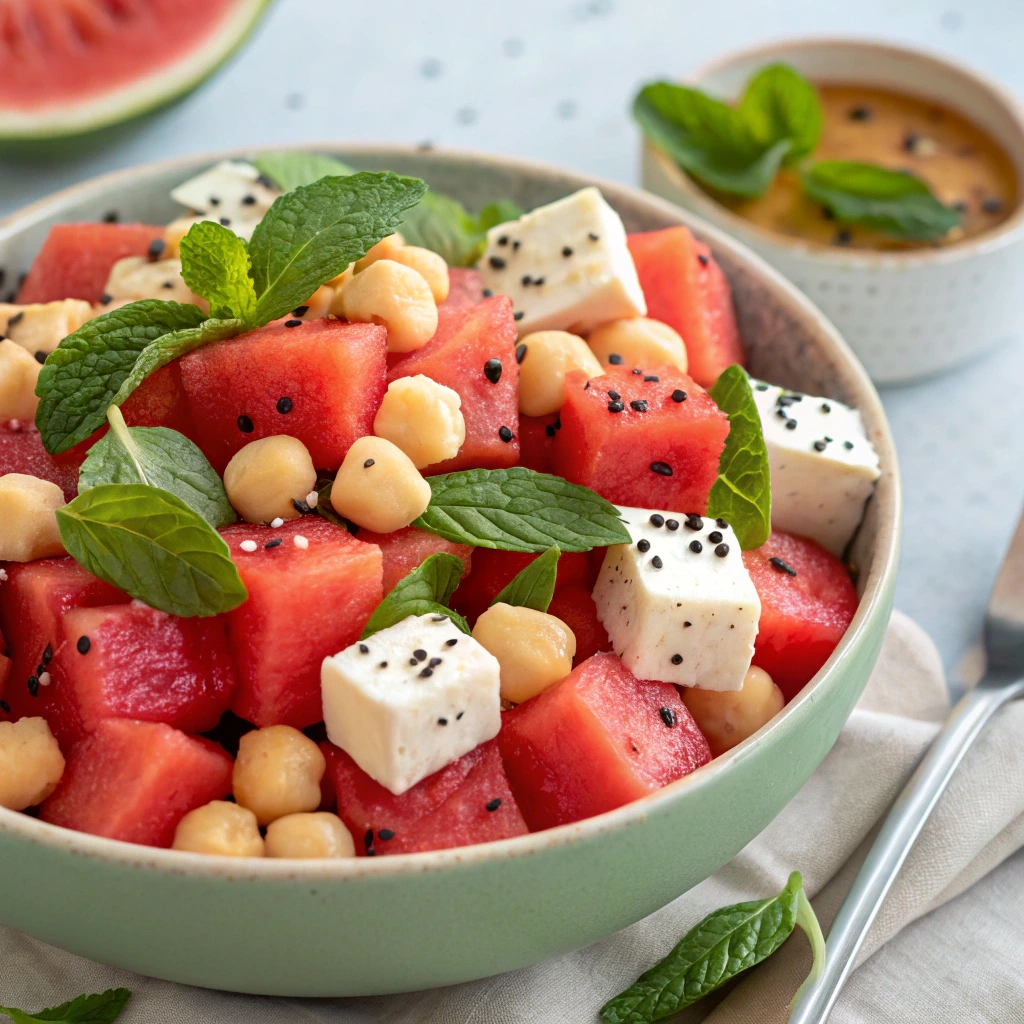
WFPB Macadamia “Feta” & Watermelon Salad
Macadamia nuts, a prized South African crop, are the key to this dairy-free, crumbly “feta.”
Ingredients:
- 1 cup raw macadamia nuts.
- 1/4 cup nutritional yeast (for cheesy flavour).
- 1 tbsp apple cider vinegar.
- 1 tsp dried origanum.
- Pinch of garlic powder.
- 1/2 block of cubed watermelon.
- Fresh mint leaves.
Method:
- Make sure not to overprocess the macadamia nuts into butter; pulse them in a food processor until they crumble finely.
- Transfer the macadamia crumble to a bowl. Mix in the nutritional yeast, apple cider vinegar, origanum, and garlic powder. The vinegar and yeast provide the characteristic salty-tangy flavour of feta.
- Gently mix the “feta” crumble into the cubed watermelon, then top with fresh mint leaves. Serve immediately.
Homemade SA-Style Seed & Nut Dukkah
Dukkah is a fragrant blend of nuts and spices from Egypt. It’s now a popular staple in South Africa.
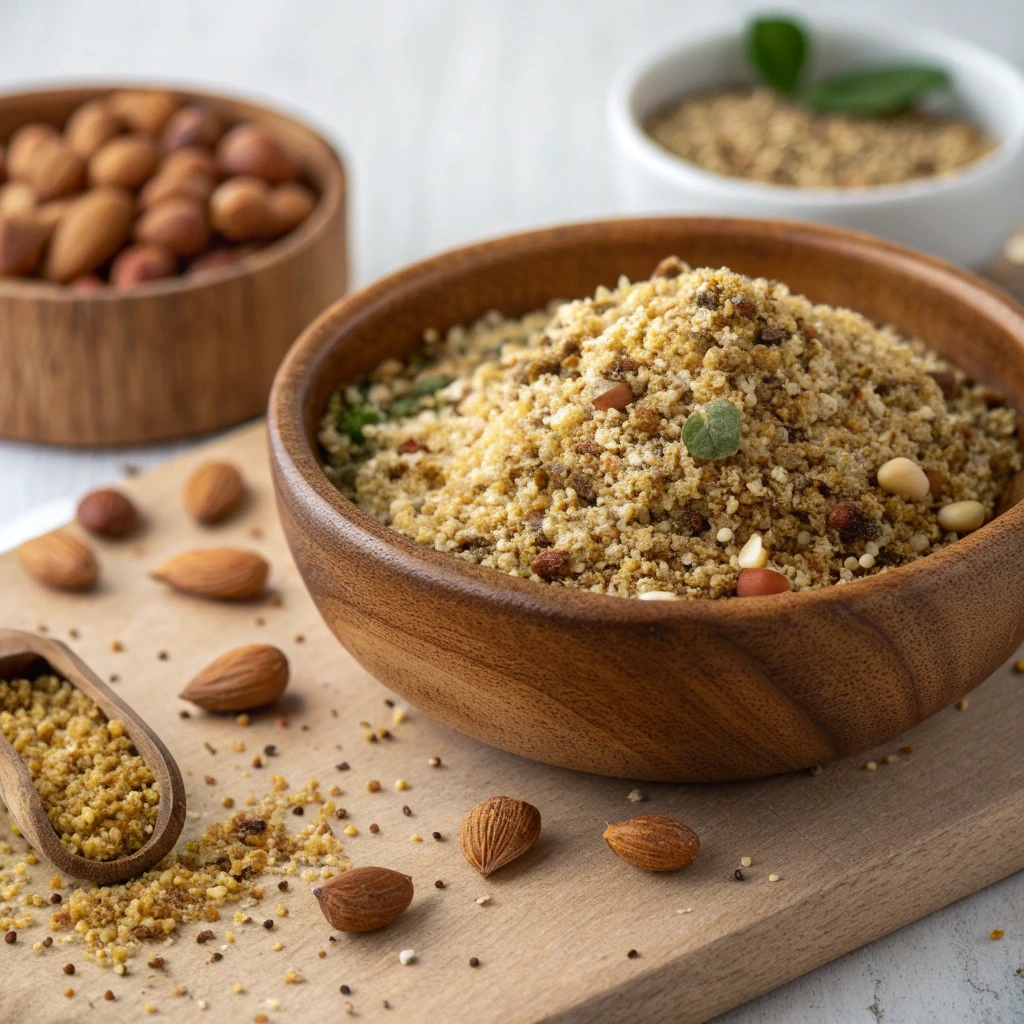
This recipe uses lots of seeds and local spices. It’s a WFPB dish that boosts flavour while keeping sodium low.
Ingredients:
- 1/4 cup pumpkin seeds (pips).
- 1/4 cup sunflower seeds.
- 1/4 cup sesame seeds.
- 1/4 cup Pecan nuts (or almonds/hazelnuts).
- 1 tbsp coriander seeds.
- 1 tbsp cumin seeds.
- 1 tsp black peppercorns.
- 1 tsp smoked paprika.
Method:
- Dry Toast: In a dry pan over medium heat, combine all the seeds, nuts, cumin, coriander, and peppercorns. Toast, stirring constantly, until fragrant (about 3–5 minutes). The seeds will begin to “pop.”
- Remove from heat and let cool completely.
- Pulse: Transfer the cooled mixture to a food processor or use a pestle and mortar. Pulse or pound until you have a coarse, rustic crumble—not a fine powder.
- Stir in the smoked paprika.
- Serve: Sprinkle generously over hummus or roasted veggies like sweet potato or butternut, or mix into a WFPB yoghurt dip.
Recipe Section 2: Sweet & Snack Heroes (WFPB Compliant)
Nuts and seeds are key to making tasty, nutrient-rich sweet treats. They follow the WFPB rule of no added sugar or oil.
Plant-Based Bran Rusks (WFPB Adaptation)
The South African rusk is an icon—perfect for dipping in coffee or tea. This WFPB adaptation swaps out butter, oil, refined flour, and sugar. It uses whole ingredients like bananas, dates, and a potent mix of nuts and seeds instead.
Ingredients:
- 2 cups whole wheat or spelt flour.
- One cup of rolled oats.
- 1 cup wheat bran or oat bran.
- 1/2 cup pumpkin seeds.
- 1/2 cup chopped Pecan nuts.
- 1/4 cup ground flaxseeds.
- 1 tsp baking soda.
- 2 large, very ripe bananas, mashed (binder/sweetener).
- 1/2 cup date paste (made by blending soaked dates with minimal water).
- One cup of plant milk (almond or soy) without sugar.
Method:
- Preheat oven to 180°C.
- Combine the dry ingredients (flours, oats, bran, seeds, nuts, flaxseeds, and baking soda) in a large bowl.
- Mix the plant milk, date paste, and mashed banana in another bowl.
- The liquid mixture should be combined with the dry ingredients. Mix until just combined—it will be a very thick, dense dough.
- Press the dough evenly into a lined rectangular loaf pan or tray (this dough is firm, so press hard).
- Bake for 35–40 minutes until golden brown and firm to the touch.
- The Drying Stage: Let the loaf cool completely. Slice it into traditional rusk fingers. Put the fingers on a baking sheet. Then, please return them to the oven at a low temperature (about 100°C) for 2 to 4 hours. You should scorch them until they are crunchy. Store in an airtight container.
Quick Chia Seed ‘Mielie Pap’ Breakfast Bowl
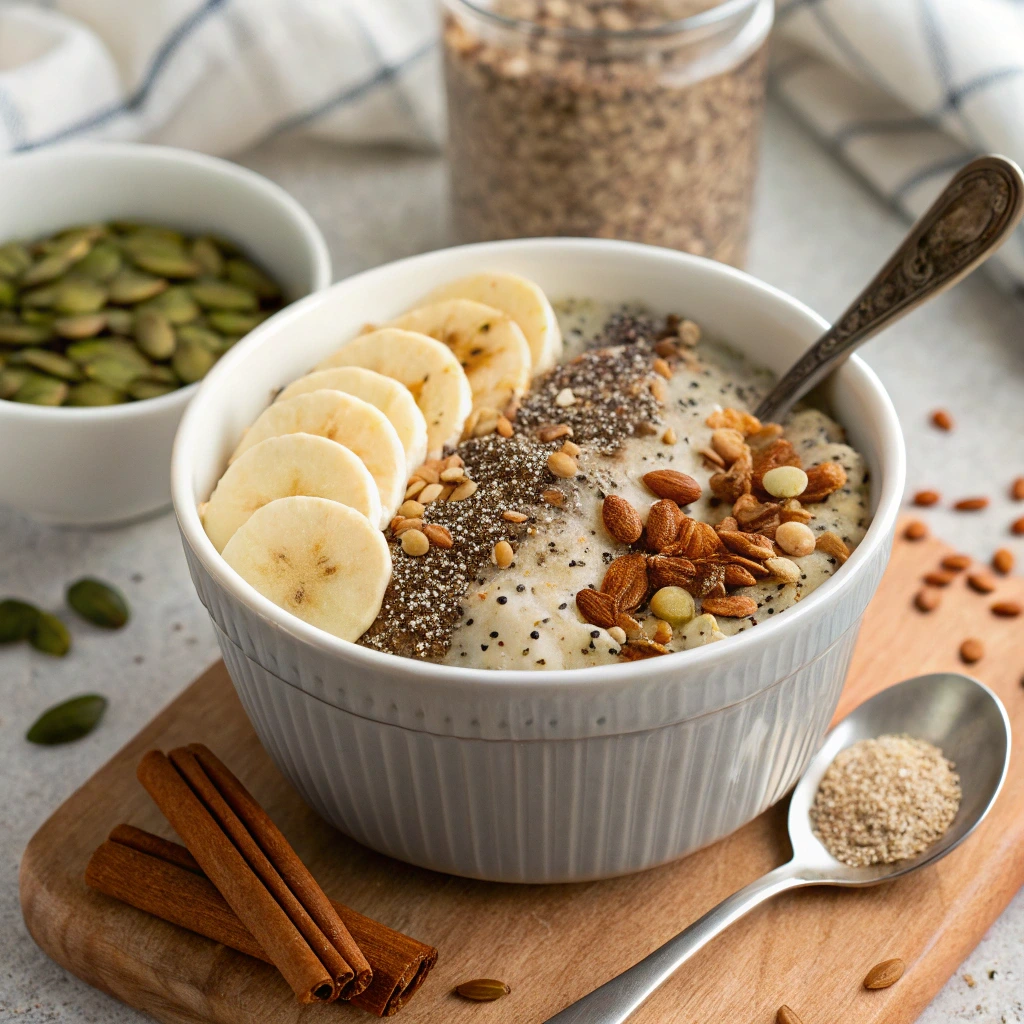
Traditional mielie pap (maize porridge) is a staple, but it can be low in fibre and Omega-3s. We boost it with chia and flaxseeds to create a true WFPB super-breakfast.
Ingredients:
- 1/2 cup prepared, cooked mielie pap (or substitute with quick-cooking oats for faster prep).
- 1 tbsp whole chia seeds.
- 1 tbsp ground flaxseeds.
- 1/4 cup mixed nuts/seeds (e.g., pumpkin and sunflower).
- 1/2 cup plant milk (to desired consistency).
- 1/2 sliced banana or other fresh fruit.
- Pinch of cinnamon.
Method:
- Combine the warm pap with chia seeds, ground flaxseeds, and plant milk. Stir well. The chia and flax will thicken the mixture rapidly.
- Let it stand for 5 minutes.
- Top with the mixed nuts/seeds, fresh fruit, and cinnamon. The seeds add important fibre and Omega-3s. They turn a basic starch into a nutritious meal.
Practical Tips for WFPB Success in SA
Adopting a WFPB diet in South Africa is getting easier.
However, to fully enjoy the benefits of nuts and seeds, follow these key practices:
- Portion Control is Key: Nuts and seeds are calorie-dense. The WFPB philosophy doesn’t limit whole foods. A general serving suggestion is around 30g, which is a small handful, each day. This prevents unintentional high-calorie intake while still delivering maximum nutritional benefit.
- Soak It Up: Soaking nuts, like almonds and cashews, and seeds, like sunflower and pumpkin, for a few hours helps with digestion. It also boosts nutrient absorption by reducing phytate levels. Consult a Guide to Soaking and Sprouting Nuts for best practice.
- The Power of Ground Flax/Chia: To truly access the Omega-3 ALA in flaxseeds and chia seeds, you must ground just before use. The whole seeds pass through the digestive system largely intact. When necessary, grind the entire flaxseed in a blender or a tiny coffee grinder, and store it in the freezer.
- Cost-Effective Swaps: Always remember the cashew/sunflower seed swap. Sunflower seeds are usually much cheaper. They also provide nutritionally similar, if not better, WFPB creamy sauces and dips.
- Look Local: Use the quality and abundance of South African Macadamia and Pecan Production to find top-notch, local ingredients.
Conclusion
The Whole Food Plant-Based diet isn’t just a trend. It’s a proven way to achieve better health.
Nuts and seeds are essential. They provide Omega-3s, fibre, minerals, and healthy fats. These nutrients help fight chronic diseases.
Using the best plant-based nuts and seeds recipes, like an oil-free curry or a crunchy WFPB rusk, changes more than just your diet. You’re choosing a sustainable, tasty lifestyle that’s great for your body.
Start today by making a simple change.
Use sunflower seed cream instead of dairy in your next savoury dish. Or, add a daily tablespoon of ground flaxseed to your morning pap. Both your sense of taste and your body will appreciate it.