You didn’t use to feel this way. Lunch used to be just lunch.By 3 PM, your eyes feel heavy. Your focus slips, and you grab coffee or something sweet to power through the afternoon. Your waistline has grown even though the scale barely moves. And …
By Zama Zincume — Public Health Specialist & Plant-Based Food Writer Start a plant-based diet in South Africa by building every meal around one staple (like samp, pap, or rice), one legume (like beans, lentils, or cowpeas), and one vegetable (like morogo or butternut), then …
By Zama Zincume — Public Health Specialist & Plant-Based Food Writer
Medically Reviewed
High blood sugar does not always mean you need to stop eating carbohydrates.
A better starting point is to improve the quality of your food, increase your fibre intake, move more, strengthen your muscles, improve your sleep, and understand how your daily habits affect your glucose levels.
For many people with prediabetes or type 2 diabetes, these changes form an important part of blood sugar management.
This guide explains how to lower blood sugar naturally using practical, evidence-based strategies. I will focus on affordable whole plant foods that fit easily into a South African diet.
How Can You Lower Blood Sugar Naturally?
If you want the short answer, start here:
Eat more beans, lentils, vegetables, whole grains, and whole fruit.
Replace refined carbohydrates with minimally processed carbohydrate foods.
Stop drinking sugar-sweetened beverages.
Increase your fibre intake.
Walk regularly, including after meals.
Strength-train two or three times per week.
Break up long periods of sitting.
Improve your sleep routine.
Reduce highly processed foods.
Monitor your glucose as your healthcare team recommends.
You do not need to do everything at once.
Start with the changes you will repeat.
What Causes High Blood Sugar?
Blood glucose is glucose circulating in your bloodstream.
Carbohydrate-containing foods provide one source of glucose. Your liver also produces and releases glucose.
Insulin helps glucose move from your bloodstream into your cells, where your body uses or stores the energy.
With insulin resistance, your cells respond less effectively to insulin. Your pancreas often compensates by producing more insulin.
Over time, glucose levels may rise.
Insulin resistance plays an important role in prediabetes and type 2 diabetes.
This is why blood sugar management involves more than removing sugar from your tea.
Your overall dietary pattern, physical activity, body composition, sleep, medications and other factors matter.
High Blood Sugar Is Not the Same as Hypoglycaemia
This distinction is important.
Hyperglycaemia means your blood glucose is too high.
Hypoglycaemia means your glucose is too low.
For people with diabetes, a glucose level below 3.9 mmol/L, or 70 mg/dL, is considered clinically important hypoglycaemia.
These foods provide fibre alongside carbohydrates.
Compare this with sweets, sugary drinks, refined cereals, biscuits, cakes and many packaged snacks. These foods often contain refined carbohydrates while providing far less fibre.
You do not need expensive imported health foods.
South African staples such as beans, lentils, samp, sorghum, oats, sweet potatoes, cabbage and spinach fit this approach.
2. Stop Treating All Carbohydrates as Equal
People with high blood sugar often receive one simple message:
Cut carbohydrates.
This misses an important point.
Carbohydrate quality matters.
Consider these two foods:
A bowl of lentils.
A bottle of sugary soft drink.
Both provide carbohydrates. Their nutritional profiles differ sharply.
Lentils provide fibre, protein, minerals and intact plant structure.
The soft drink delivers sugar in liquid form without the fibre found in whole plant foods.
Instead of asking only:
“Does this food contain carbs?”
Ask:
“How processed is this carbohydrate?”
Make whole or minimally processed carbohydrate foods your usual choice.
Choose:
Beans instead of many processed meat substitutes.
Oats instead of sugary breakfast cereal.
Whole fruit instead of juice.
Boiled or baked potatoes instead of chips.
Samp and beans instead of highly processed convenience meals.
Whole grains instead of refined grains more often.
The goal is better-quality carbohydrates, not fear of carbohydrate-containing plants.
3. Eat Beans and Lentils Regularly
Legumes deserve a regular place on your plate.
This group includes:
Beans.
Lentils.
Chickpeas.
Split peas.
They provide fibre and plant protein in the same food.
They are also among the most affordable staples available in South Africa.
Try:
Samp and beans with spinach.
Lentil curry with brown rice and vegetables.
Split-pea soup.
Chickpea and potato curry.
Sugar beans with sweet potatoes and cabbage.
Bean stew with pap and morogo.
If you currently eat little fibre, gradually increase your intake of legumes and drink adequate fluids.
Your digestive system often needs time to adjust.
4. Stop Drinking Your Sugar
Look at what you drink each day.
This is an easy place for added sugar to accumulate.
Common sources include:
• Soft drinks • Energy drinks • Sweetened iced tea • Sweetened coffee drinks • Fruit drinks • Sports drinks • Large servings of fruit juice
Make water your default drink.
Unsweetened tea or coffee also fits for many people.
Choose whole fruit more often instead of fruit juice.
An orange contains water, carbohydrate, fibre and intact plant structure.
Orange juice makes consuming the carbohydrate from several oranges much easier.
Whole fruit and fruit juice are therefore not nutritionally interchangeable.
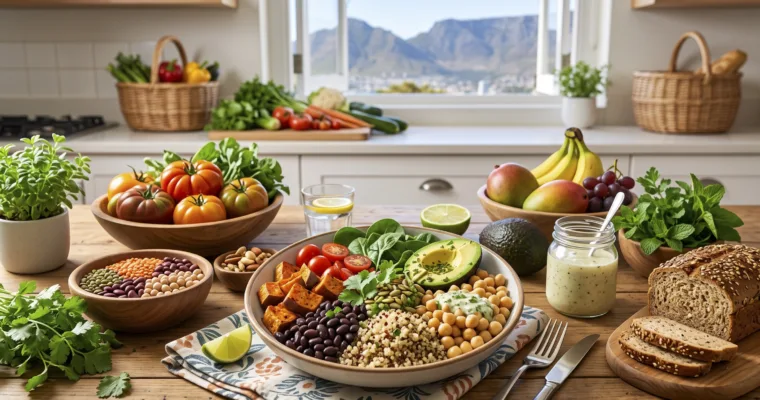
5. Use a Simple Blood Sugar Plate
Healthy eating becomes easier when you have a system.
Try this meal structure.
Fill a large part of your plate with non-starchy vegetables.
Add a fibre-rich staple such as potatoes, sweet potatoes, sorghum, intact whole grains, brown rice or samp.
Add beans, lentils, chickpeas or another protein-rich food.
Include nuts, seeds or avocado in appropriate portions.
For example:
Breakfast:
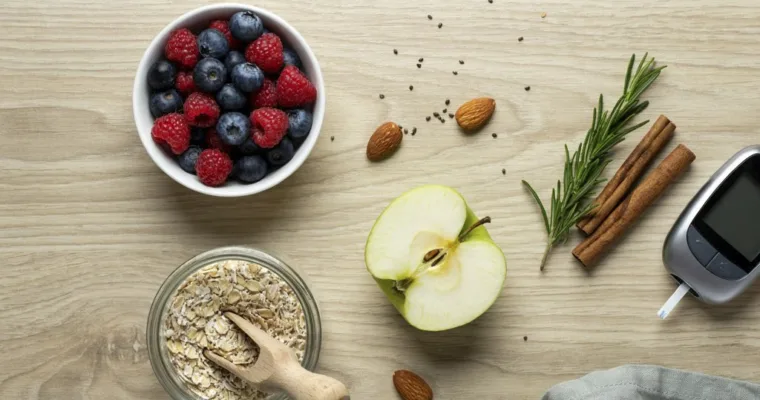
Oats with berries or banana, ground flaxseed and a few nuts.
Lunch:
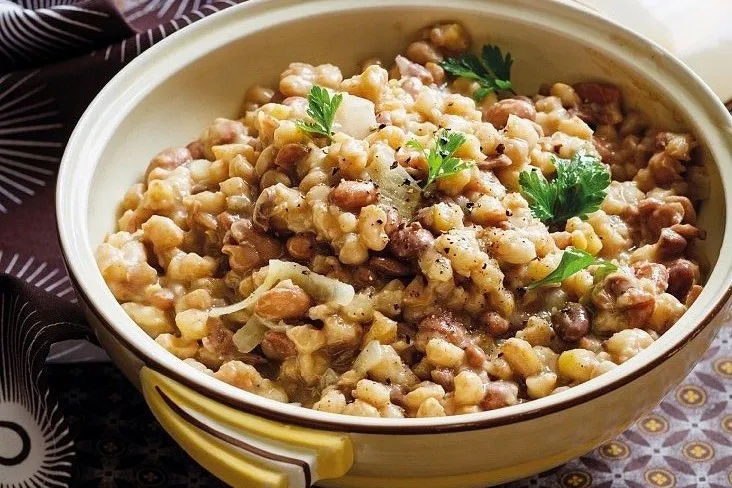
Samp and beans with cabbage, spinach and tomato.
Dinner:
Sweet potato, lentil stew and mixed vegetables.
The exact foods matter less than building a repeatable pattern around minimally processed foods.
6. Walk After Eating
Your muscles use glucose.
Physical activity, therefore, deserves a place alongside nutrition in your blood sugar plan.
Walking is one of the easiest ways to begin.
Try a 10 to 15-minute walk after lunch or dinner.
You also want to reduce prolonged sitting.
Stand up.
Walk around the house.
Take the stairs.
Work in the garden.
Walk while talking on your phone.
Build movement into your normal day.
For most adults with diabetes, current guidelines recommend aiming for at least 150 minutes of moderate-to-vigorous aerobic activity each week, spread across at least three days.
You do not need to reach this target in your first week.
Start from your current level and progress.
7. Strengthen Your Muscles
Do not rely on walking alone.
Resistance exercise also supports blood sugar management.
Your muscles are important sites for glucose use.
You do not need an expensive gym membership.
Try:
Chair squats.
Wall push-ups.
Resistance bands.
Body-weight exercises.
Light dumbbells.
Current diabetes guidelines recommend resistance exercise two to three times per week for adults with type 1 or type 2 diabetes, where appropriate.
Combine strength training with regular walking or other aerobic activity.
8. Break Up Long Periods of Sitting
Exercise for 30 minutes does not mean you should ignore the other hours of your day.
Long periods of sitting matter too.
If you work at a desk or spend hours watching television, build movement breaks into your routine.
Stand up every 30 minutes.
Walk for a few minutes.
Stretch.
Do a simple household task.
Take a short trip outside.
Small bouts of movement throughout your day add to your overall activity.
9. Improve Your Sleep
Blood sugar management does not end with food and exercise.
Sleep belongs in the discussion too.
Aim for a consistent bedtime and waking time.
Keep your room dark.
Reduce screen use near bedtime if it interferes with your sleep.
Avoid caffeine late in the day if it keeps you awake.
If you regularly snore loudly, gasp during sleep, wake with headaches or experience severe daytime sleepiness, discuss these symptoms with a healthcare professional.
Do not accept poor sleep as an unavoidable part of getting older.
10. Reduce Highly Processed Foods
You do not need a complicated list of forbidden foods.
Change your defaults.
Skip sugary breakfast cereal; eat oats.
Refrain from eating biscuits; choose whole fruit.
Instead of a soft drink, choose water.
Avoid eating chips; prepare potatoes or sweet potatoes with minimal added fat.
Instead of relying heavily on processed foods, build meals around staples, legumes and vegetables.
Repeated choices matter more than occasional meals.
What Foods Help With Blood Sugar Control?
No individual food acts as a replacement for glucose-lowering medication.
Think about your dietary pattern.
Useful foods include:
Beans and lentils.
Non-starchy vegetables.
Whole grains.
Oats.
Sorghum.
Whole fruit.
Sweet potatoes.
Potatoes prepared in minimally processed ways.
Nuts.
Seeds.
These foods fit into eating patterns emphasising fibre-rich, nutrient-dense foods.
The goal is not to find a food that rapidly lowers your blood gl down.
The goal is better glucose management over time.
Can a Plant-Based Diet Help With Blood Sugar?
A well-planned plant-based eating pattern is one evidence-supported option for people with prediabetes and diabetes.
But the words “plant-based” do not automatically mean healthy.
Soft drinks are plant-derived.
So are many biscuits, sweets, refined cereals and chips.
Build your diet around whole or minimally processed plants instead.
Focus on:
Legumes.
Whole grains.
Vegetables.
Whole fruit.
Nuts.
Seeds.
Starchy vegetables.
Food quality matters.
What About Cinnamon, Chromium and Blood Sugar Supplements?
Search online for natural ways to lower blood sugar,, and you will soon find supplements.
Cinnamon capsules.
Chromium.
Herbal mixtures.
“Glucose support” tablets.
Blood sugar teas.
Do not make these the foundation of your plan.
Current diabetes guidance does not recommend micronutrient, herb or spice supplements such as chromium or cinnamon for glycaemic benefits.
Focus first on dietary quality, physical activity, sleep, weight management where appropriate, prescribed treatment and glucose monitoring when recommended.
Never stop or reduce prescribed diabetes medication because you have started eating differently.
Discuss medication changes with the clinician managing your diabetes.
Does Losing Weight Lower Blood Sugar?
For people with prediabetes or type 2 diabetes who also have overweight or obesity, weight reduction often improves metabolic health.
Current diabetes guidelines recommend individualised weight management rather than a one-size-fits-all dietary approach.
Food quality still matters.
So does physical activity.
Your progress also includes changes in:
Blood glucose.
HbA1c.
Waist measurement.
Fitness.
Strength.
Diet quality.
Daily movement.
Do not judge your entire metabolic health from the bathroom scale.
A Simple South African Blood Sugar Meal Plan
You do not need imported superfoods.
Here is one example.
Breakfast:
Oats cooked with water or unsweetened plant milk, topped with banana, ground flaxseed and a small amount of nuts.
Lunch:
Samp and sugar beans with cabbage, spinach and tomato.
Snack:
An apple with a small handful of unsalted peanuts.
Dinner:
Baked sweet potato with lentil and vegetable stew.
After dinner:
A short walk.
The foods are familiar.
The ingredients are widely available.
The principle is simple: staple plus legumes plus vegetables, with whole fruit, nuts or seeds where appropriate.
How Quickly Will Blood Sugar Improve?
There is no single timeline.
Your response depends on your starting glucose, medications, physical activity, diet, body composition, sleep and other health factors.
Some activities affect glucose on the same day.
HbA1c reflects glucose exposure over a much longer period.
Focus on trends rather than trying to force rapid changes.
What If Your Blood Sugar Drops (Too Low?)
This requires a different strategy.
If your glucose falls below 3.9 mmol/L, or 70 mg/dL, you need to raise it.
For a conscious person with hypoglycaemia, glucose or another fast-acting carbohydrate is used for treatment.
One common approach is the 15-15 rule.
Take 15 grams of fast-acting carbohydrate.
Wait 15 minutes.
Check your glucose again.
If it remains below 3.9 mmol/L, repeat treatment.
Severe hypoglycaemia requires urgent assistance.
People using insulin or medications that increase hypoglycaemia risk should discuss major changes in diet and exercise with their healthcare team.
Your 7-Day Blood Sugar Challenge
Do this for the next seven days.
Day 1: Replace sugary drinks with water.
2: Eat beans or lentils with one main meal.
3: Replace one refined grain with an intact whole-food starch or whole grain.
4: Walk for 10 to 15 minutes after a meal.
5: Add vegetables to two meals.
6: Complete a short resistance-training session appropriate for your fitness level.
Day 7: Review what worked and repeat the habits you found easiest.
Do not chase perfection.
Build a routine you will keep.
Frequently Asked Questions
How can I lower blood sugar naturally?
Focus on a dietary pattern rich in vegetables, legumes, whole fruits, whole grains, nuts and seeds. Reduce sugary drinks and highly processed foods. Add regular aerobic activity and resistance exercise. If you take glucose-lowering medication, work with your healthcare team as your glucose levels change.
What foods lower blood sugar?
No single food reliably lowers high blood glucose as effectively as medication. Beans, lentils, vegetables, whole grains, whole fruit, nuts and seeds fit dietary patterns associated with better metabolic health.
Does walking lower blood sugar?
Physical activity increases glucose use by working muscles and improves insulin sensitivity. Walking is one accessible carbohydratesase daily activity.
Can I eat levelspotatoes if I have diabetes?
Potatoes contain carbohydrates, so they affect blood glucose levels. Preparation, quantity and the rest of the meal matter. A boiled or baked potato eaten with beans and vegetables differs nutritionally from fried chips.
Can I eat bananas if I have diabetes?
Whole fruit, including bananas, fits within evidence-based dietary patterns for diabetes. Your portion, overall meal and individual glucose response matter.
Is a plant-based diet good for diabetes?
Plant-based eating is one recognised dietary pattern for diabetes prevention and management. Prioritise minimally processed plant foods rather than refined plant-based products.
Is cinnamon good for lowering blood sugar?
Do not rely on cinnamon supplements for glucose management. Current diabetes guidance does not recommend herbs or spices such as cinnamon as supplements for glycaemic benefits.
What should I do if my blood sugar is below 3.9 mmol/L?
Treat low glucose promptly. A common approach for a conscious adult is 15 grams of fast-acting carbohydrate, followed by another glucose check after 15 minutes. Follow the hypoglycaemia plan provided by your healthcare team.
Start With Your Next Meal
You do not need an extreme diet.
Start with familiar food.
Choose beans and lentils more often.
Keep whole grains and starchy vegetables in their minimally processed forms.
Eat more vegetables.
Choose whole fruit instead of juice.
Drink water instead of sugary drinks.
Walk.
Strengthen your muscles.
Sleep consistently.
Then repeat the habits that work for you.
This is the principle behind my Staple-First Method™.
Start with an affordable staple. Add legumes and vegetables. Keep the foods close to their whole form. Build meals you will still want to eat next month.
If you are a man over 50 and high blood sugar, energy crashes, or insulin resistance have become a concern, I take this process further in The Men’s Blood Sugar Fix After 50.
The book uses my STEADY Method to turn these principles into a structured daily system for improving metabolic control without crash diets.
By Zama Zincume — Public Health Specialist & Plant-Based Food Writer. Originally published: 9 November 2023 | Fully updated in 2026 Quick Answer: A plant-based lifestyle in South Africa means building meals around whole plant foods — vegetables, legumes, whole grains, fruits, nuts, and seeds …
This is your guide to type 2 diabetes plant-based meals South Africa. Type 2 diabetes is growing fast in South Africa. Every year, more and more families feel the effects. The good news is this: food choices can make a big difference. In this guide, …
Three main concerns fuel this movement: ethics, the environment, and the clear benefits of plant-based diets.
Research and personal stories show that a good whole-food diet can boost athletic performance.
The focus has changed. Now, we discuss not if plant-based diets benefit athletes, but how to use them for the best results.
First, let’s explain what a plant-based diet means for competitive athletes. Then, we’ll look at its benefits.
Defining the Spectrum of Plant-Based Nutrition for Peak Athletic Performance
The term “plant-based diet” encompasses a range of dietary habits.
Athletes need to know the differences.
A standard vegetarian diet leaves out meat, poultry, and fish. Conversely, a vegan diet excludes all animal products, such as dairy and eggs.
To boost athletic performance, focus on a whole-food, plant-based (WFPB) diet.
A WFPB diet focuses on whole, minimally processed foods.
This includes fruits, vegetables, tubers, whole grains, and legumes.
It limits or cuts out refined oils, sugars, and highly processed meat substitutes.
This approach boosts your intake of essential vitamins, minerals, and phytochemicals.
A “junk food vegan” who mostly eats fries and packaged foods may notice a drop in their athletic performance.
This happens due to low nutrient density.
A key point for dedicated athletes is that a successful switch needs variety and density.
How does this diet improve physical abilities and performance?
Enhancing Athletic Performance with Plant-Based Diets
Fueling Endurance and Aerobic Capacity with Plant-Based Nutrition
The Carbohydrate Advantage is one important advantage of a plant-based diet for athletes.
Plant foods are full of complex carbohydrates. This diet helps boost glycogen levels and keeps muscle and liver stores full.
The main energy source for moderate-to-intense endurance exercises is glycogen.
Athletes can boost endurance by increasing glycogen stores. This helps them last longer during exercise.
Furthermore, the high nitrate content in certain plant foods, such as beets, spinach, and arugula, plays a pivotal role.
Nitrates turn into nitric oxide in the body. This gas is a potent vasodilator. It relaxes blood vessels and improves endothelial function.
Better vascular function means more oxygen gets to tissues and improves blood flow to active muscles.
Consequently, studies often highlight a correlation between plant-based diets and higher VO2 max (maximal oxygen uptake), a key predictor of endurance performance.
Optimising Recovery and Reducing Inflammation: The Plant-Based Edge
Exercise is good for you, but it can also cause stress and minor muscle damage. This can lead to inflammation and delayed onset muscle soreness (DOMS). A plant-based diet has many antioxidants and phytochemicals that help repair these effects.
Athletes who eat plenty of fruits, vegetables, and whole grains gain compounds such as quercetin, curcumin, and Vitamins C and E.
These help fight free radicals and reduce oxidative stress from exercise.
This quick reduction of inflammation helps muscles heal faster and shortens recovery times.
Athletes on a plant-based diet often train more consistently. This can significantly improve their long-term performance.
Plant-Based Diets and Strength/Hypertrophy Outcomes
A persistent myth is that a plant-based diet is inadequate for strength or muscle hypertrophy.
However, research consistently shows that when total energy and protein needs are adequately met, when compared to omnivorous diets, there is no discernible difference in strength or muscular growth.
The key is strategic planning. It ensures you take in enough essential amino acids, especially Leucine.
Plant-based athletes need to focus on complementary protein sources. This means combining grains and legumes. Doing so helps them get a complete amino acid profile.
Using protein sources such as soy, pea, and rice isolates supports muscle protein synthesis (MPS). Whole foods like tofu, tempeh, and lentils also help this process.
Thus, the focus shifts from the source of the protein to the successful optimisation of total quantity and quality.
Critical Nutrient Considerations for the Plant-Based Athlete
There are many advantages to adopting a plant-based diet.
However, it needs careful attention to some key nutrients. These “red flag” nutrients are often harder to find or absorb than those in animal products.
Good planning ensures the diet helps athletes perform better rather than holding them back.
Meeting Protein Requirements on a Plant-Based Diet
High-volume athletes should eat 1.6 – 2.2 grams of protein per kilogram of body weight daily.
Meeting this target requires diligence.
You should consume plant-based protein sources throughout the day. Aim for about 2.5–3 grams of Leucine per meal. This helps maximise muscle protein synthesis.
High-quality plant sources are:
Soy products (like tofu and tempeh)
Lentils
Chickpeas
Black beans
Quinoa
Pea/rice blends (supplements)
So, variety and intentionality are key for plant-based athletes who want to perform at their best.
Micronutrients and Plant-Based Athletic Performance: Red Flag Nutrients
Vitamin B12: Vitamin B12 is vital for making red blood cells and supporting nerve health. It isn’t found in plant foods, so vegan athletes must take supplements.
Iron: Plant-based athletes get non-heme iron, which is less readily absorbed than heme iron. Combine foods high in vitamin C, like peppers and citrus, with meals high in iron, such spinach and lentils. This pairing can boost absorption. Iron is vital for moving oxygen and helps stop anaemia, which can harm endurance.
Calcium and Vitamin D: These are critical for bone health, a common concern for high-impact athletes. Sources include fortified plant milks (almond, soy, oat) and dark leafy greens. Vitamin D often requires supplementation, regardless of diet.
Zinc and Iodine: Anti-nutrients, such as phytates in some whole grains and legumes, can limit the absorption of these minerals. Soaking, sprouting, or fermenting these foods can help. Make sure to get enough zinc and iodine. Good sources include pumpkin seeds, beans, and fortified salts.
Omega-3 Fatty Acids (DHA and EPA) for Recovery and Health
Long-chain omega-3s are renowned for their anti-inflammatory properties, which aid in recovery.
While primary plant sources (flax, chia, walnuts) provide ALA, the conversion to the active forms (DHA and EPA) is inefficient.
Many plant-based athletes use algae-based DHA/EPA supplements.
This helps them maintain healthy levels for heart health and to lower inflammation.
Practical Implementation: Meal Planning for Plant-Based Athletic Performance
It’s only half the fight to know what to eat. Timing and structuring meals are what really boost a plant-based diet for top athletic performance.
This means carefully planning fuelling strategies around training sessions and competitive events.
Plant-Based Pre-Workout and Pre-Competition Fuelling
The goal of pre-exercise nutrition is to fill glycogen stores. It should also avoid any stomach issues.
Therefore, meals should be high in complex carbohydrates and relatively low in fat and fibre, especially in the 1–2 hours before activity.
Examples include rice cakes with a small amount of banana, or a bowl of oatmeal with a splash of maple syrup.
Crucially, the timing and composition of this meal are highly individualised.
Intra-Workout Nutrition for the Plant-Based Athlete
For activities lasting 60–90 minutes or more, maintaining blood glucose control is vital.
Consequently, plant-based athletes rely on easily digestible carbohydrate sources.
These include:
Commercial carbohydrate gels
Sports drinks
Whole-food options like dates, dried fruit, or diluted maple syrup with water
The focus here is on rapid absorption to sustain endurance performance.
Post-Workout Recovery Meals and Muscle Protein Synthesis
The recovery window is critical.
To recover well after exercise, you need two things: quick glycogen replacement and amino acids for muscle repair.
This is achieved by consuming a meal with a Carb-to-Protein Ratio of roughly 3:1 or 4:1 within the first hour.
Great plant-based options are a smoothie with fruit, greens, and pea protein. You could also try a bowl of rice and beans.
Delivering macronutrients simultaneously quickly stops catabolism. This also jumpstarts muscle protein synthesis.
Strategic Use of Plant-Based Supplements
Specific legal ergogenic aids can boost athletic performance in a plant-based diet, along with the needed B12.
The best evidence supports Creatine, Caffeine, and specific protein powders. Creatine is made in the body, but is often low in non-meat eaters.
Targeted protein powders, such as soy or pea/rice blends, support high protein intake. They do this without adding too much bulk.
Frequently Asked Questions (FAQs) on Plant-Based Diet and Athletic Performance
Plant-Based Diet & Athletic Performance FAQs
Is a plant-based diet better than an omnivorous diet for athletic performance?
Current evidence suggests it is at least non-inferior and may offer significant advantages. A smart plant-based diet gives you more carbs, cuts body fat, and helps fight inflammation. These factors lead to improved endurance, quicker recovery, and better heart health. Together, they boost long-term athletic performance.
Can a plant-based athlete get enough protein to build muscle?
Absolutely. However, careful planning is required to achieve the 1.6–2.2 g/kg/day target. Plant-based athletes can meet, and even exceed, their requirements for muscle protein synthesis and growth. They should focus on diverse, high-quality protein sources, such as soy, legumes, and protein powders.
What is the primary nutritional challenge for vegan athletes?
First and foremost, ensuring adequate intake of Vitamin B12, which is not found in plants. Managing iron absorption and ensuring enough DHA/EPA omega-3 fatty acids are key. This may require brilliant food pairing or supplements.
How long does it take for a plant-based diet to improve athletic performance?
You can see some changes, like better gut health, in weeks.
You’ll often see benefits such as reduced chronic inflammation and improved vascular function after following the WFPB approach for 3 to 6 months.
These long-term changes enhance training adaptation.
Conclusion: The Future of Plant-Based Athletic Performance
Adopting a plant-based diet for sports takes thought and a desire to learn.
The days of doubting this lifestyle for high-level competition are fading fast.
A well-planned plant-based diet meets all the nutrient needs for intense training. Athletes need to pay attention to a few key nutritional factors.
In summary, the benefits are clear:
Better endurance from optimal carbohydrate loading.
Quick recovery thanks to potent antioxidants.
Stronger muscles from smart protein intake.
The plant-based diet isn’t just a trend. It’s a strong, evidence-backed approach that gives athletes an edge. This makes it a key part of future sports performance.
Can a plant-based diet combat obesity in South Africa? We’ll address this question. South Africa is in a health crisis. Obesity rates are going up. This increase leads to more non-communicable diseases (NCDs). These include type 2 diabetes, hypertension, and heart disease. This challenge connects …
Plant-based eating is everywhere right now. You see it on menus, in grocery stores, and all over social media. But there is a big difference between following a trend and making a decision based on real science. That is exactly what evidence-based plant-based living is …
Find the best whole food, plant-based nuts and seeds recipes in South Africa. Enjoy dishes like Dukkah and rusks while discovering their proven health benefits.
Introduction: The WFPB Heroes on the South African Table
South Africa boasts a rich culinary heritage.
Chefs know it for its vibrant flavours and diverse ingredients. There’s also a growing focus on health and sustainability.
It’s a diet centred on fresh fruits, vegetables, whole grains, legumes, nuts, and seeds. It limits or avoids animal products, oils, refined sugars, and refined flours.
At the heart of this diet’s success are nuts and seeds.
Many people underestimate or fear fats because of their content. Fats are essential for living longer, staying heart-healthy, and avoiding diseases.
This article is your go-to guide for the best plant-based nut and seed recipes in South Africa. It’s based on solid evidence.
It will help you add these dishes to your whole-food, plant-based lifestyle.
We’ll explore nutritional science and feature local South African favourites. Plus, we’ll share tasty, oil-free, sugar-free WFPB twists on beloved SA classics.
Tradition and taste may coexist in healthy eating!
The Science Behind the Crunch: Evidence-Based Benefits
Eating nuts and seeds every day is key to the WFPB diet. This advice is based on years of robust scientific research.
These tiny powerhouses pack essential micronutrients, healthy fats, and fibre. They significantly boost health.
The Nutritional Superstars
Omega-3 Fatty Acids (ALA): Alpha-linolenic acid (ALA) is abundant in walnuts, chia seeds, and flaxseeds. This is an essential plant-based source of Omega-3 fats. ALA helps lower chronic inflammation in the body. This is important because inflammation drives many non-communicable diseases (NCDs). Consistent consumption of ALA-rich seeds supports The Power of Omega-3 ALA for Heart Health.
Heart-Healthy Fats: Whole nuts, like almonds, macadamias, and pecans, are rich in unsaturated fats. This is different from the saturated fats found mainly in animal products and processed oils. These fats can improve cholesterol levels. They lower LDL (bad) cholesterol and reduce the risk of heart disease.
Fibre for Gut Health: Nuts and seeds are exceptionally high in dietary fibre, which is vital for the Role of fibre in a Healthy South African Gut. Fibre helps digestion and keeps you regular. It also feeds good gut bacteria. As a result, short-chain fatty acids (SCFAs) are produced. SCFAs are essential for immune function and brain health.
Mineral Density: They are potent sources of minerals often lacking in the standard Western diet.
Magnesium is key for muscle function, nerve signals, and blood sugar control. You can find it in pumpkin seeds, almonds, and cashews.
Zinc: Essential for wound healing and immune system performance (rich in sunflower and pumpkin seeds).
Vitamin E is a potent antioxidant. It’s found in high amounts in sunflower seeds. It helps protect cells from damage.
WFPB and Disease Prevention
Studies consistently show that incorporating nuts and seeds into a WFPB eating pattern contributes to lower rates of:
Cardiovascular Disease: Healthy fats, fibre, and antioxidants work together. They help keep arteries flexible and blood pressure in check.
Type 2 Diabetes: The high fibre and healthy fats slow glucose absorption. This helps control blood sugar levels.
Obesity: Many studies show that eating nuts can help with weight management. Even though they are high in calories, nuts are very filling. They keep you feeling full longer.
In summary, choosing whole nuts and seeds over refined oils and saturated fats is a wise WFPB choice. This decision brings substantial, measurable health benefits.
WFPB Nuts & Seeds for the South African Table
The WFPB approach emphasises whole ingredients. We pick whole almonds, not almond oil. We also choose ground flaxseeds instead of flaxseed oil.
South Africa is fortunate to be a significant producer of several world-class nuts. Choosing local is not only sustainable but often more affordable.
WFPB Staple
SA Availability/Focus
WFPB Use Case
Pecan Nuts
Widely grown in SA; excellent source of antioxidants.
Raw chopping over oats, ground into pie crusts, or used in ‘nut loaf’ recipes.
Macadamia Nuts
SA is a major global producer and is high in monounsaturated fats.
Creamy dairy-free sauces, WFPB ‘cheese’ alternatives, or crumbled salad toppings.
Sunflower Seeds
Highly affordable and rich in Vitamin E, Magnesium, and Zinc.
The ultimate Cashew alternative for creamy sauces, added to bread doughs, or homemade nut/seed butter.
Pumpkin Seeds (Pips)
Excellent source of zinc and protein.
Toasted as a snack, sprinkled on pap, or added to salad dressings.
Ground Flaxseeds (Linseeds)
Essential for Omega-3 ALA absorption.
SA is a major global producer, high in monounsaturated fats.
The WFPB Difference: Always choose raw or dry-roasted, unsalted, and unflavoured varieties. For the best cost and freshness, check out Purchasing Affordable Nuts and Seeds in Bulk in SA.
Recipe Section 1: Savoury Staples
One key part of WFPB cooking is using whole nuts and seeds. They help create rich, creamy textures and bold flavours. Plus, you don’t need refined oils or dairy.
Creamy Sunflower Seed South African Curry Base (Oil-Free)
Many creamy curries rely on coconut cream or dairy. This WFPB recipe features sunflower seeds. They are a cost-effective and nutritious substitute for cashews. This makes them ideal for creating a creamy base in lentil or bean bunny chow.
Sunflower seeds have more protein, fibre, and minerals like magnesium and vitamin E than cashews.
This makes them an excellent option for a WFPB budget.
Ingredients:
1 cup raw, unhulled sunflower seeds, soaked in hot water for 30 minutes.
1 cup water (or vegetable broth).
1 large onion, chopped.
3 cloves garlic, minced.
1 tbsp mild SA curry powder.
1 tsp turmeric.
1/2 tsp smoked paprika (for depth).
Juice of 1/2 lemon.
Salt-free vegetable bouillon powder, to taste.
Method:
Drain and rinse the soaked sunflower seeds.
In a food processor, blend the soaked seeds with the 1 cup of water until completely smooth. This is your thick, oil-free cream.
Sauté the onion in a splash of water/broth (no oil) until soft, then add garlic, curry powder, and turmeric. Cook for 1 minute until fragrant.
Add the sunflower cream, lemon juice, and bouillon powder. Bring to a gentle simmer after stirring well.
Mix this base with cooked chickpeas, butter beans, or lentils. You’ll get a hearty, authentic, and fully WFPB curry.
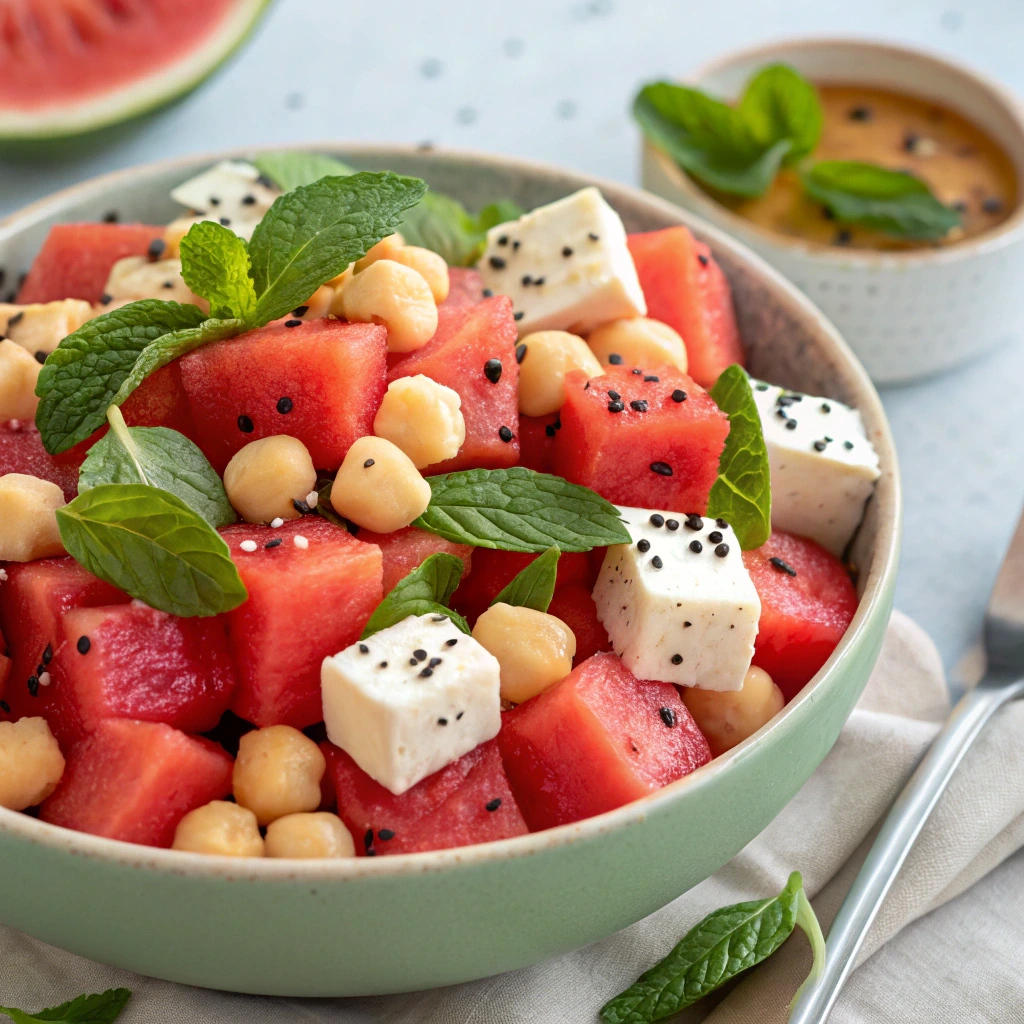
WFPB Macadamia “Feta” & Watermelon Salad
Macadamia nuts, a prized South African crop, are the key to this dairy-free, crumbly “feta.”
Ingredients:
1 cup raw macadamia nuts.
1/4 cup nutritional yeast (for cheesy flavour).
1 tbsp apple cider vinegar.
1 tsp dried origanum.
Pinch of garlic powder.
1/2 block of cubed watermelon.
Fresh mint leaves.
Method:
Make sure not to overprocess the macadamia nuts into butter; pulse them in a food processor until they crumble finely.
Transfer the macadamia crumble to a bowl. Mix in the nutritional yeast, apple cider vinegar, origanum, and garlic powder. The vinegar and yeast provide the characteristic salty-tangy flavour of feta.
Gently mix the “feta” crumble into the cubed watermelon, then top with fresh mint leaves. Serve immediately.
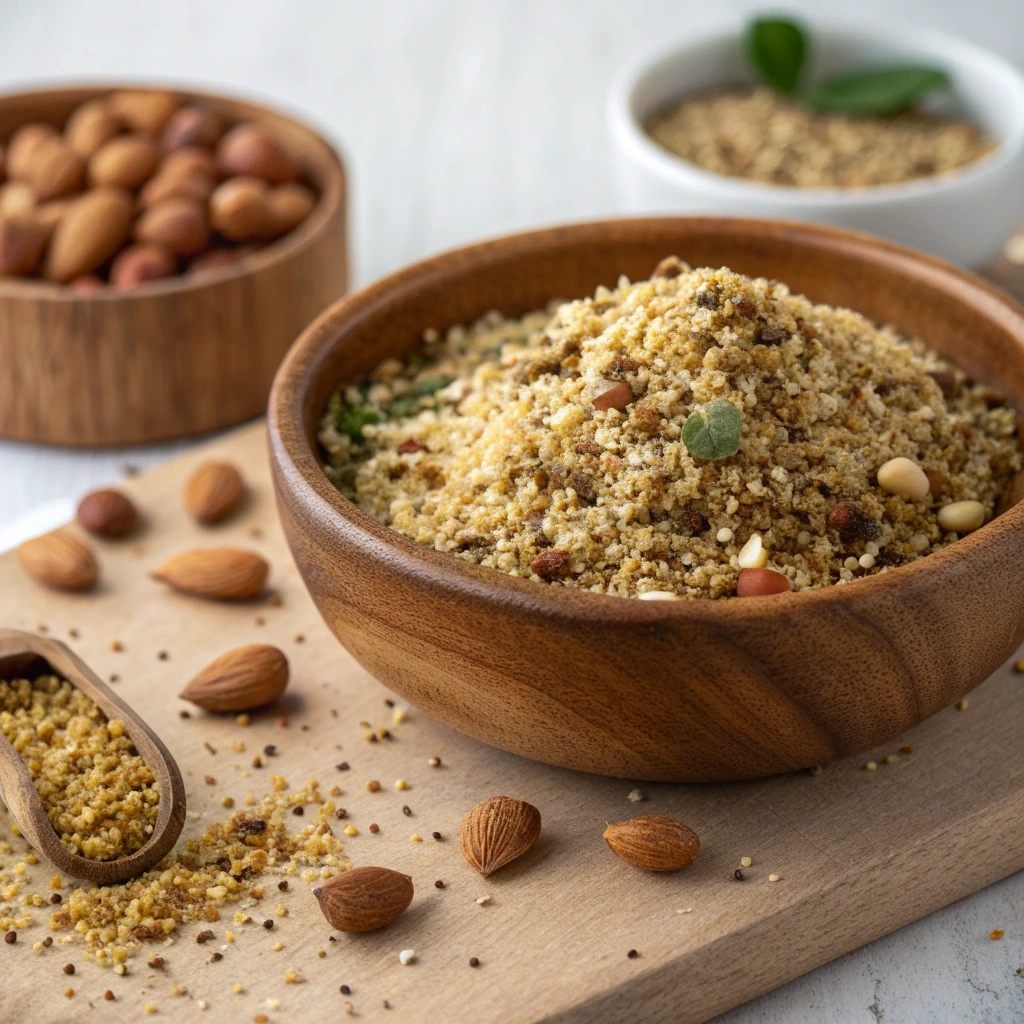
Homemade SA-Style Seed & Nut Dukkah
Dukkah is a fragrant blend of nuts and spices from Egypt. It’s now a popular staple in South Africa.
This recipe uses lots of seeds and local spices. It’s a WFPB dish that boosts flavour while keeping sodium low.
Ingredients:
1/4 cup pumpkin seeds (pips).
1/4 cup sunflower seeds.
1/4 cup sesame seeds.
1/4 cup Pecan nuts (or almonds/hazelnuts).
1 tbsp coriander seeds.
1 tbsp cumin seeds.
1 tsp black peppercorns.
1 tsp smoked paprika.
Method:
Dry Toast: In a dry pan over medium heat, combine all the seeds, nuts, cumin, coriander, and peppercorns. Toast, stirring constantly, until fragrant (about 3–5 minutes). The seeds will begin to “pop.”
Remove from heat and let cool completely.
Pulse: Transfer the cooled mixture to a food processor or use a pestle and mortar. Pulse or pound until you have a coarse, rustic crumble—not a fine powder.
Stir in the smoked paprika.
Serve: Sprinkle generously over hummus or roasted veggies like sweet potato or butternut, or mix into a WFPB yoghurt dip.
Nuts and seeds are key to making tasty, nutrient-rich sweet treats. They follow the WFPB rule of no added sugar or oil.
Plant-Based Bran Rusks (WFPB Adaptation)
The South African rusk is an icon—perfect for dipping in coffee or tea. This WFPB adaptation swaps out butter, oil, refined flour, and sugar. It uses whole ingredients like bananas, dates, and a potent mix of nuts and seeds instead.
Ingredients:
2 cups whole wheat or spelt flour.
One cup of rolled oats.
1 cup wheat bran or oat bran.
1/2 cup pumpkin seeds.
1/2 cup chopped Pecan nuts.
1/4 cup ground flaxseeds.
1 tsp baking soda.
2 large, very ripe bananas, mashed (binder/sweetener).
1/2 cup date paste (made by blending soaked dates with minimal water).
One cup of plant milk (almond or soy) without sugar.
Method:
Preheat oven to 180°C.
Combine the dry ingredients (flours, oats, bran, seeds, nuts, flaxseeds, and baking soda) in a large bowl.
Mix the plant milk, date paste, and mashed banana in another bowl.
The liquid mixture should be combined with the dry ingredients. Mix until just combined—it will be a very thick, dense dough.
Press the dough evenly into a lined rectangular loaf pan or tray (this dough is firm, so press hard).
Bake for 35–40 minutes until golden brown and firm to the touch.
The Drying Stage: Let the loaf cool completely. Slice it into traditional rusk fingers. Put the fingers on a baking sheet. Then, please return them to the oven at a low temperature (about 100°C) for 2 to 4 hours. You should scorch them until they are crunchy. Store in an airtight container.
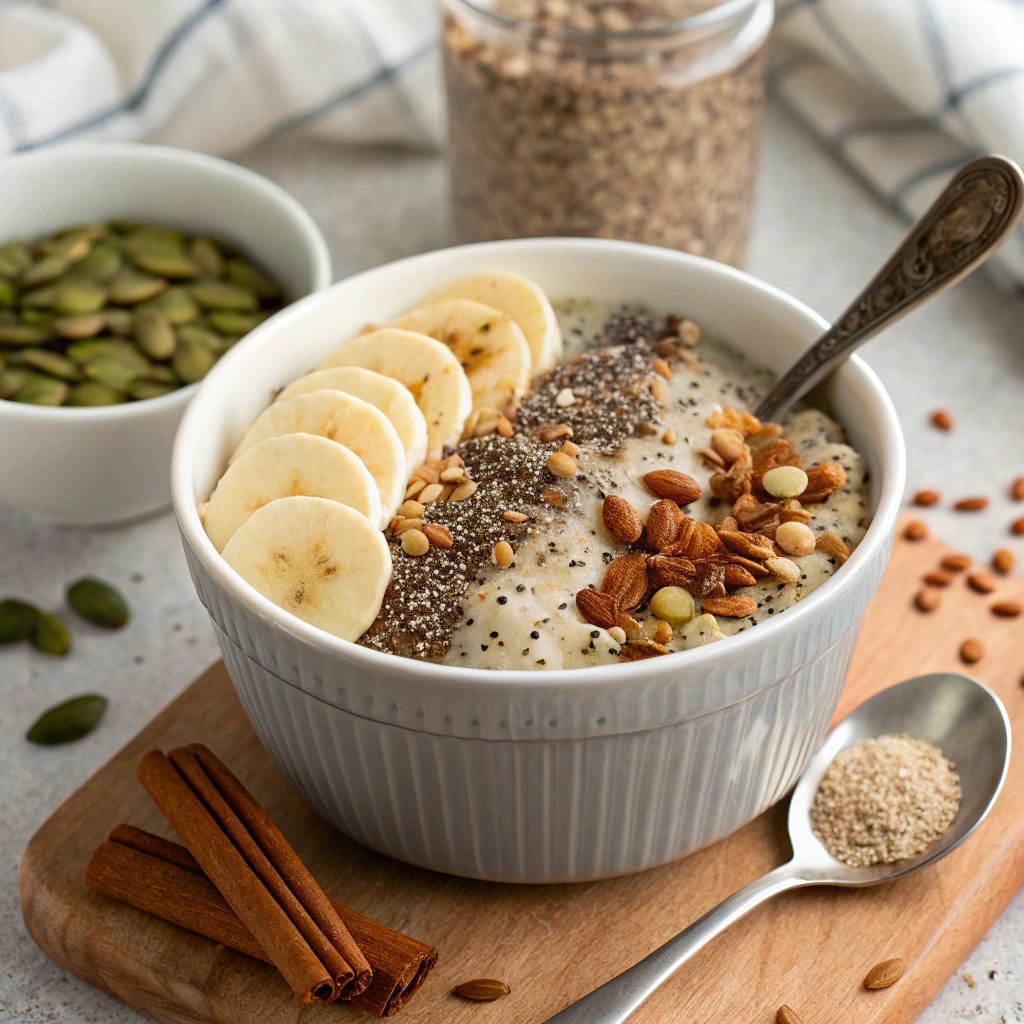
Quick Chia Seed ‘Mielie Pap’ Breakfast Bowl
Traditional mielie pap (maize porridge) is a staple, but it can be low in fibre and Omega-3s. We boost it with chia and flaxseeds to create a true WFPB super-breakfast.
Ingredients:
1/2 cup prepared, cooked mielie pap (or substitute with quick-cooking oats for faster prep).
1 tbsp whole chia seeds.
1 tbsp ground flaxseeds.
1/4 cup mixed nuts/seeds (e.g., pumpkin and sunflower).
1/2 cup plant milk (to desired consistency).
1/2 sliced banana or other fresh fruit.
Pinch of cinnamon.
Method:
Combine the warm pap with chia seeds, ground flaxseeds, and plant milk. Stir well. The chia and flax will thicken the mixture rapidly.
Let it stand for 5 minutes.
Top with the mixed nuts/seeds, fresh fruit, and cinnamon. The seeds add important fibre and Omega-3s. They turn a basic starch into a nutritious meal.
Practical Tips for WFPB Success in SA
Adopting a WFPB diet in South Africa is getting easier.
However, to fully enjoy the benefits of nuts and seeds, follow these key practices:
Portion Control is Key: Nuts and seeds are calorie-dense. The WFPB philosophy doesn’t limit whole foods. A general serving suggestion is around 30g, which is a small handful, each day. This prevents unintentional high-calorie intake while still delivering maximum nutritional benefit.
Soak It Up: Soaking nuts, like almonds and cashews, and seeds, like sunflower and pumpkin, for a few hours helps with digestion. It also boosts nutrient absorption by reducing phytate levels. Consult a Guide to Soaking and Sprouting Nuts for best practice.
The Power of Ground Flax/Chia: To truly access the Omega-3 ALA in flaxseeds and chia seeds, you must ground just before use. The whole seeds pass through the digestive system largely intact. When necessary, grind the entire flaxseed in a blender or a tiny coffee grinder, and store it in the freezer.
Cost-Effective Swaps: Always remember the cashew/sunflower seed swap. Sunflower seeds are usually much cheaper. They also provide nutritionally similar, if not better, WFPB creamy sauces and dips.
Look Local: Use the quality and abundance of South African Macadamia and Pecan Production to find top-notch, local ingredients.
Conclusion
The Whole Food Plant-Based diet isn’t just a trend. It’s a proven way to achieve better health.
Nuts and seeds are essential. They provide Omega-3s, fibre, minerals, and healthy fats. These nutrients help fight chronic diseases.
Using the best plant-based nuts and seeds recipes, like an oil-free curry or a crunchy WFPB rusk, changes more than just your diet. You’re choosing a sustainable, tasty lifestyle that’s great for your body.
Start today by making a simple change.
Use sunflower seed cream instead of dairy in your next savoury dish. Or, add a daily tablespoon of ground flaxseed to your morning pap. Both your sense of taste and your body will appreciate it.
Introduction: Navigating the Plant-Based Aisle with Pick n Pay Vegan Guide Here’s your ultimate guide to Pick n Pay Vegan guide for South Africa. More people in South Africa are choosing plant-based diets. Worries about ethics, health, and the environment drive this change. As a …