
Affordable, Evidence-Based Plant-Based Eating in South Africa
Hi there — I’m Zama Zincume from Eating Plant-Based South Africa, and today I’m taking you on a journey to discover how affordable, evidence-based plant-based eating isn’t just a dream for the privileged in South Africa.
With food prices rising and health concerns growing, switching to a plant-based way of eating that’s backed by science and practical for local budgets is more critical than ever.
In this article, you’ll learn what the evidence says, exactly how to build a budget-friendly plant-based pantry in South Africa, where to shop, how to cook, and how you can make this work for your wallet and your health.
Evidence-Based Benefits: What the Science Says in South Africa
When we talk about evidence-based plant-based eating, we mean dietary patterns shown in research to support health, particularly in the South African context.
The Food-Based Dietary Guidelines for South Africa emphasise eating vegetables and fruit every day, making starchy foods part of most meals, and include the key message: “Eat dry beans, split peas, lentils and soya regularly.”
Plant-forward patterns that prioritise legumes, whole grains, vegetables and fruit are linked with lower risks for certain chronic diseases and improved fibre and micronutrient intake.
When tailored to South African foods and culture, these patterns are both relevant and realistic.
Affordability in Today’s Market: Reading the Price Signals
Food inflation continues to pressure household budgets, but the good news is that baskets built around legumes, grains and seasonal produce can hold costs down.

Watching unit prices, leaning on house brands, and choosing locally available staples help you stretch your rand further while keeping meals nutritious.
Modelling studies show that shifting a typical SA “healthy basket” toward legumes and whole foods can reduce overall costs compared to animal-protein-centred baskets.
Core SA Staples for an Affordable, Evidence-Based Plant-Based Pantry
Affordable, Evidence-Based Plant-Based Proteins in South Africa
- Dry beans (sugar beans, black beans), lentils, split peas — protein, fibre and superb value per serving.
- Soya mince — versatile, shelf-stable, widely available.
- Chickpeas — dried (best value) or canned (convenient).
Budget-Friendly, Evidence-Based Starchy & Whole-Grain Bases in South Africa
- Maize meal (pap), brown rice, oats, barley, samp & beans (umngqusho), potatoes and sweet potatoes.
Affordable, Evidence-Based Vegetables & Fruit in South Africa
- Prioritise in-season produce and use frozen veg as a price-stable, nutritious backup.
Affordable, Evidence-Based Fats & Flavour in South Africa
- Small amounts of canola or olive oil, unsweetened peanut butter, herbs and spice mixes (Cape Malay curry, peri-peri, chakalaka).
Cost-Savvy Protein Math: Rands-per-Serving Comparisons
When you compare “R per 10 g protein,” cooked dried beans, lentils and split peas consistently beat pricier animal-based proteins and many imported meat analogues.
- Dried > canned for lowest cost, but canned wins for convenience when time/energy is tight.
- Tofu can be budget-friendly from Asian/Indian groceries; always compare unit price (R/100 g).
- Do quick “protein math” at the shelf to see the value clearly.
Smart Shopping in SA: Where to Buy Affordable Plant-Based Foods
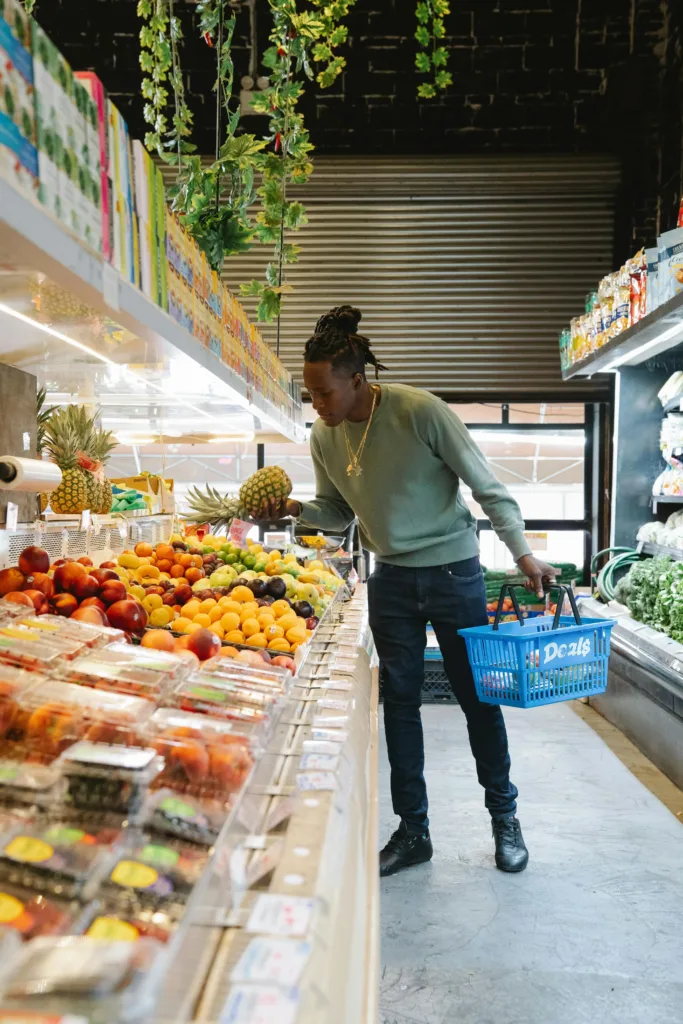
- National chains: Checkers, Shoprite, Pick n Pay, Food Lover’s Market — watch weekly specials and use loyalty points.
- Wholesale/Discounters: Bulk beans, rice and oats if you have storage.
- Street & municipal markets: Seasonal produce is often at lower prices than fully packaged alternatives.
- House brands: Often the best value for staples.
- Clearance (“yellow-sticker”): Freeze fruit/veg nearing sell-by dates to cut waste and costs.
By Greta Hoffman (https://www.pexels.com/@GretaHoffman
Electricity-Aware Cooking to Keep Total Meal Costs Down
- Use a pressure cooker or slow cooker for legumes to reduce cooking time and electricity use.
- Batch-cook beans and grains, then portion and freeze so you cook once and eat many times.
- Rely on one-pot meals and thermos- or insulated-cooking methods during load shedding.
Seven-Day “Affordable, Evidence-Based Plant-Based Eating in South Africa” Menu
Breakfasts
- Oats with water or a fortified plant milk, topped with frozen berries and a spoon of peanut butter.
- Maize-meal porridge (pap) with mashed banana and ground flaxseed.
- Overnight oats with chia, apple and cinnamon (rotate fruit as seasons change).
Lunches
- Umngqusho (samp & beans) with morogo (wild spinach) and a tomato-onion salad.
- Lentil breyani with brown rice, mixed vegetables and warming spices.
- Chickpea “mayo” sandwiches on whole-grain bread with crunchy veg.
Dinners
- Sugar-bean stew (beans, carrots, potatoes) with pap and steamed greens.
- Peanut-butter spinach (morogo) with sweet-potato mash and corn.
- Soya-mince chilli (soya mince, beans, tomatoes, spices) on brown rice.
Snacks & Batch-Prep
- Home-popped popcorn with a sprinkle of paprika.
- Carrot sticks with hummus (made from chickpeas).
- Turn leftover legumes into mini patties for breakfast or snacks.
Meal-Prep and Storage for Affordability
- Soak and cook large batches of beans or lentils, then freeze in flat, labelled bags for quick use.
- Cook grains (brown rice, barley) and freeze in single-meal portions.
- Designate a weekly “big pot” meal, then eat leftovers or freeze portions for later.
- Track avoided waste — it’s real money saved.
Evidence-Based Micronutrient Checklist on a Budget
- Iron: Legumes plus vitamin-C-rich foods (citrus, peppers) to enhance absorption.
- Calcium: Dark greens (morogo, kale), fortified plant milks/yoghurts when affordable.
- Zinc: Beans, lentils and wholegrains.
- Omega-3: Ground flaxseed or chia; small portions of walnuts if budget allows.
- Iodine: Use iodized salt (standard in SA).
- Vitamin B12: Essential if entirely plant-based — rely on fortified foods or consider a budget-friendly supplement.
SA-Specific Price-Savvy Swaps & Recipes
- Swap meat stews for sugar-bean or lentil stews.
- Use soya mince instead of beef mince in chilli or bolognese.
- DIY patties from mashed beans/lentils instead of imported vegan burgers.
- Choose maize meal or brown rice as your base over costlier imported grains.
- Go spice-first: Cape Malay curry with lentils, chakalaka beans, peri-peri bean bowls.
Shopping List: “Affordable, Evidence-Based Plant-Based Eating in South Africa”
- 1 kg dry beans (sugar beans or black beans)
- 500 g lentils
- 1 kg brown rice or samp & beans mix
- 1 kg maize meal
- Large bag of oats
- Frozen mixed vegetables (±1 kg) or seasonal fresh veg
- 2 kg sweet potatoes/potatoes
- Unsweetened peanut butter
- Small bottle of olive or canola oil
- Ground flaxseed or chia
- Seasonal fruit (bananas, apples, oranges)
- Whole-grain bread
- Tofu (budget brand)
- Herbs & spices (paprika, curry powder, peri-peri, garlic, onion)
Note: Costs vary by region and specials, but planning and unit-price comparisons keep totals low.
Common Mistakes That Make Plant-Based Eating Expensive in SA
- Over-reliance on imported, ultra-processed “vegan meats”.
- Ignoring seasonal produce cycles.
- Cooking only tiny batches (higher energy and time costs).
- Food waste from poor planning or unused leftovers.
FAQs — People Also Ask About Affordable, Evidence-Based Plant-Based Eating in South Africa
Is a plant-based diet really cheaper in South Africa?
Yes — centring meals on legumes, maize meal, brown rice, and seasonal veg typically reduces costs while maintaining high nutrition.
What are the cheapest high-protein plant foods in South Africa?
Dry beans, lentils, split peas and soya mince lead the pack, with tofu a smart buy from Asian/Indian groceries.
How can I eat plant-based food on a tight budget during load shedding?
Batch-cook with a pressure cooker, portion and freeze, rely on one-pot meals, and keep canned legumes handy for quick prep.
Where can I find SA-specific guidance for healthy eating?
See the Food-Based Dietary Guidelines for South Africa (linked below) for evidence-based, locally relevant guidance.
Do I need supplements on a budget with a plant-based diet?
Prioritise fortified foods and consider a low-cost B12 supplement if fully plant-based; keep an eye on iron, calcium, omega-3 and iodine.
Are plant-based meat alternatives worth it for tight budgets?
They’re convenient, but staples like beans, lentils and grains deliver better nutrition per serving; use analogues occasionally.
Conclusion
Switching to affordable, evidence-based plant-based eating in South Africa is absolutely possible — and wise.
You’ve got the evidence, budget-smart tools and local context — now it’s time to act.
Download my free Plant-Based on a Budget Toolkit for a printable shopping list, batch-cook plan and meal-prep checklist.
Join my newsletter for weekly specials, South African plant-based recipes and community support from fellow budget-conscious plant-eaters.